1899
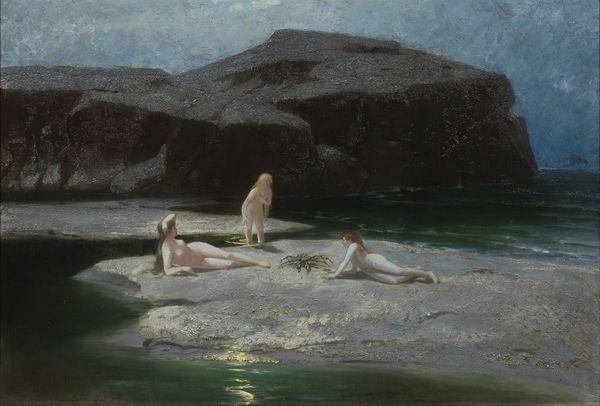
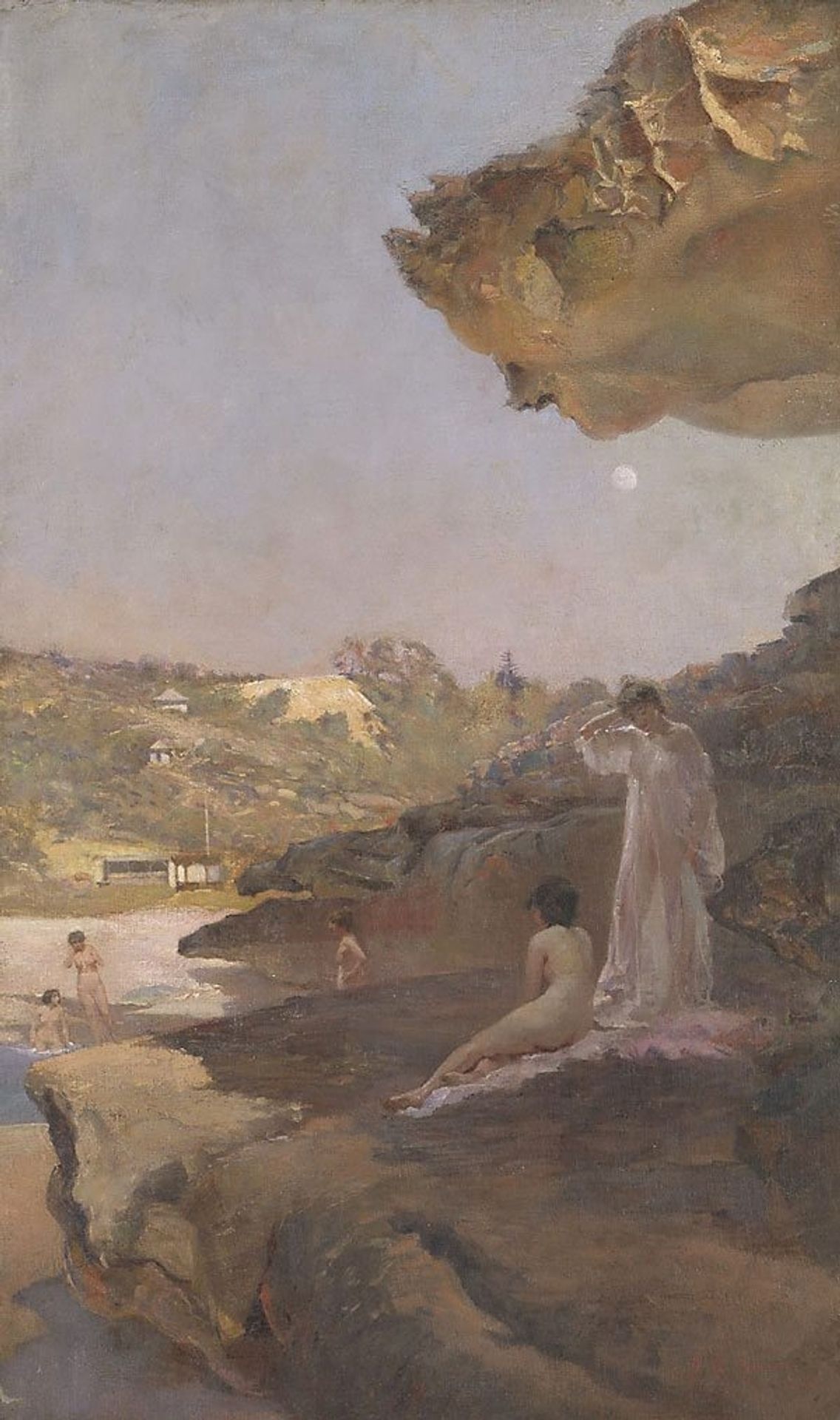
Tamarama Beach, forty years ago, a summer morning

Listen to curator's interpretation
Curatorial notes
Julian Ashton captured this scene of Tamarama Beach, likely around the turn of the century, with oil on canvas. The soft, muted tones and diffused light evoke a hazy, dreamlike quality. The composition is structured by contrasting textures. The rough, earthy rock formations in the foreground create a sense of immediacy, while the smooth, almost ethereal rendering of the figures and distant landscape adds depth. Notice how Ashton plays with scale. The imposing rock overhang dominates the upper portion, dwarfing the figures below. This juxtaposition creates a dynamic tension, hinting at the sublime power of nature. Ashton's strategic use of color and light, along with the spatial arrangement, suggests a semiotic interplay between the natural and the human. The figures are not merely representations of bodies; they’re forms integrated into a broader commentary on the human relationship with the environment. The scene functions aesthetically and as part of a larger cultural discourse around leisure, nature, and the body.