About this artwork
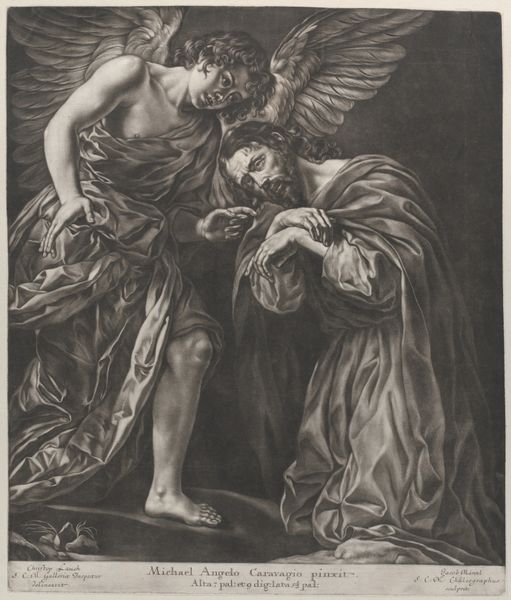
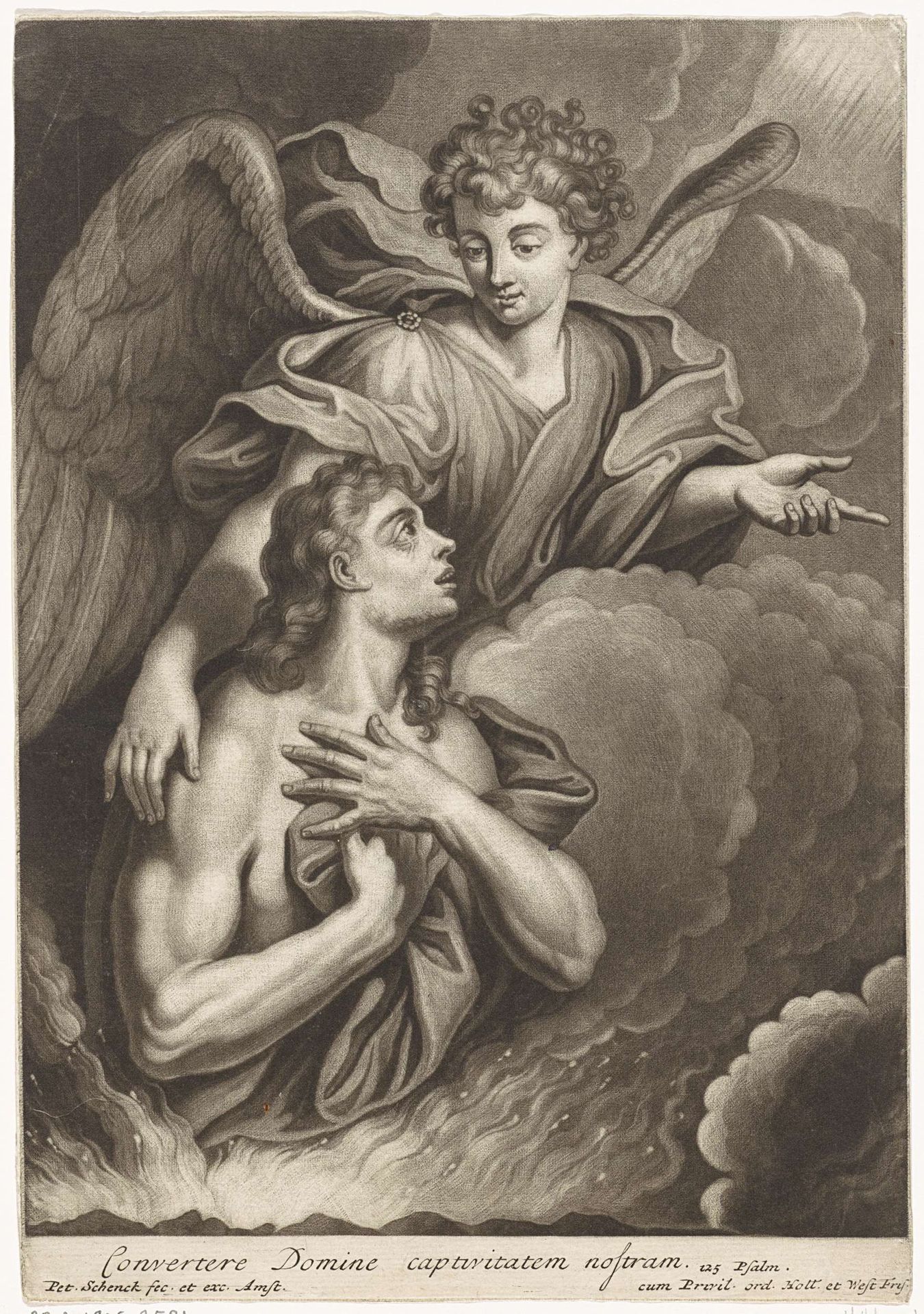
Pieter Schenk created this print, "Ziel in het vagevuur bidt om genade", which translates to "Soul in Purgatory Pleading for Mercy," sometime between 1670 and 1711 using etching and engraving. During this period, religious art served as a powerful tool for moral instruction and spiritual reflection. Here, we see a soul caught in the torment of purgatory, reaching out in supplication. Above, an angel descends, offering a hand in a gesture of divine intervention. The soul's muscular body, with hands clasped in prayer, conveys both vulnerability and an earnest desire for redemption. This image is not just a depiction of religious doctrine, but also an exploration of the very human emotions of guilt, hope, and the yearning for forgiveness. Prints like this one were widely disseminated, bringing theological concepts into everyday life. Schenk's work provides a window into the spiritual anxieties of his time, inviting viewers to contemplate their own mortality and moral standing.

Artwork details
- Medium
- engraving
- Dimensions
- height 250 mm, width 175 mm
- Location
- Rijksmuseum
- Copyright
- Rijks Museum: Open Domain
Tags
baroque
figuration
history-painting
engraving
Comments
Be the first to share your thoughts about this work.
About this artwork
Pieter Schenk created this print, "Ziel in het vagevuur bidt om genade", which translates to "Soul in Purgatory Pleading for Mercy," sometime between 1670 and 1711 using etching and engraving. During this period, religious art served as a powerful tool for moral instruction and spiritual reflection. Here, we see a soul caught in the torment of purgatory, reaching out in supplication. Above, an angel descends, offering a hand in a gesture of divine intervention. The soul's muscular body, with hands clasped in prayer, conveys both vulnerability and an earnest desire for redemption. This image is not just a depiction of religious doctrine, but also an exploration of the very human emotions of guilt, hope, and the yearning for forgiveness. Prints like this one were widely disseminated, bringing theological concepts into everyday life. Schenk's work provides a window into the spiritual anxieties of his time, inviting viewers to contemplate their own mortality and moral standing.
Comments
Be the first to share your thoughts about this work.