1734 - 1766
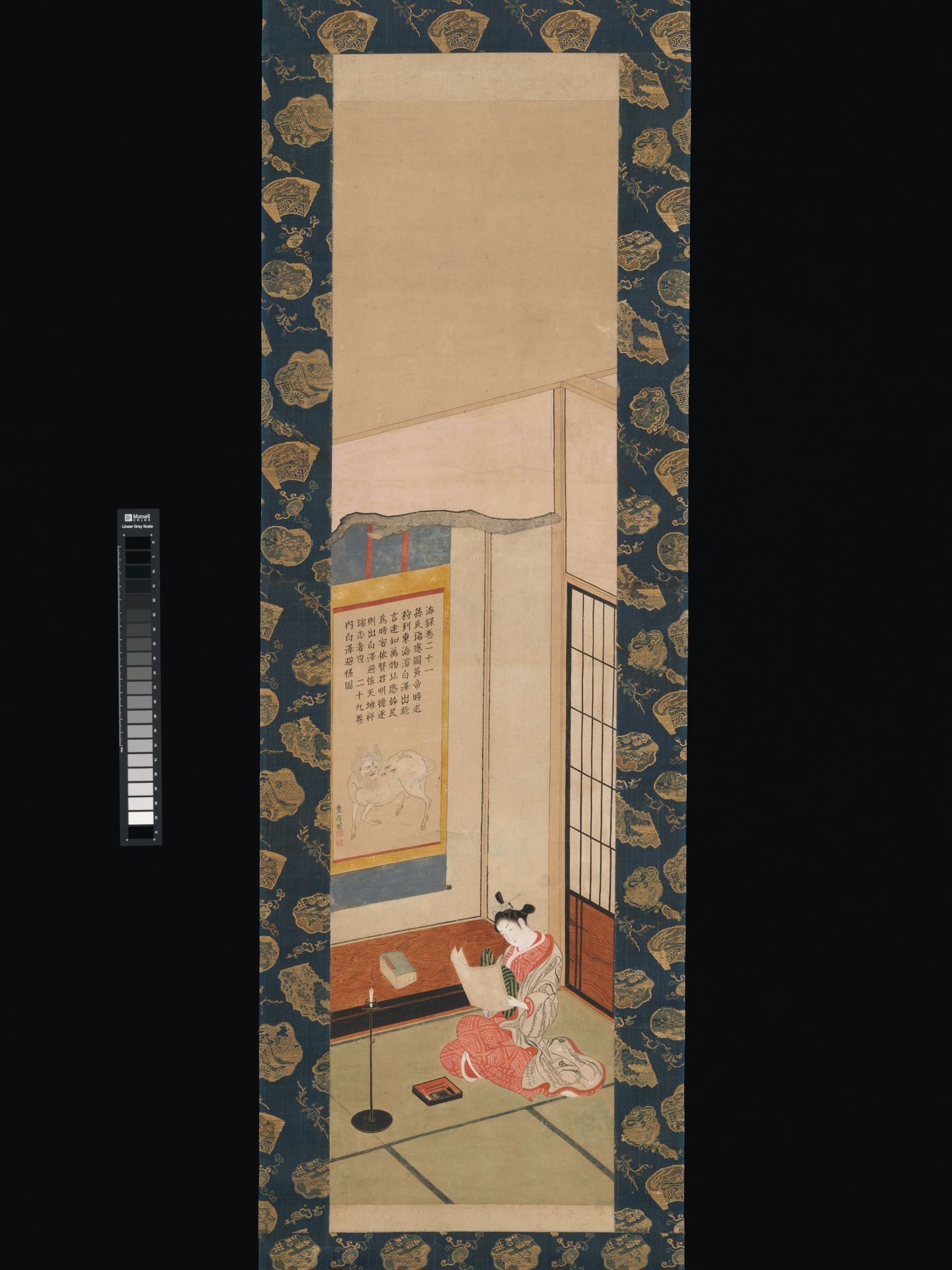
Courtesan Reading a Letter


Listen to curator's interpretation
Curatorial notes
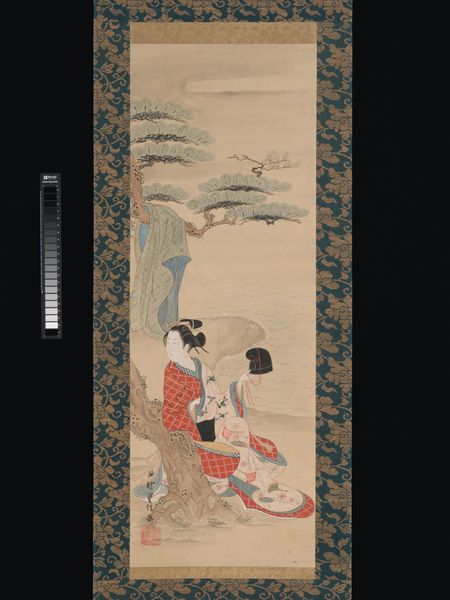
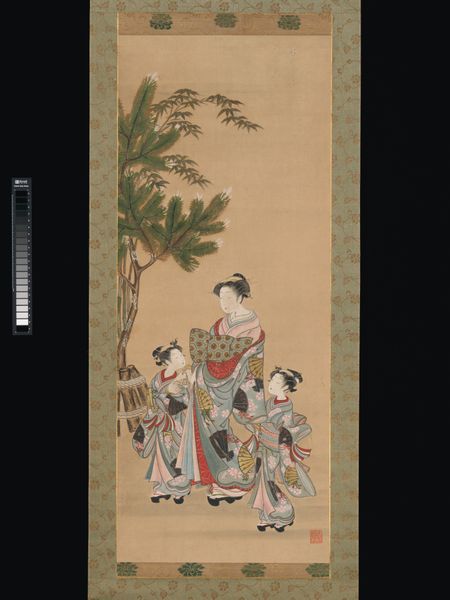
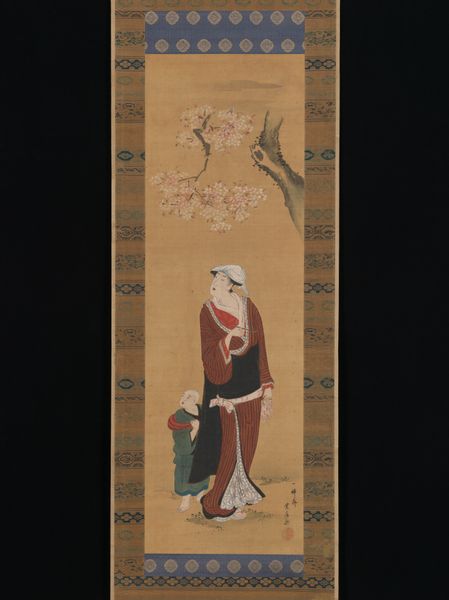
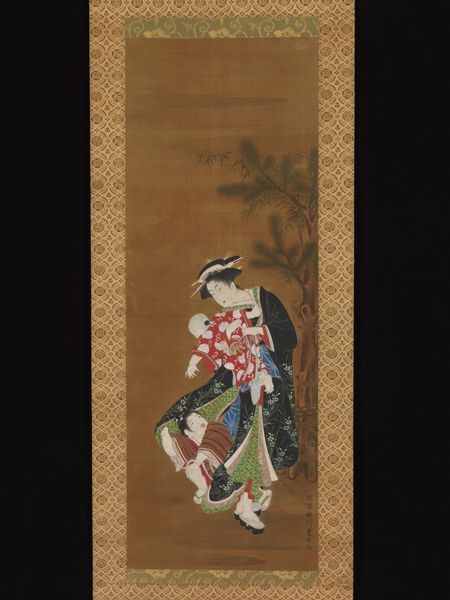
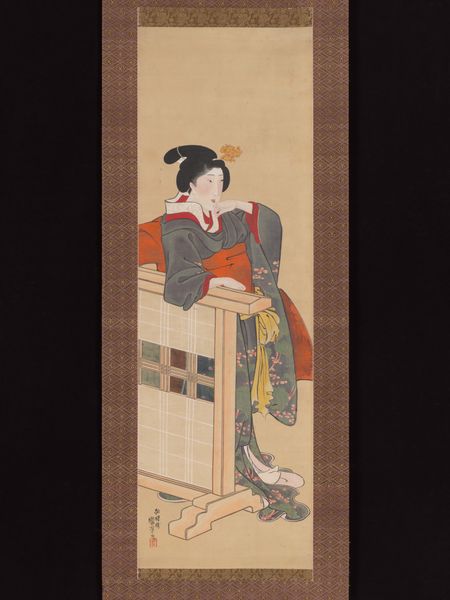
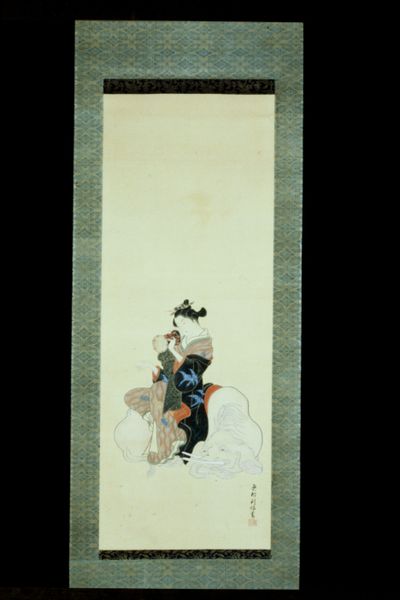
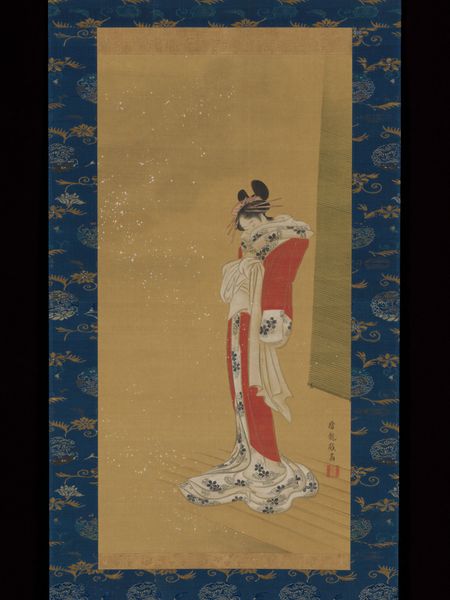
Editor: This scroll painting, "Courtesan Reading a Letter" by Ishikawa Toyonobu, created sometime between 1734 and 1766, captures such a quiet, intimate moment. She seems so engrossed in the letter. How do you interpret this work in the context of its time? Curator: That's a great observation! I see this as an important genre painting reflective of the ukiyo-e tradition. Its focus on the floating world, the transient pleasures available particularly in urban centers. Think about how this image circulated: as a print. This speaks volumes about its purpose and its audience, broadening the world through accessible artwork. What is suggested about societal expectations, considering the role of courtesans within Edo-period Japan? Editor: I see what you mean. It wasn't necessarily about capturing reality, but portraying a version of reality. The courtesan is depicted in this peaceful domestic scene. Curator: Exactly. It idealizes that aspect, carefully managing perceptions of the Yoshiwara district where these women lived. Her kimono, the perfect stillness – this controls a very specific, marketable persona. Consider who would purchase this print, and why. What does that tell us about class, desire, and the power of representation? Editor: So, it's less a direct record of daily life and more about carefully curated imagery within the existing cultural power dynamics? Curator: Precisely. Think about the artist's role, too. They weren't passive observers. Toyonobu actively shaped perceptions, negotiating complex social realities through imagery intended for consumption. It is a business. These prints contribute to and influence ideas of beauty, leisure, and femininity. Editor: That's fascinating. It really highlights how art can be both a product of and a shaper of cultural values. Curator: Agreed. It shows how art participates in a dialogue that both creates and responds to an audience. The piece invites us to engage in questioning representation in society.