About this artwork
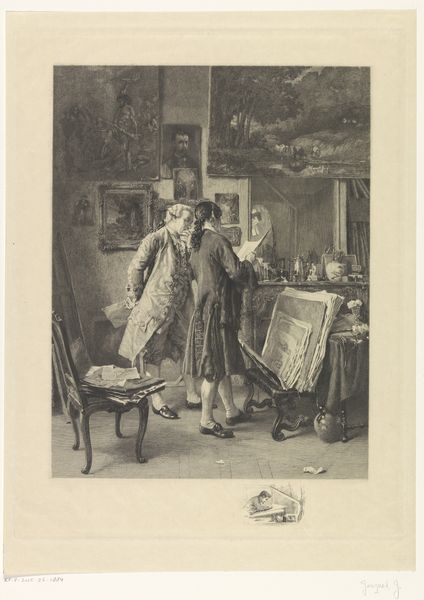
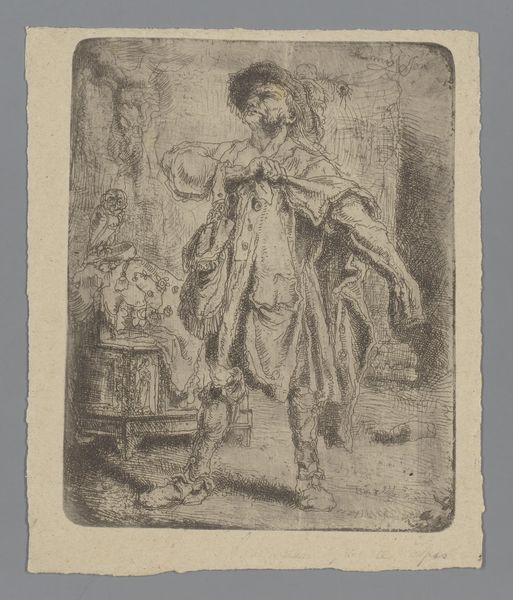
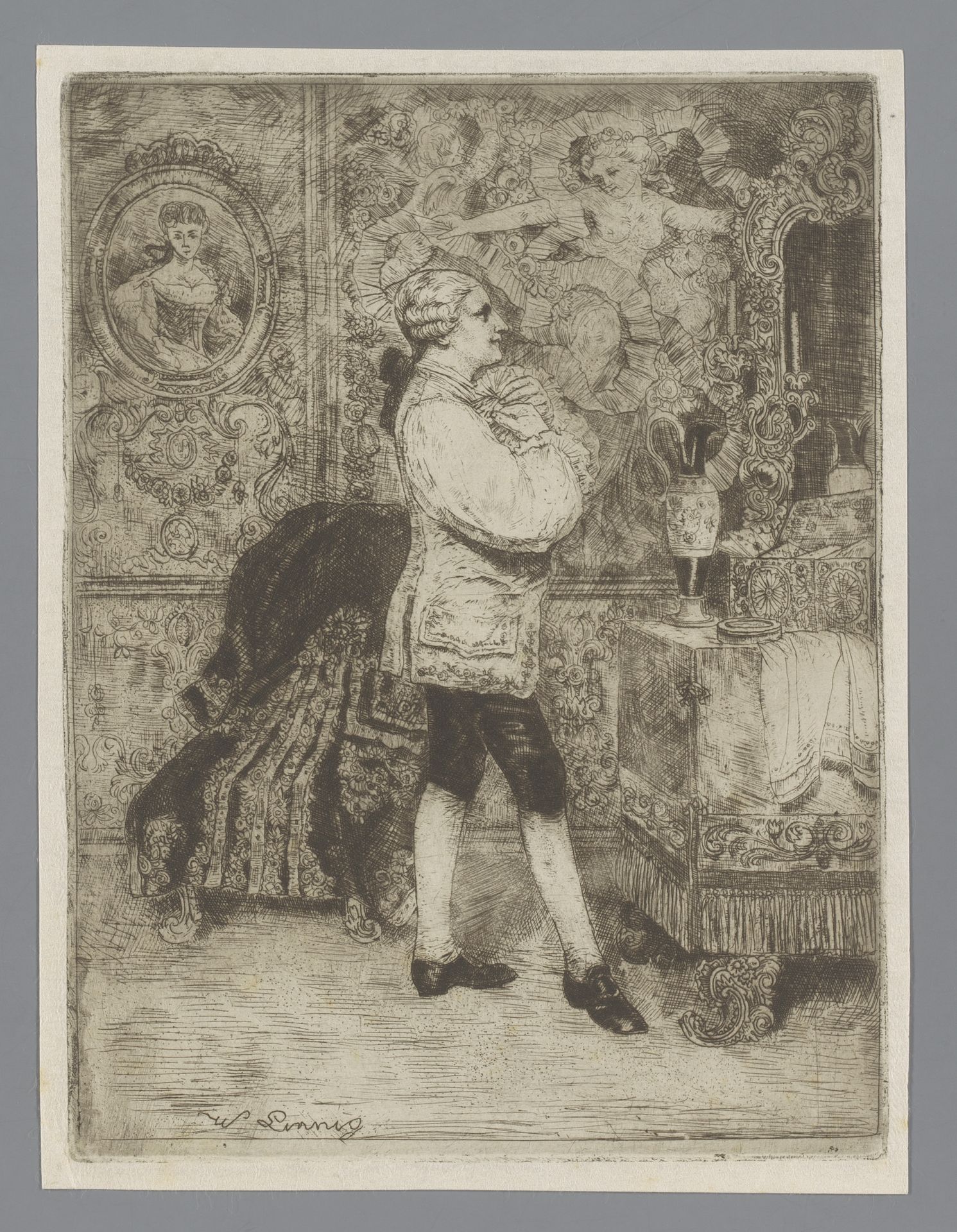
Willem Linnig's etching presents a young man indoors, adjusting his necktie. Consider the etching technique itself. It is an indirect method, requiring the artist to prepare a metal plate, cover it with a waxy, acid-resistant ground, then draw through the ground with a sharp needle, exposing the metal. The plate is then immersed in acid, which bites into the exposed lines. This process demands precision and control, and the resulting image has a distinctive graphic quality. Note how Linnig uses this to full advantage. The density and direction of the etched lines create tone and texture, defining the forms of the figure, the drapery, and the ornate interior. Look closely, and you'll see how the hatching varies to suggest light and shadow, giving depth to the scene. The etching medium lends itself particularly well to capturing intricate details, like the patterns on the wallpaper, underscoring the artistry involved in producing a seemingly simple image of everyday life. Paying attention to the making of the print enhances our appreciation, reminding us of the skills and labor involved in bringing art into the world.
Jonge man in een interieur strikt zijn das
1829 - 1885

Willem (I) Linnig
1819 - 1885Location
RijksmuseumArtwork details
- Medium
- drawing, print, etching
- Dimensions
- height 214 mm, width 162 mm
- Location
- Rijksmuseum
- Copyright
- Rijks Museum: Open Domain
Tags
Comments
Share your thoughts
About this artwork
Willem Linnig's etching presents a young man indoors, adjusting his necktie. Consider the etching technique itself. It is an indirect method, requiring the artist to prepare a metal plate, cover it with a waxy, acid-resistant ground, then draw through the ground with a sharp needle, exposing the metal. The plate is then immersed in acid, which bites into the exposed lines. This process demands precision and control, and the resulting image has a distinctive graphic quality. Note how Linnig uses this to full advantage. The density and direction of the etched lines create tone and texture, defining the forms of the figure, the drapery, and the ornate interior. Look closely, and you'll see how the hatching varies to suggest light and shadow, giving depth to the scene. The etching medium lends itself particularly well to capturing intricate details, like the patterns on the wallpaper, underscoring the artistry involved in producing a seemingly simple image of everyday life. Paying attention to the making of the print enhances our appreciation, reminding us of the skills and labor involved in bringing art into the world.
Comments
Share your thoughts