About this artwork
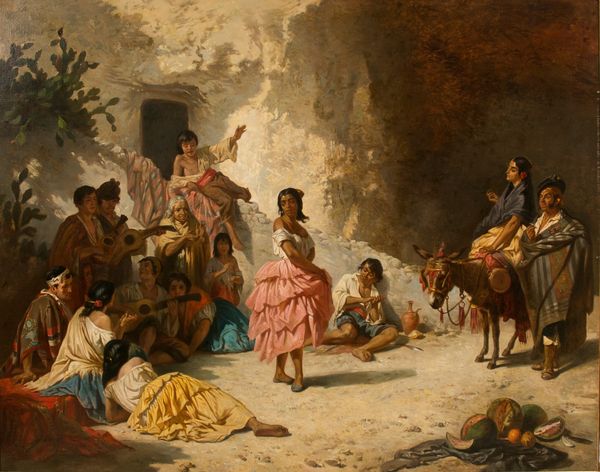
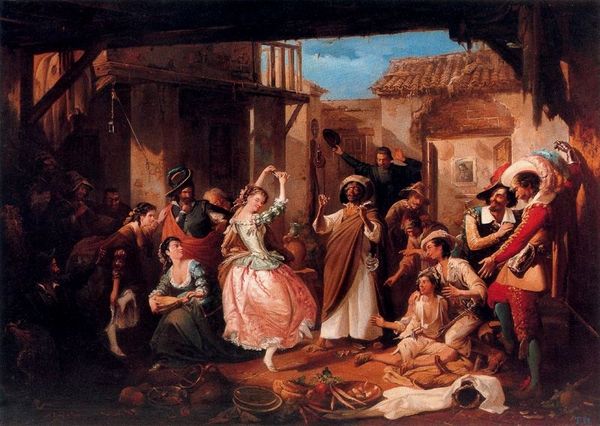
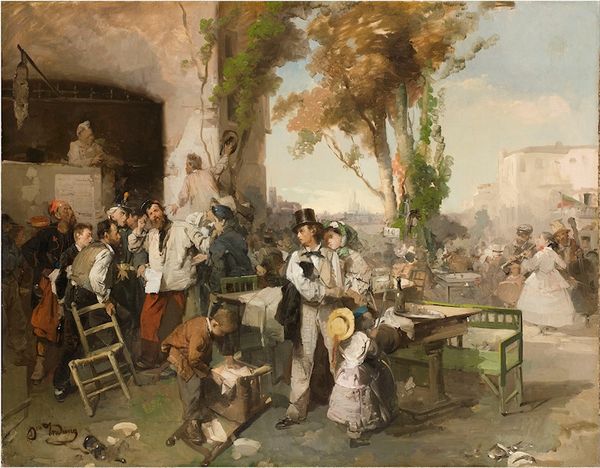
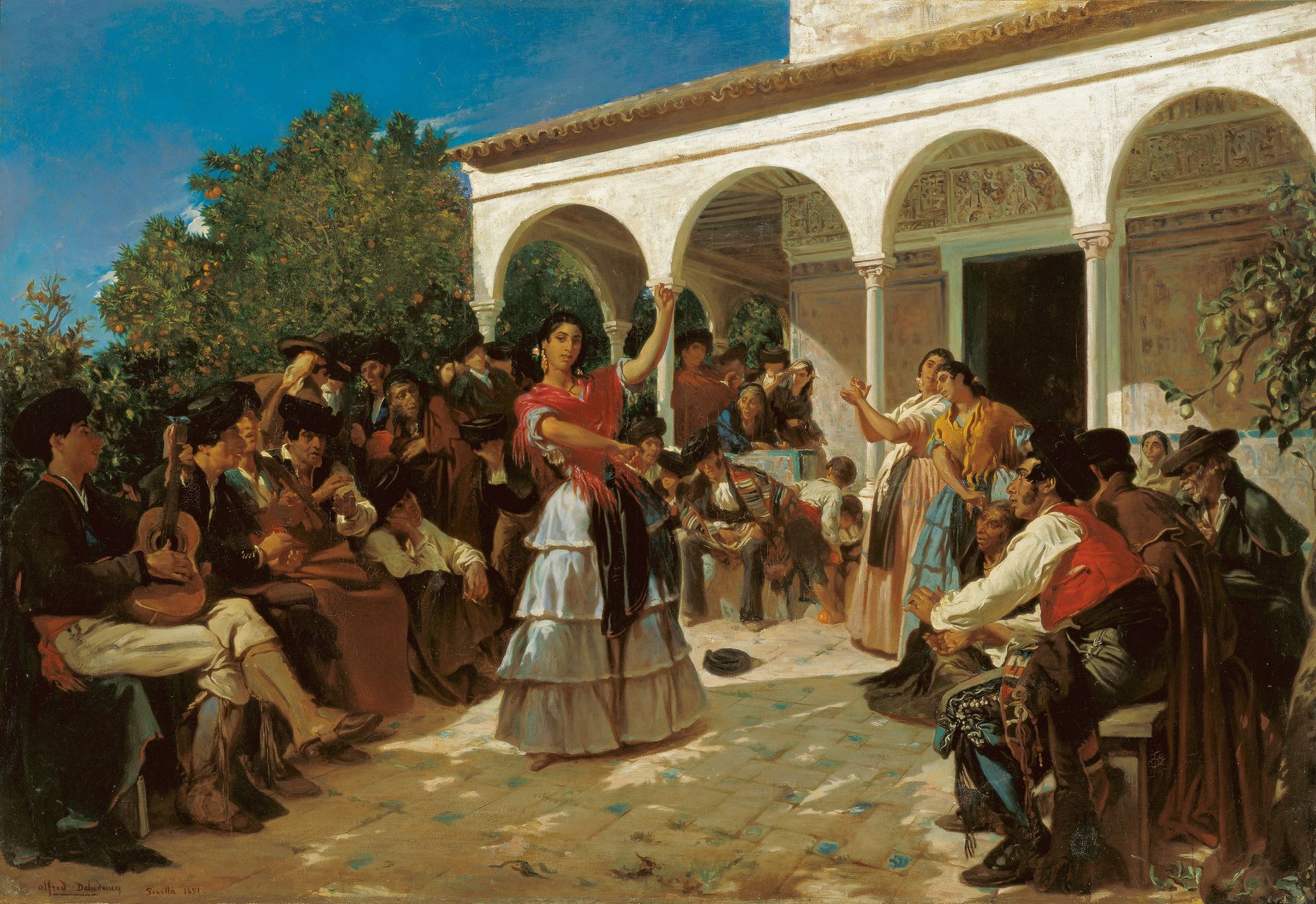
Alfred Dehodencq painted "A Gypsy Dance in the Gardens of the Alcázar, in Front of Charles V Pavilion" during a period when orientalism was a popular movement in European art. Dehodencq, a French artist, like many of his contemporaries, traveled to Spain and North Africa, seeking exotic subjects. Here, he captures a scene of Romani people performing in the gardens of a historic Spanish palace, a setting that underscores the perceived otherness of the Romani within European society. The dancer, adorned in traditional garb, becomes the focal point, embodying a sense of vibrant, untamed spirit. The artist’s role in depicting this scene raises questions about representation. Are we offered a genuine glimpse into Romani culture, or a romanticized vision filtered through a European lens? Consider the power dynamics at play. The Romani, often marginalized, are here framed within a context of performance for an external audience. How does this affect their agency and identity? The painting offers a moment to reflect on the complexities of cultural exchange and the ways in which art can both celebrate and perpetuate stereotypes.
A Gypsy Dance in the Gardens of the Alcázar, in Front of Charles V Pavilion 1851

Artwork details
- Dimensions
- 111.5 x 161.5 cm
- Copyright
- Public domain
Comments
No comments
About this artwork
Alfred Dehodencq painted "A Gypsy Dance in the Gardens of the Alcázar, in Front of Charles V Pavilion" during a period when orientalism was a popular movement in European art. Dehodencq, a French artist, like many of his contemporaries, traveled to Spain and North Africa, seeking exotic subjects. Here, he captures a scene of Romani people performing in the gardens of a historic Spanish palace, a setting that underscores the perceived otherness of the Romani within European society. The dancer, adorned in traditional garb, becomes the focal point, embodying a sense of vibrant, untamed spirit. The artist’s role in depicting this scene raises questions about representation. Are we offered a genuine glimpse into Romani culture, or a romanticized vision filtered through a European lens? Consider the power dynamics at play. The Romani, often marginalized, are here framed within a context of performance for an external audience. How does this affect their agency and identity? The painting offers a moment to reflect on the complexities of cultural exchange and the ways in which art can both celebrate and perpetuate stereotypes.
Comments
No comments