Possibly 1819
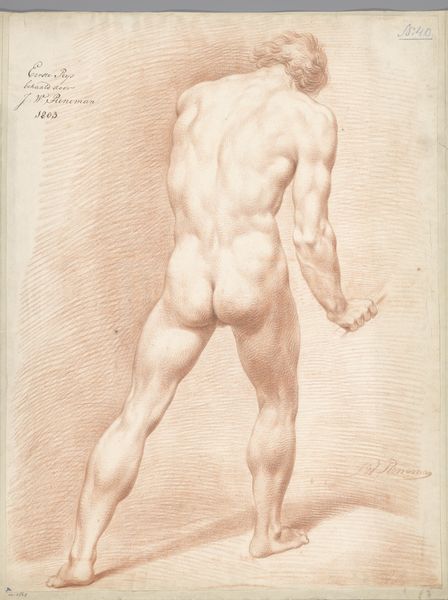
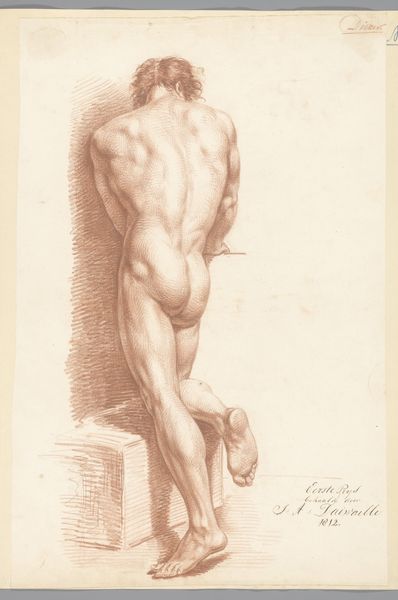
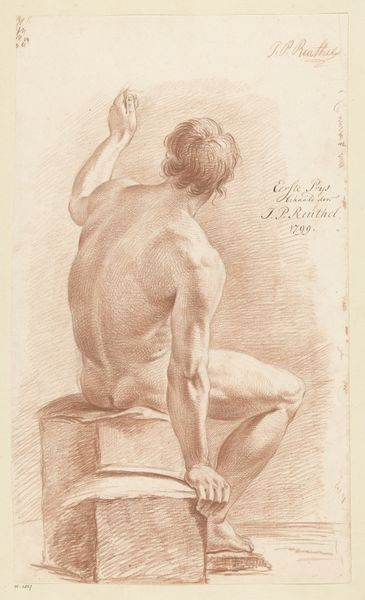
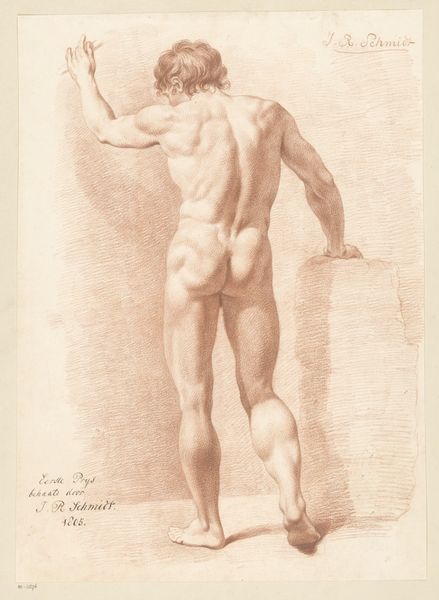
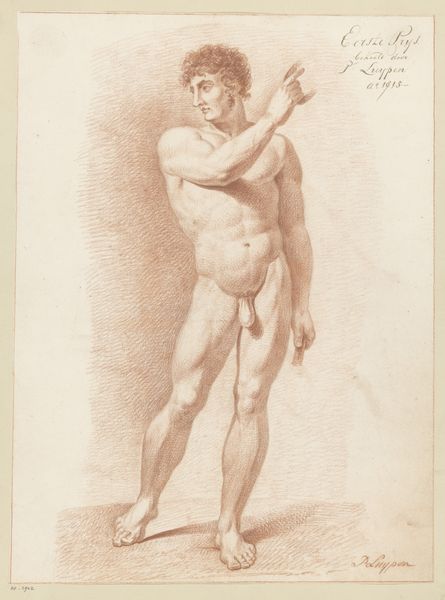
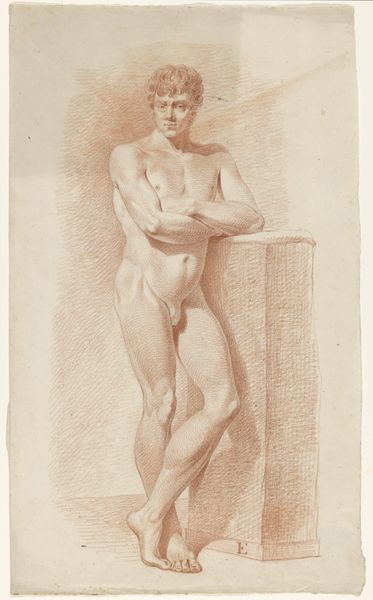
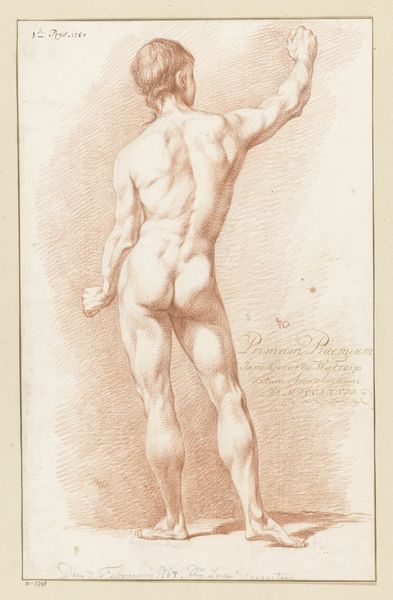
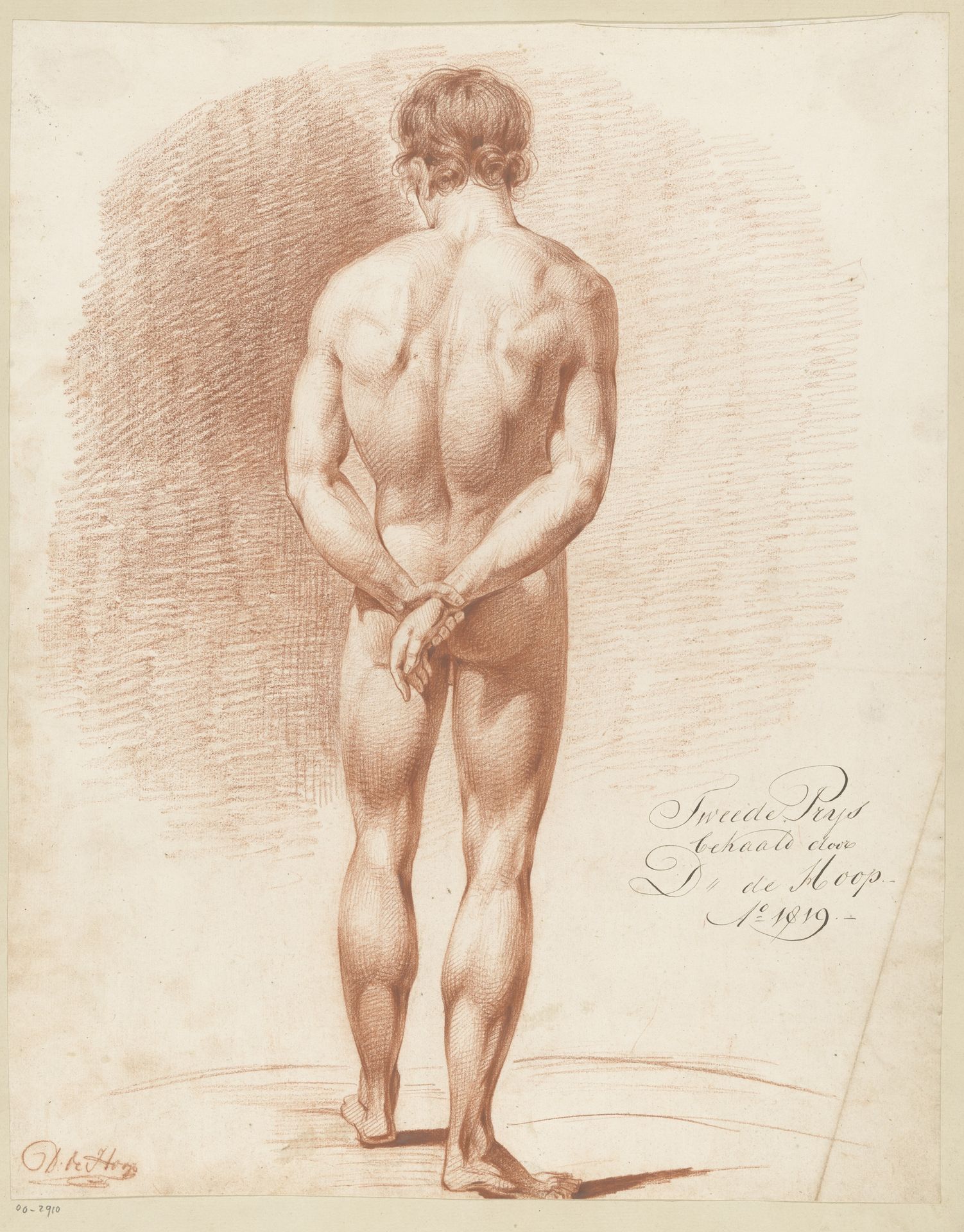
Staand mannelijk naakt, op de rug gezien (2e prijs 1819)

Listen to curator's interpretation
Curatorial notes
This red chalk drawing of a standing male nude, seen from the back, was made by Douwe de Hoop in 1819. The figure's clasped hands behind his back present a fascinating study in contrapposto, a classical pose evoking both restraint and latent power. This motif of hands clasped behind the back is not unique to de Hoop; we see echoes of it in depictions of bound captives throughout history, from ancient Roman reliefs to Renaissance depictions of Christ. The gesture speaks to a deep-seated human fascination with control, vulnerability, and the tension between inner strength and outward confinement. Consider the emotional weight this conveys: a deliberate obscuring of the hands, the tools of creation and agency, suggesting a suppression of action. It's a posture of introspection, perhaps even resignation. Such a symbol resurfaces and evolves, echoing through time. It engages us on a subconscious level, reminding us of our own complex relationship with freedom and constraint.