About this artwork
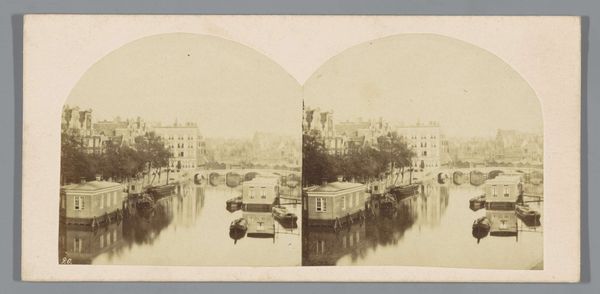
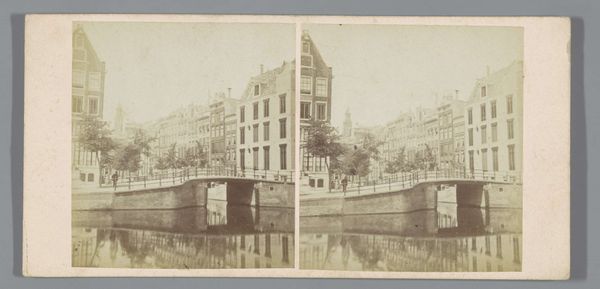
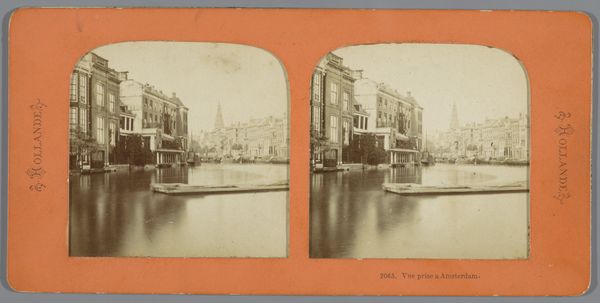
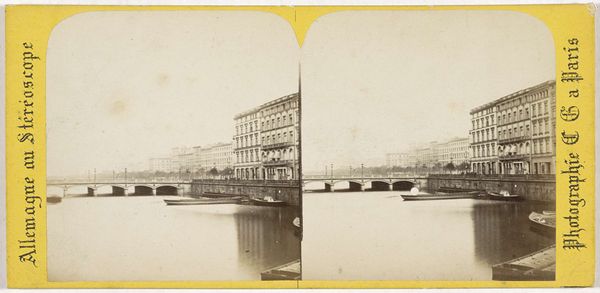
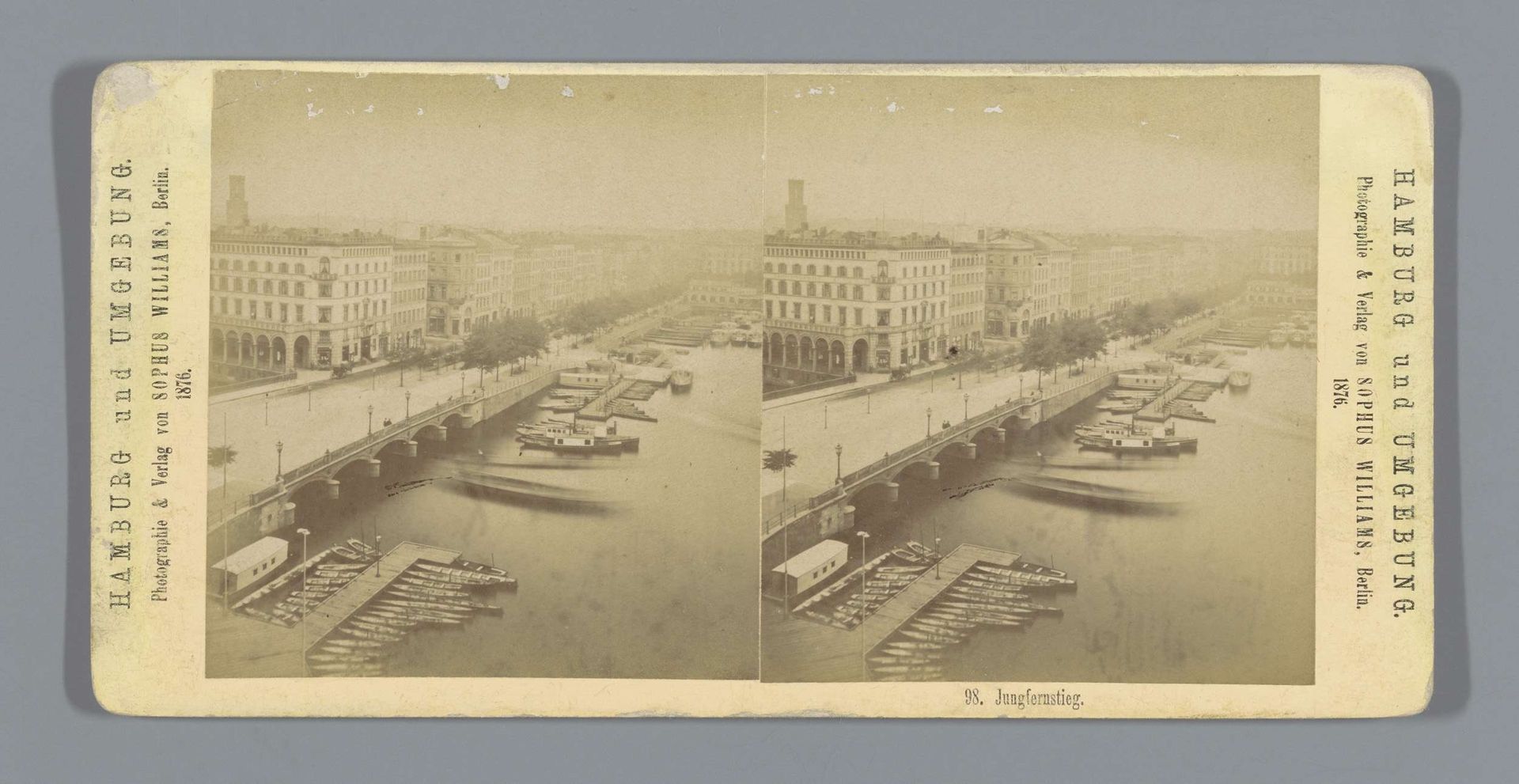
This stereoscopic card shows the Jungfernstieg in Hamburg, produced by Sophus Williams around 1876 using photographic techniques. The muted sepia tones create a unified visual field, allowing the structural elements to take precedence. The composition emphasizes linear perspective, drawing the eye along the bridge and waterway into the urban space. The use of stereoscopy enhances depth, giving a palpable sense of three-dimensionality to the architectural forms and arrangement of boats. The image captures a moment of urban stillness, yet the structure of the photograph itself—its geometric ordering of space—suggests an underlying order. Consider how the photograph both represents and constructs space through perspectival lines and stereoscopic depth. It's not just a record, but an active engagement with how we perceive urban environments.

Artwork details
- Medium
- photography, gelatin-silver-print
- Dimensions
- height 85 mm, width 170 mm
- Copyright
- Rijks Museum: Open Domain
Tags
16_19th-century
photography
gelatin-silver-print
cityscape
Comments
No comments
About this artwork
This stereoscopic card shows the Jungfernstieg in Hamburg, produced by Sophus Williams around 1876 using photographic techniques. The muted sepia tones create a unified visual field, allowing the structural elements to take precedence. The composition emphasizes linear perspective, drawing the eye along the bridge and waterway into the urban space. The use of stereoscopy enhances depth, giving a palpable sense of three-dimensionality to the architectural forms and arrangement of boats. The image captures a moment of urban stillness, yet the structure of the photograph itself—its geometric ordering of space—suggests an underlying order. Consider how the photograph both represents and constructs space through perspectival lines and stereoscopic depth. It's not just a record, but an active engagement with how we perceive urban environments.
Comments
No comments