About this artwork
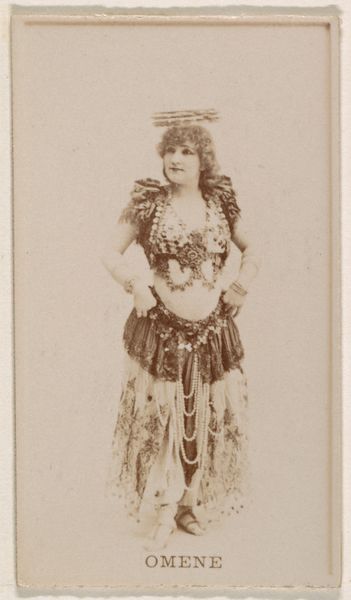
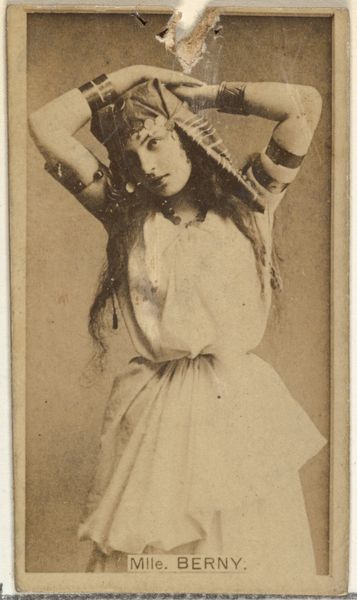
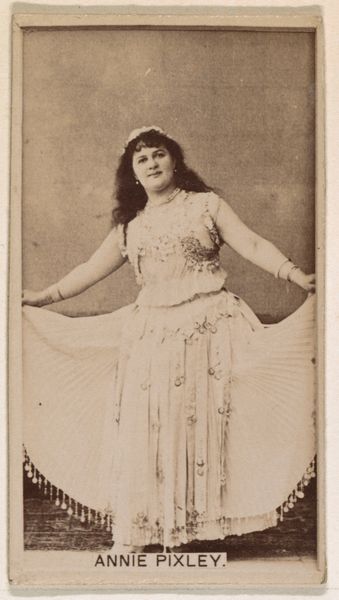
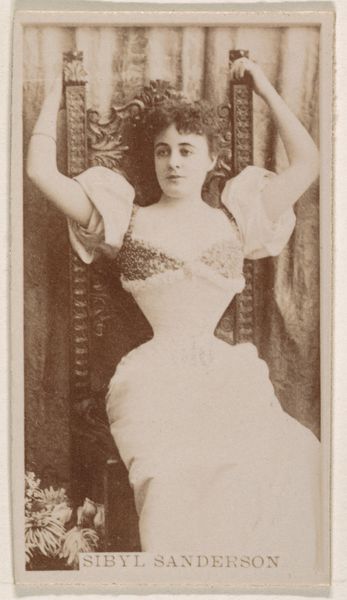
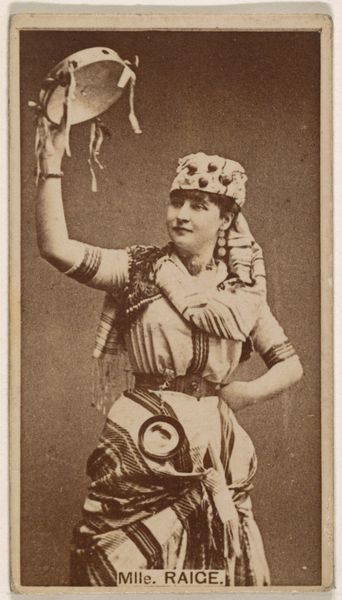
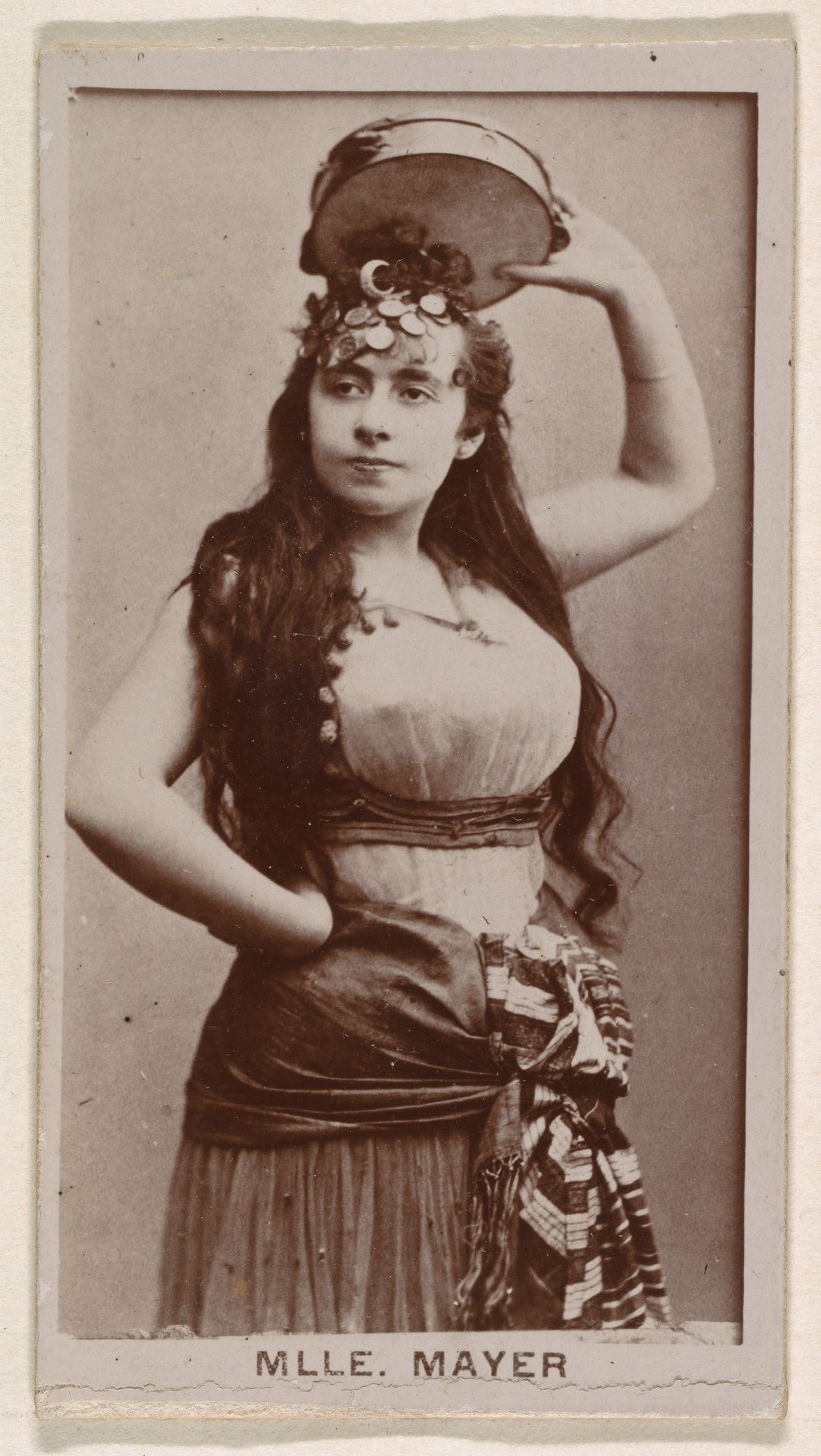
This card, featuring Mlle. Mayer, was printed by the Kinney Brothers Tobacco Company as part of a series of actresses used to promote Sweet Caporal Cigarettes. The late 19th century saw an explosion in commercial imagery, intertwining consumer culture and popular entertainment. The photograph presents Mayer in a somewhat exoticized "Oriental" costume, complete with tambourine. This was a common trope of the era, reflecting both fascination with and misrepresentation of non-Western cultures. Such images played into existing social hierarchies, reinforcing dominant cultural norms while simultaneously offering consumers a taste of the "other." Consider how the institutions of advertising and entertainment colluded in shaping public perceptions. Researching advertising history, theater archives, and photographic collections would shed further light on the social context of this image. In the end, studying such cards provides insights into the cultural values and power dynamics of its time.
Mlle. Mayer, from the Actresses series (N245) issued by Kinney Brothers to promote Sweet Caporal Cigarettes
1890

Kinney Brothers Tobacco Company
1869 - 2011
The Metropolitan Museum of Art
Metropolitan Museum of Art, New York, NYArtwork details
- Medium
- print, photography
- Dimensions
- Sheet: 2 1/2 × 1 7/16 in. (6.4 × 3.7 cm)
- Location
- Metropolitan Museum of Art, New York, NY
- Copyright
- Public Domain
Tags
Comments
Share your thoughts
About this artwork
This card, featuring Mlle. Mayer, was printed by the Kinney Brothers Tobacco Company as part of a series of actresses used to promote Sweet Caporal Cigarettes. The late 19th century saw an explosion in commercial imagery, intertwining consumer culture and popular entertainment. The photograph presents Mayer in a somewhat exoticized "Oriental" costume, complete with tambourine. This was a common trope of the era, reflecting both fascination with and misrepresentation of non-Western cultures. Such images played into existing social hierarchies, reinforcing dominant cultural norms while simultaneously offering consumers a taste of the "other." Consider how the institutions of advertising and entertainment colluded in shaping public perceptions. Researching advertising history, theater archives, and photographic collections would shed further light on the social context of this image. In the end, studying such cards provides insights into the cultural values and power dynamics of its time.
Comments
Share your thoughts