About this artwork
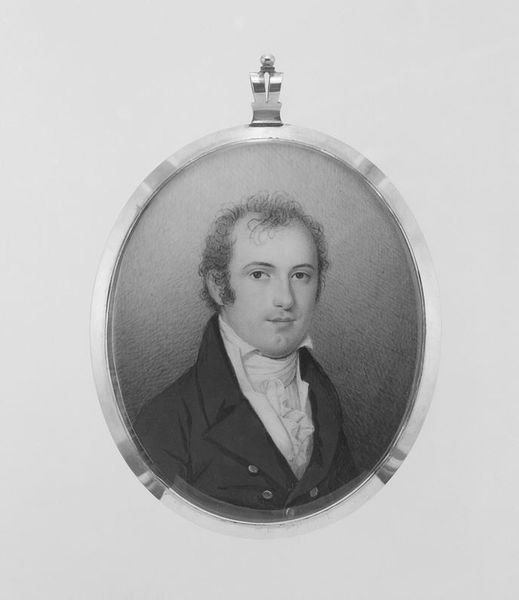
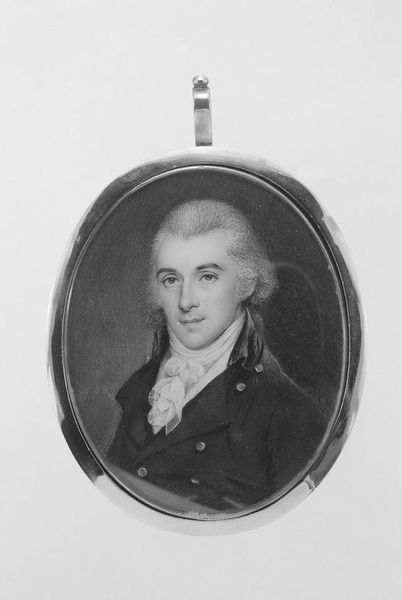
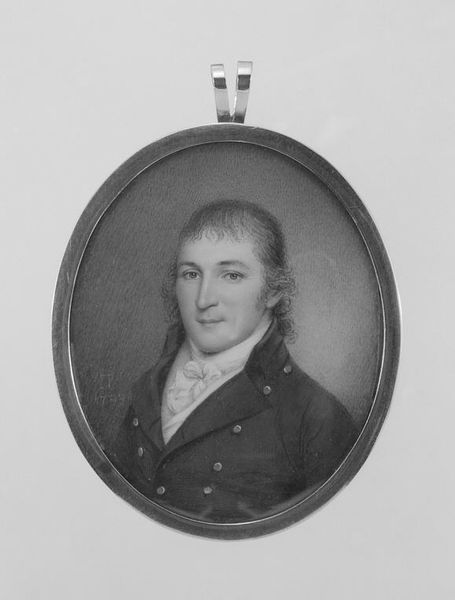
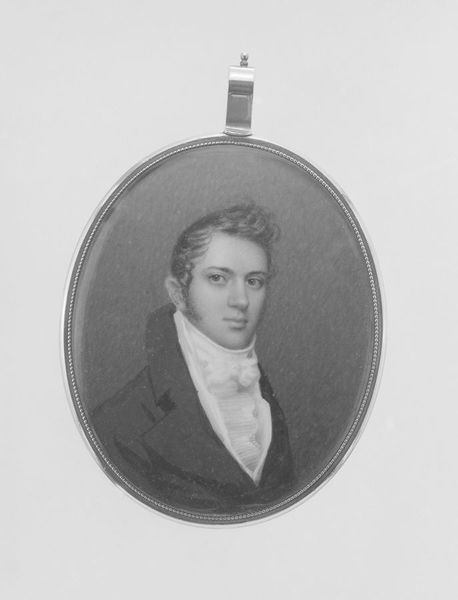
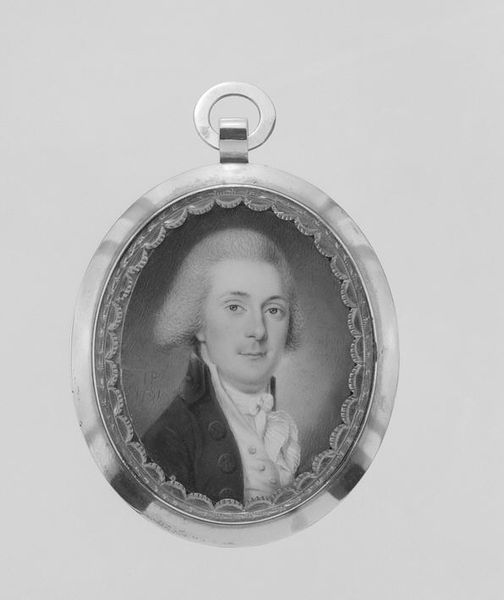
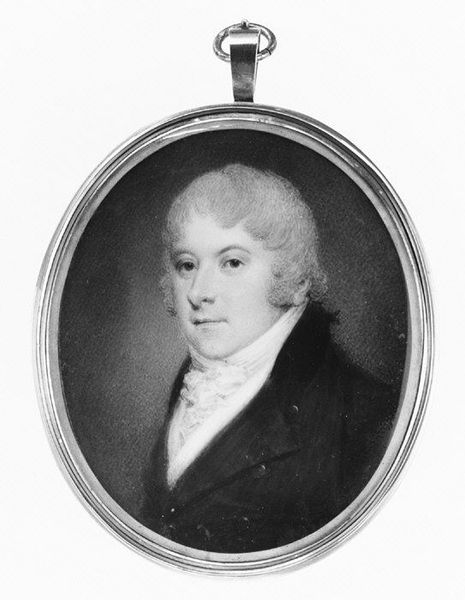
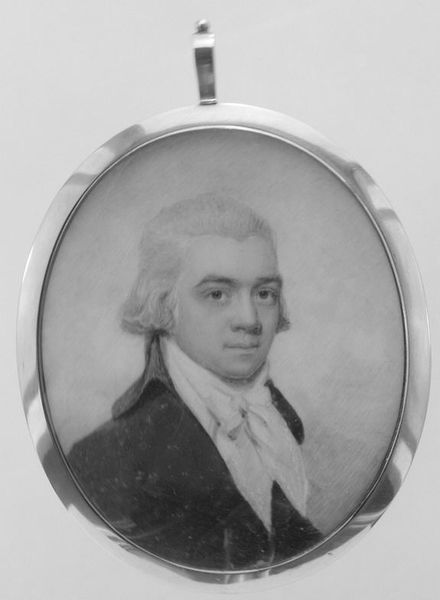
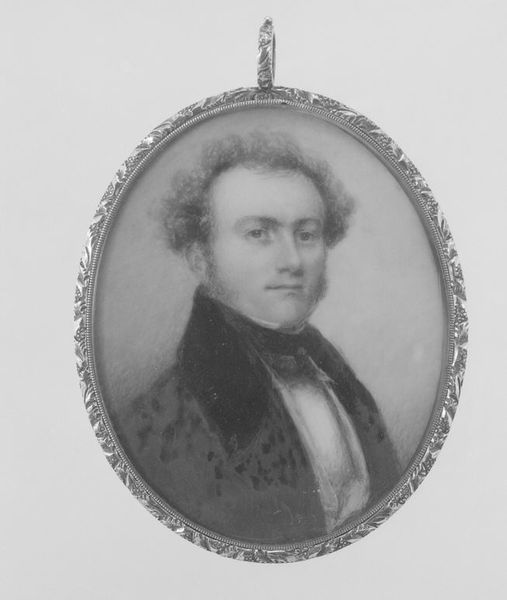
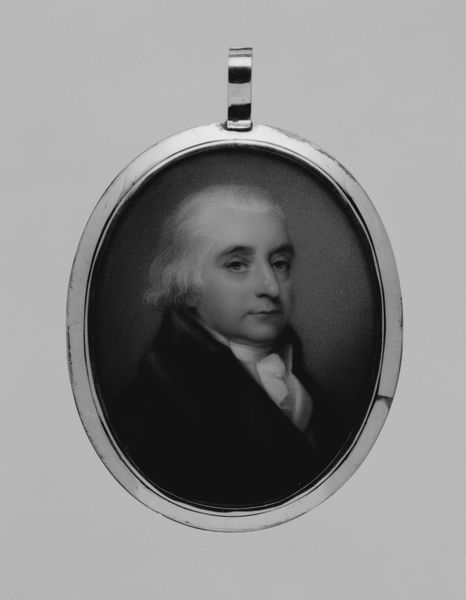
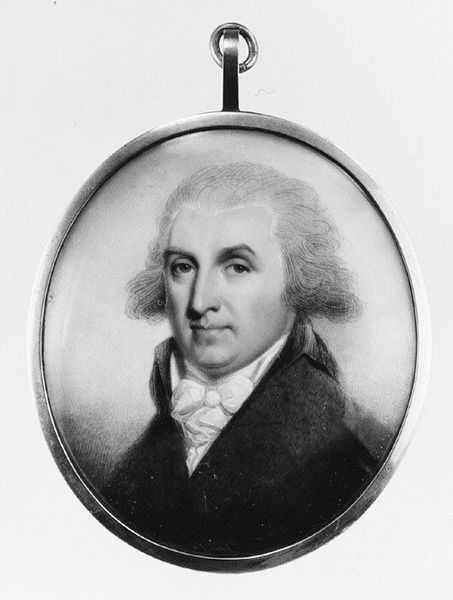
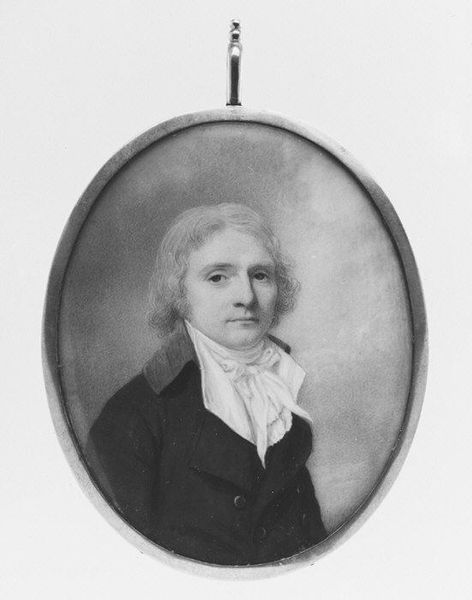
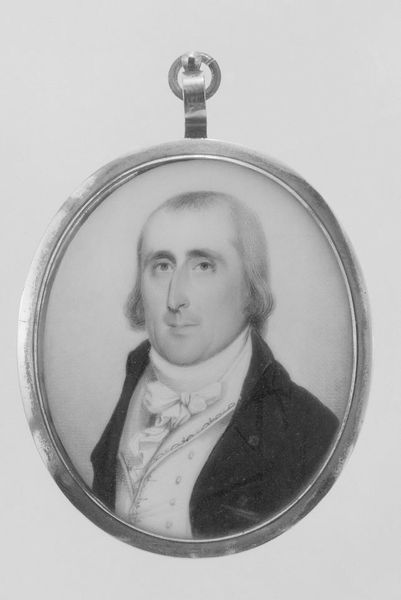
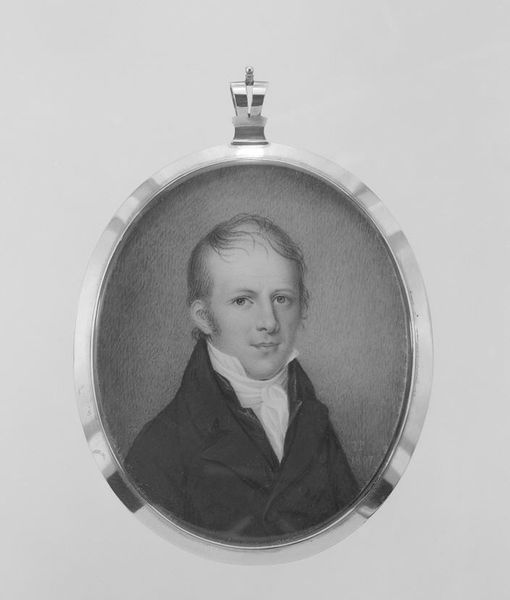
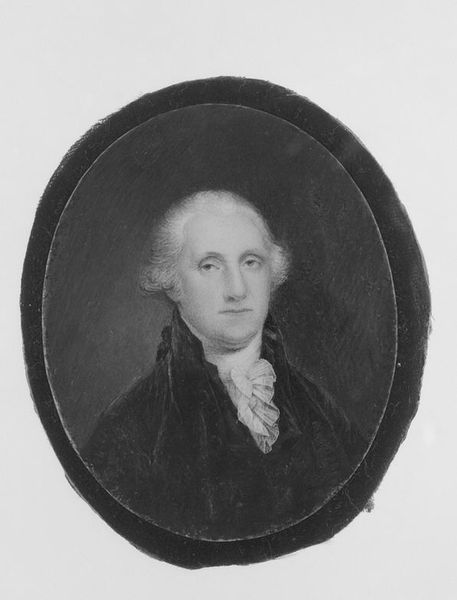
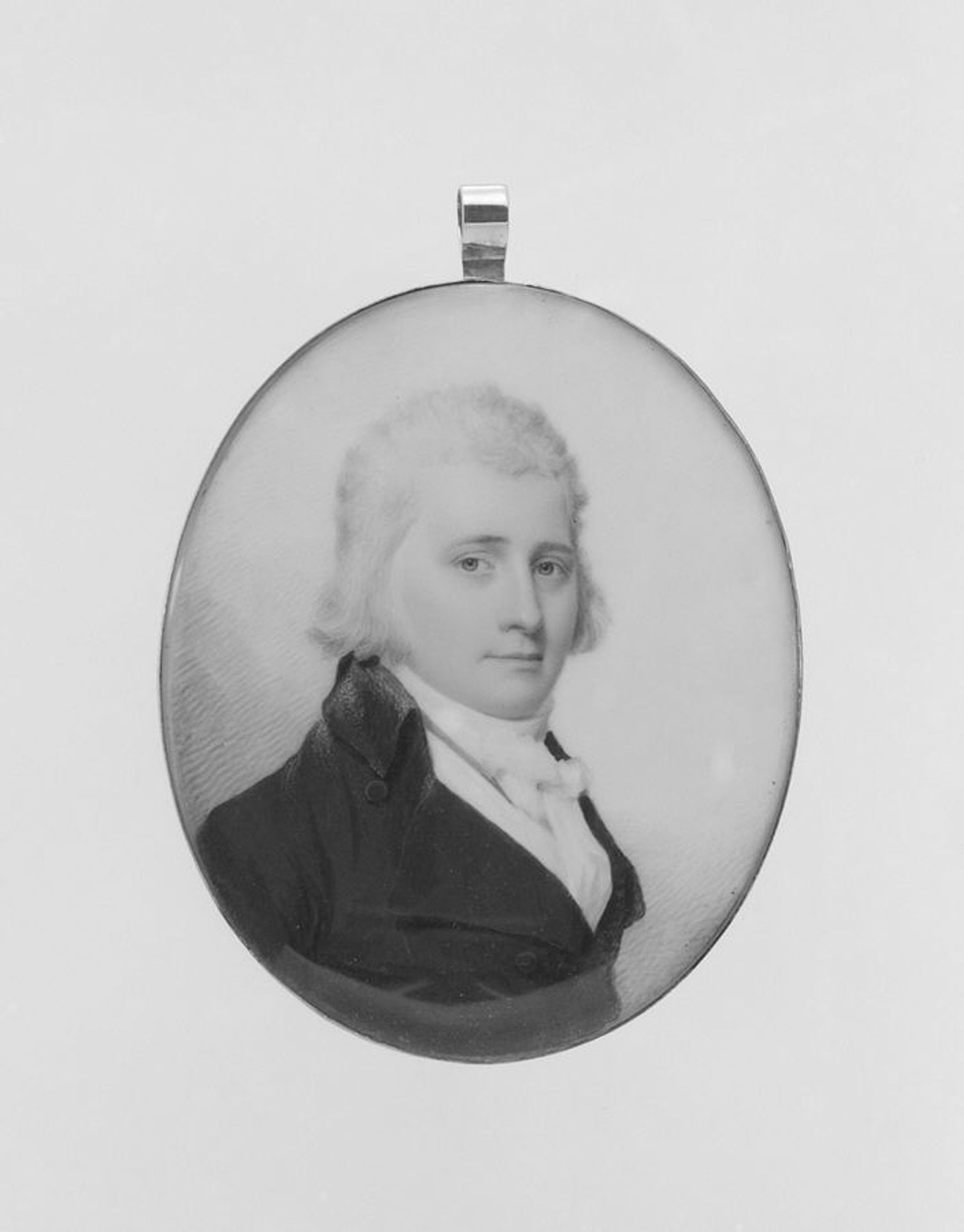
Edward Greene Malbone painted this miniature portrait of Samuel Denman using watercolors on ivory. The choice of ivory as a ground is critical. Its smooth, reflective surface allows for a delicate luminosity, a quality Malbone expertly exploits. Think of the way light seems to emanate from Denman’s face. Applying thin washes of watercolor, Malbone built up layers of tone to capture the sitter's likeness. The precision of the brushwork, especially in rendering the fine details of Denman’s coat and hair, speaks to Malbone’s mastery of the medium. Miniature portraits like this were luxury goods, requiring both artistic skill and access to expensive materials. Their production involved specialized labor, from ivory sourcing to the goldsmithing of the frame. As such, they reflect the economic and social structures of the time. Considering the material reality of this object and the work that went into it allows us to appreciate the craftsmanship and to understand its cultural value.
Samuel Denman
1777 - 1803

Edward Greene Malbone
1777 - 1807
The Metropolitan Museum of Art
Metropolitan Museum of Art, New York, NYArtwork details
- Medium
- drawing, ink
- Dimensions
- 2 13/16 x 2 5/16 in. (7.1 x 5.9 cm)
- Location
- Metropolitan Museum of Art, New York, NY
- Copyright
- Public Domain
Tags
Comments
Share your thoughts
About this artwork
Edward Greene Malbone painted this miniature portrait of Samuel Denman using watercolors on ivory. The choice of ivory as a ground is critical. Its smooth, reflective surface allows for a delicate luminosity, a quality Malbone expertly exploits. Think of the way light seems to emanate from Denman’s face. Applying thin washes of watercolor, Malbone built up layers of tone to capture the sitter's likeness. The precision of the brushwork, especially in rendering the fine details of Denman’s coat and hair, speaks to Malbone’s mastery of the medium. Miniature portraits like this were luxury goods, requiring both artistic skill and access to expensive materials. Their production involved specialized labor, from ivory sourcing to the goldsmithing of the frame. As such, they reflect the economic and social structures of the time. Considering the material reality of this object and the work that went into it allows us to appreciate the craftsmanship and to understand its cultural value.
Comments
Share your thoughts