About this artwork
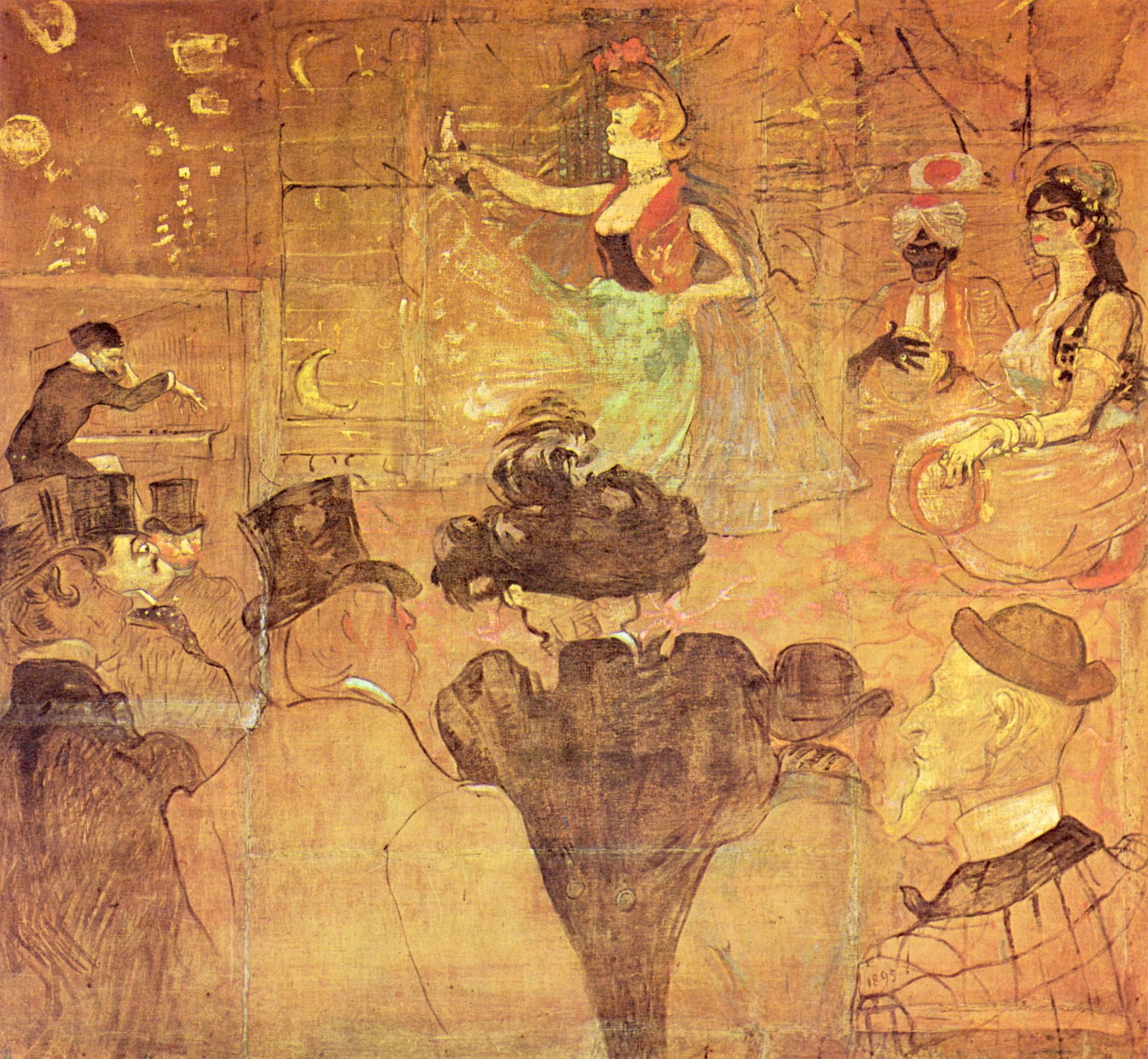
Henri de Toulouse-Lautrec painted Booth of La Goulue at the Foire du Trone using oil on canvas. The loose brushstrokes and earthy palette give a sense of the excitement of the fairground. Lautrec was working in a tradition of large-scale decorative painting, but he brought to it the directness and energy of the poster, a medium closely tied to the rise of consumer culture. This is evident in the way he applies the paint thinly, almost like a stain, rather than building up layers of pigment. The effect is to flatten the image, emphasizing its graphic quality, and to capture the fleeting atmosphere of a popular entertainment. Notice how the artist uses the very limited materials to evoke the spectacle of the stage, the fashionable audience, and the overall mood of the fair. Toulouse-Lautrec wasn't just depicting a scene, he was also participating in the commercial culture that it represented. By considering the materials, making, and context, we gain a deeper understanding of the work, and a challenge to traditional distinctions between fine art and craft.
Booth of La Goulue at the Foire du Trone (The Moorish Dance)
1895


Artwork details
- Dimensions
- 285 x 307.5 cm
- Location
- Musée d'Orsay, Paris, France
- Copyright
- Public domain
Comments
Share your thoughts
About this artwork
Henri de Toulouse-Lautrec painted Booth of La Goulue at the Foire du Trone using oil on canvas. The loose brushstrokes and earthy palette give a sense of the excitement of the fairground. Lautrec was working in a tradition of large-scale decorative painting, but he brought to it the directness and energy of the poster, a medium closely tied to the rise of consumer culture. This is evident in the way he applies the paint thinly, almost like a stain, rather than building up layers of pigment. The effect is to flatten the image, emphasizing its graphic quality, and to capture the fleeting atmosphere of a popular entertainment. Notice how the artist uses the very limited materials to evoke the spectacle of the stage, the fashionable audience, and the overall mood of the fair. Toulouse-Lautrec wasn't just depicting a scene, he was also participating in the commercial culture that it represented. By considering the materials, making, and context, we gain a deeper understanding of the work, and a challenge to traditional distinctions between fine art and craft.
Comments
Share your thoughts