#
aged paper
#
toned paper
#
asian-art
#
sketch book
#
personal sketchbook
#
coloured pencil
#
sketchbook drawing
#
watercolour bleed
#
watercolour illustration
#
sketchbook art
#
watercolor
Copyright: Public Domain: Artvee
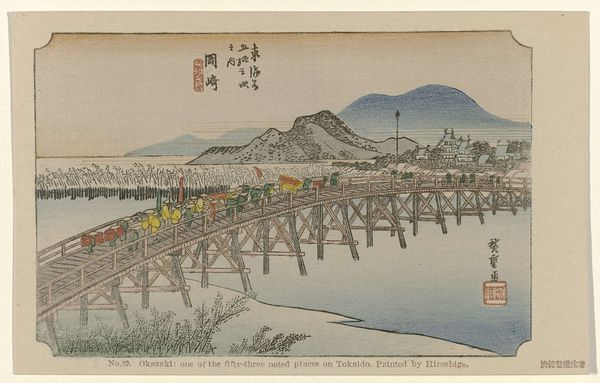
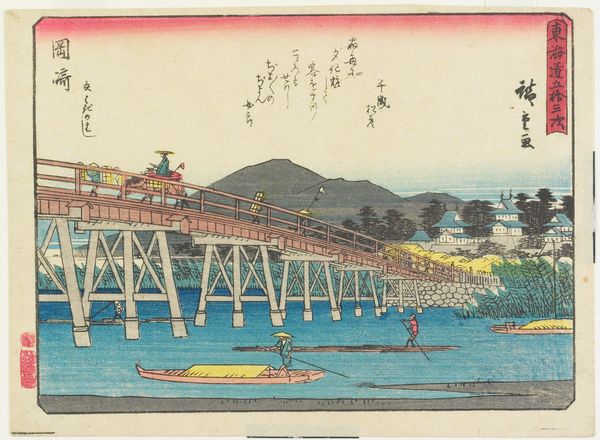
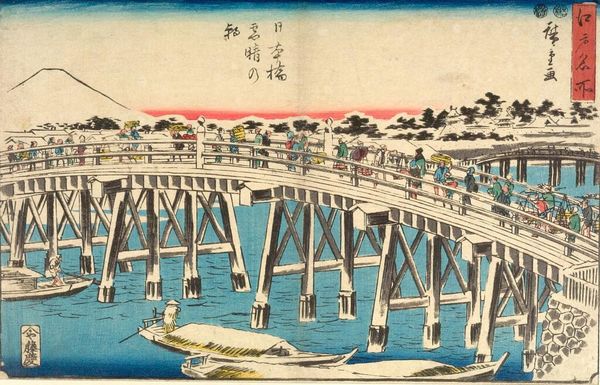
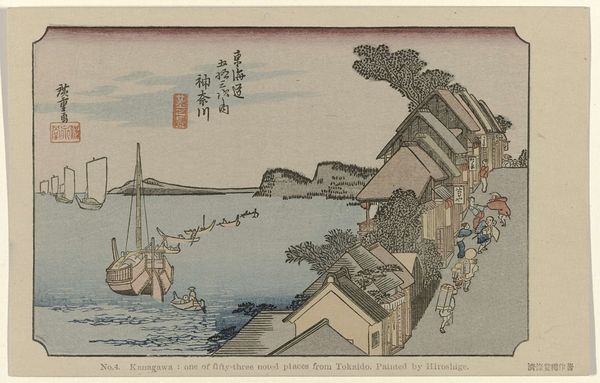
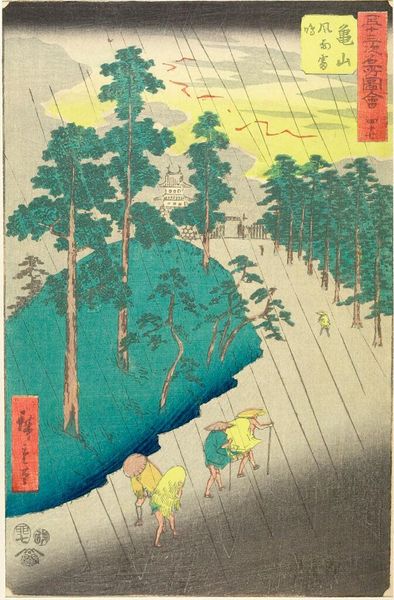
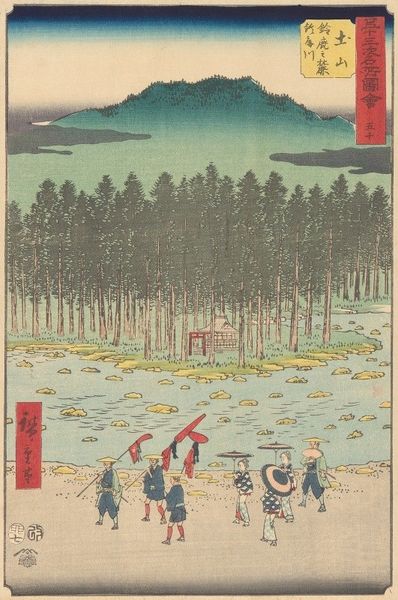
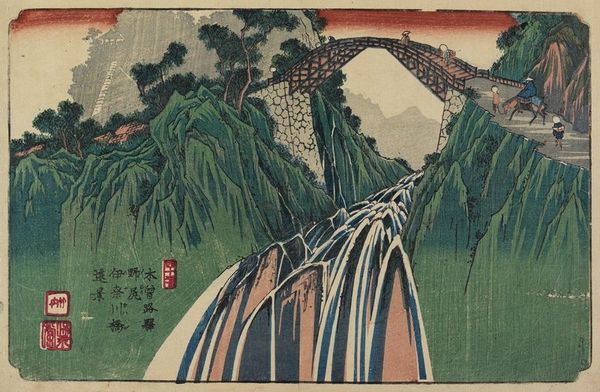
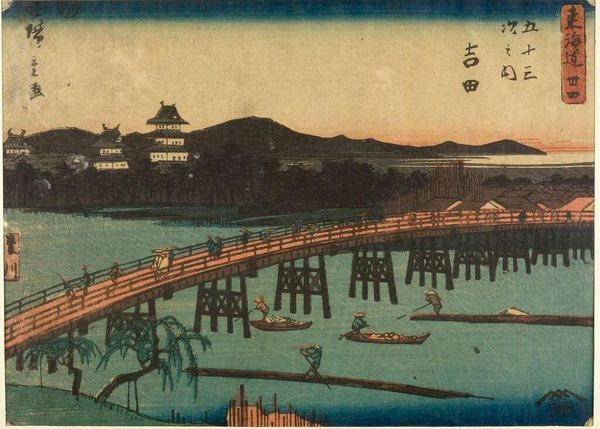
Curator: Immediately, the tranquility strikes me. A certain subdued harmony despite the architectural presence of the bridge. Editor: Indeed, there's a quiet stillness. We're looking at "Okazaki," a woodblock print by Utagawa Hiroshige, created around 1855, part of his series *Fifty-three Stations of the Tōkaidō*. It depicts a scene from the Tōkaidō road. Curator: That road was central to Japan's cultural landscape. The print captures a place of passage, of exchange, but rendered so intimately. The people crossing, those with the horse… It almost feels like a dreamscape of figures in transit. Editor: The Tōkaidō was a vital artery. This image likely reflects the social and economic changes occurring as Japan opened to the world. These prints were essentially mass-produced travel souvenirs for a growing merchant class. Note the strategic placement of figures suggesting a shared, mobile experience. Curator: Mobile indeed, but rooted in deeply personal journeys. Even the aged paper it’s printed on speaks of time's passage. How fascinating that it captures not just a physical place but an emotional state, the feeling of being both grounded and on the move, as humans always are. It feels almost archetypal. Editor: That sense of emotional resonance also reflects the politics of landscape depiction at the time. The print participates in constructing a national identity while responding to burgeoning public desire for travel imagery. The almost postcard feel isn’t accidental; these scenes normalized the landscape. Curator: So you are saying that mass distribution made this deeply personal journey commonplace and impersonal? I can’t agree that collective imagery negates individual symbolism; these visual themes continue to evoke personal meanings long after their political beginnings are gone. The individual will always seek meaning through the symbols of their society. Editor: Interesting… But what happens when those symbols themselves are used as tools of the powerful, intentionally? I'd say that any symbol is a shared agreement, and we, the beholders, always negotiate with that imagery to define the zeitgeist of a society at a given time. Curator: So while the journey continues, our discussions on the nature of its image linger… Editor: And as such, influence future readings.
Comments
No comments
Be the first to comment and join the conversation on the ultimate creative platform.
 Collect
 React
React Comment
More like this