1777 - 1779
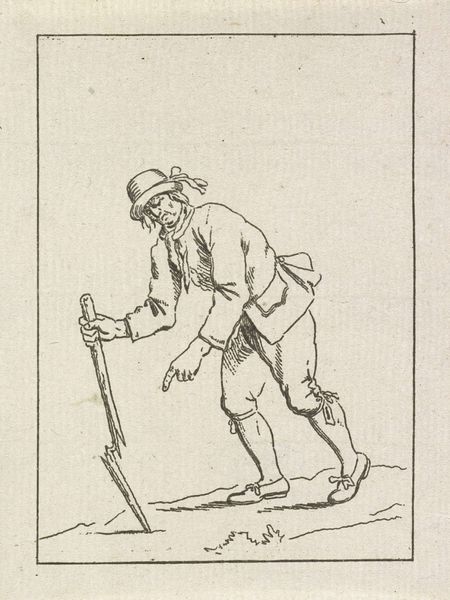
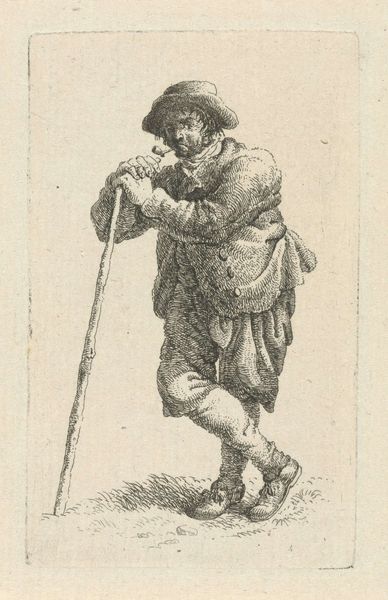
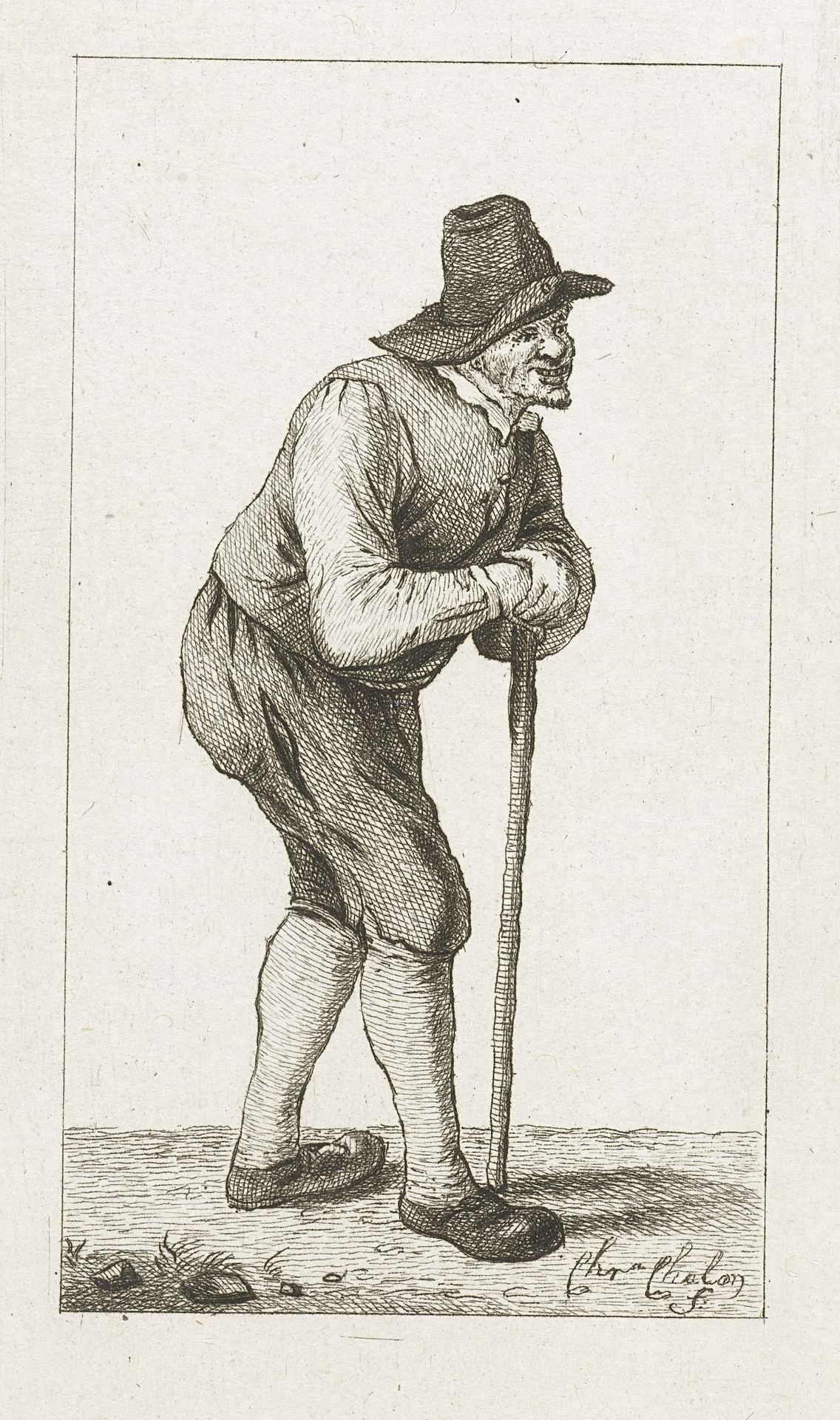
Man leunend op stok

Pieter de Mare
1758 - 1796Location
RijksmuseumListen to curator's interpretation
Curatorial notes
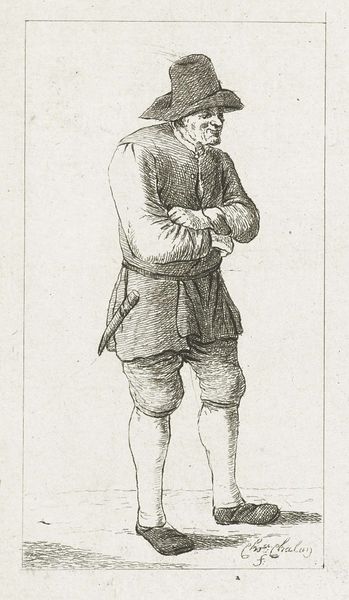
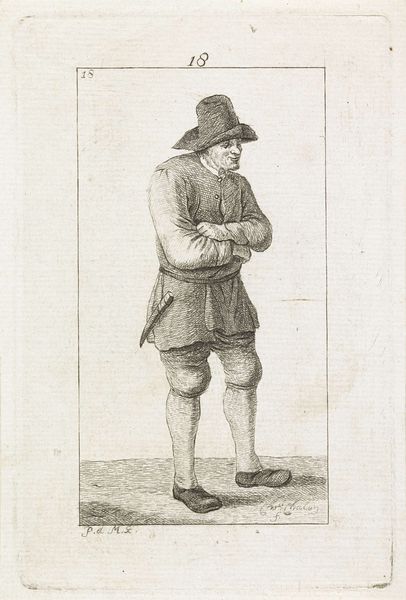
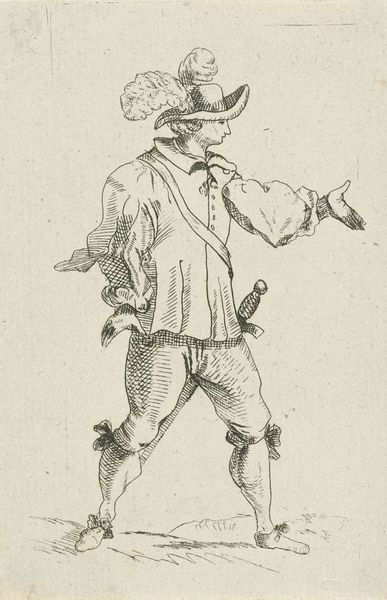
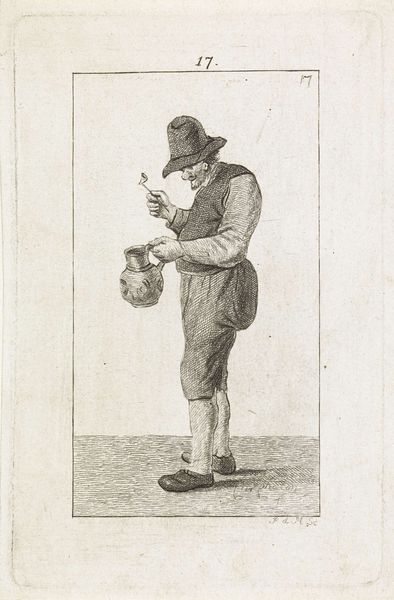
Editor: Here we have Pieter de Mare’s “Man leunend op stok,” a pen and pencil drawing on paper from between 1777 and 1779, housed at the Rijksmuseum. It's a pretty simple sketch of a man leaning on a walking stick... sort of comical. What do you see in this piece? Curator: I see a representation of labor, of class, and perhaps even resistance embedded within what seems like a simple sketch. Think about it: this is the late 18th century. How are working-class individuals represented, and by whom? De Mare offers a glimpse into a life often unseen, uncelebrated in mainstream art. The figure's posture, his worn clothing – they speak to a daily grind. Editor: So you're saying it's more than just a random drawing? Curator: Precisely. The 'genre-painting' aspect is critical. De Mare's drawing challenges the period's artistic norms by giving visibility to everyday existence, offering, even if subtly, a challenge to established power dynamics. Think about how the ruling classes might perceive such an image. Editor: That’s interesting. I never would have thought of it that way. Does the fact that it’s a sketch influence that? Curator: Absolutely. The sketch format can be seen as immediate and unfiltered, contrasting the polished, often propagandistic portraits of the elite. It humanizes its subject outside the established systems for legitimizing individuals. Editor: So the drawing becomes almost like a political statement? Curator: Exactly. Art doesn’t exist in a vacuum. Looking at art through an intersectional lens makes even the simplest sketch resonate with potent historical and social meaning. Editor: Wow, that really changed my perspective! It's amazing how much context can impact the way we see something. Curator: Indeed! It shows that the personal is always political, even in art.