c. 1664
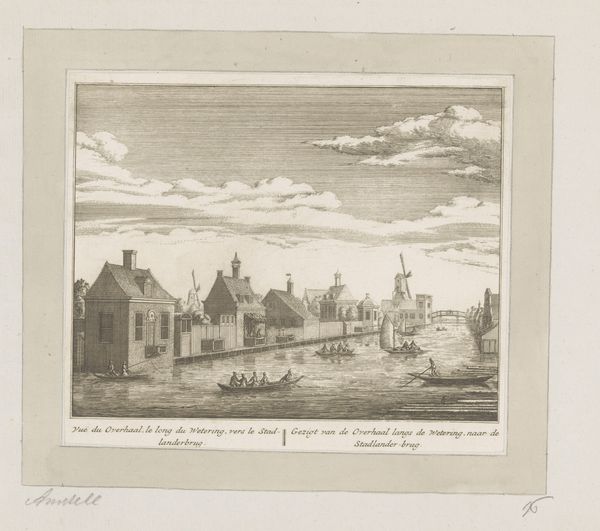
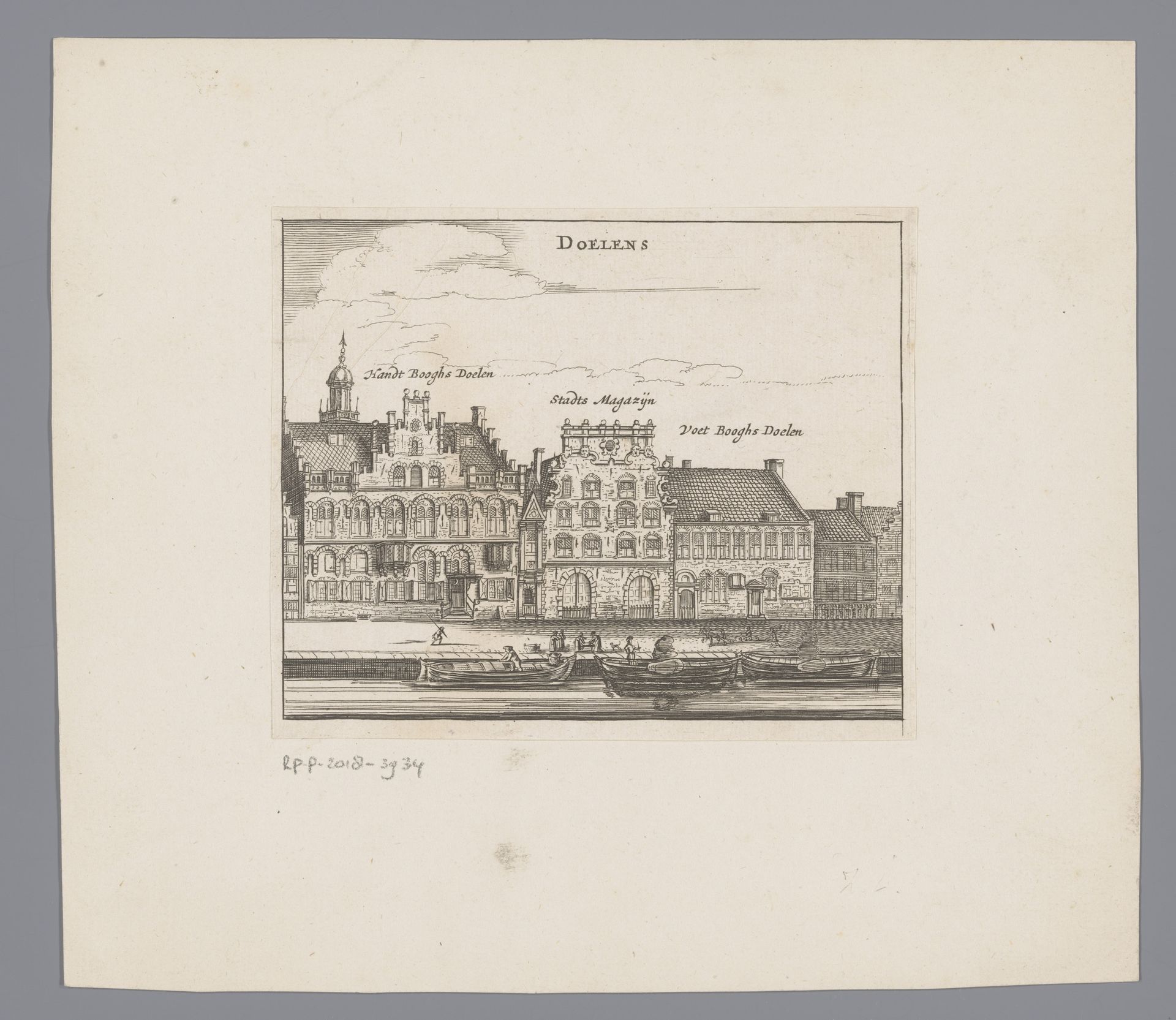
Gezicht op de Handboogdoelen, het Stadsmagazijn (Bushuis) en de Voetboogdoelen te Amsterdam

Jan Veenhuysen
1625 - 1693Location
RijksmuseumListen to curator's interpretation
Curatorial notes
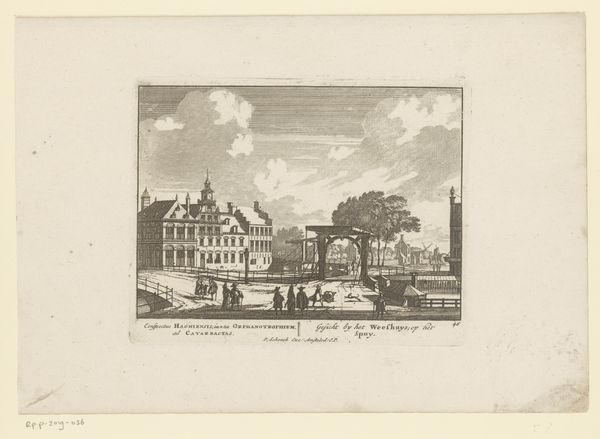
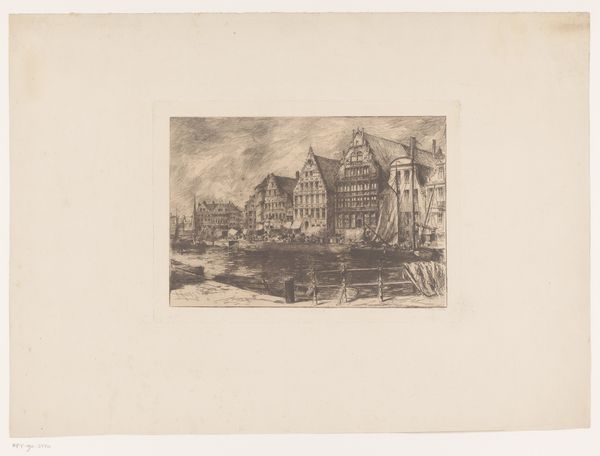
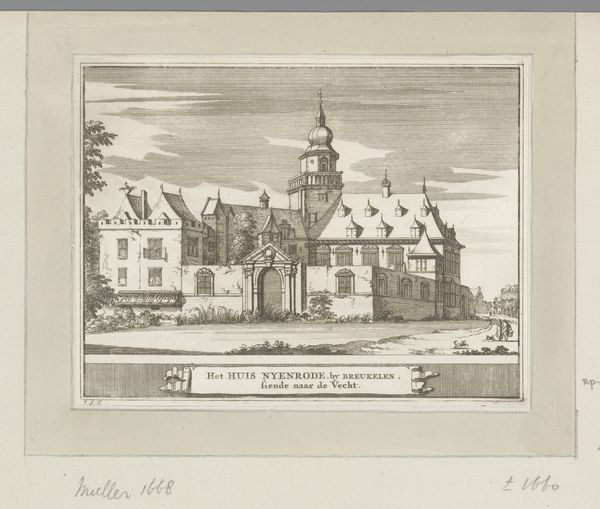
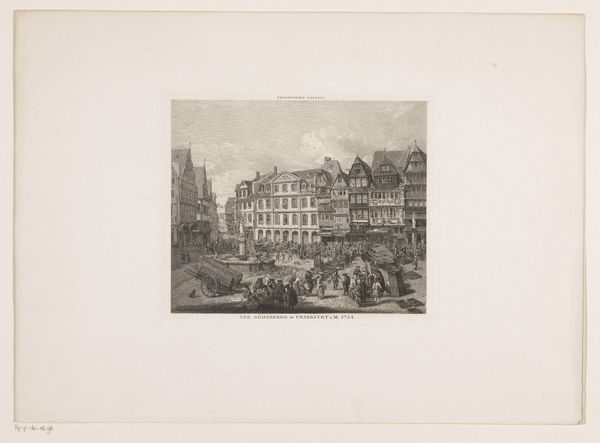
Curator: Here we have a print by Jan Veenhuysen from around 1664, titled "View of the Handboogdoelen, the City Warehouse (Bushuis) and the Voetboogdoelen in Amsterdam." It’s an engraving, giving us a glimpse of the city during the Dutch Golden Age. Editor: My initial reaction is… orderly. It’s precise, almost clinical. The lines are so neat, everything in its place. But somehow, despite all that control, it feels oddly peaceful. Like a perfectly composed still life, but of buildings. Curator: It is a remarkably accurate depiction. The Handboogdoelen, Stadsmagazijn and Voetboogdoelen were all significant buildings, and Veenhuysen captures their architectural details with a high degree of fidelity. This speaks to the function of such prints at the time, documenting the city’s progress and important civic structures. Editor: Yes, I see it now, each line like a calculated step in constructing an entire world. Those ripples on the water feel more profound; there’s a sense of observation of something bigger than a singular image here, though that building on the left makes me feel uneasy with its steeple resembling something darker on top, maybe it's nothing, I might just be overly dramatic with symbolism sometimes. Curator: Well, it is the tower for civic guard training; its function might have some bearing on those dark symbolic elements. Furthermore, Veenhuysen’s decision to use line engraving elevates the imagery in this depiction. Its popularity within the city suggests a culture keen to project the republic’s strength. Editor: I guess so. And yet, despite the underlying seriousness of civic projection, that bright atmosphere wins. There's a quiet, steady beauty present that I appreciate. Something about how light defines each space with subtle nuances in every carefully rendered facade, I just find that the most stunning thing about this, honestly. Curator: Precisely. By combining architectural accuracy with artistic rendering, Veenhuysen encapsulates not only the physical appearance but also the social and cultural identity of 17th-century Amsterdam. A real testimony to this era, wouldn’t you agree? Editor: Absolutely. You know, initially, the artwork’s precision felt a little cold to me. Now, having spoken to it a bit more, I see its elegance; not clinical at all—simply thoughtful, considered. Curator: Yes, and understanding its historical and cultural context only enriches our appreciation. A fascinating work, to say the least.