About this artwork
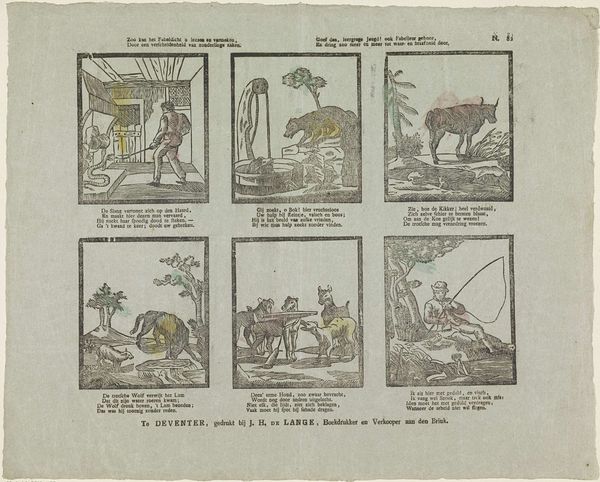
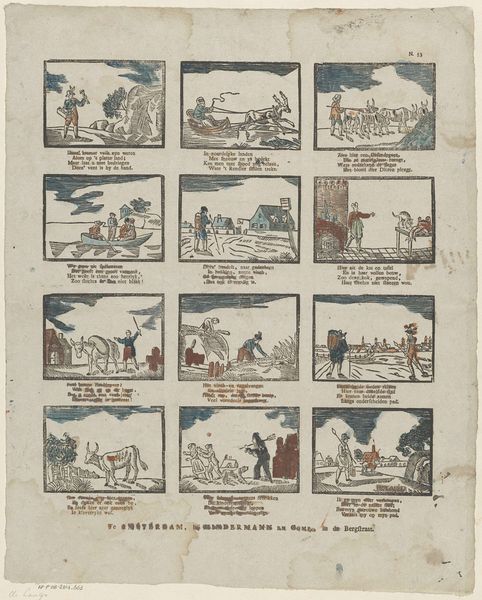
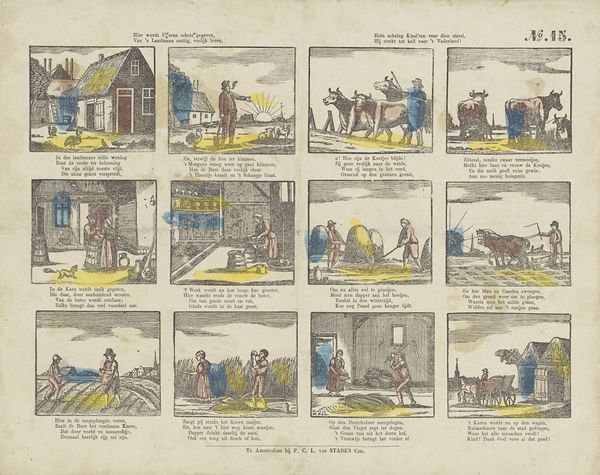
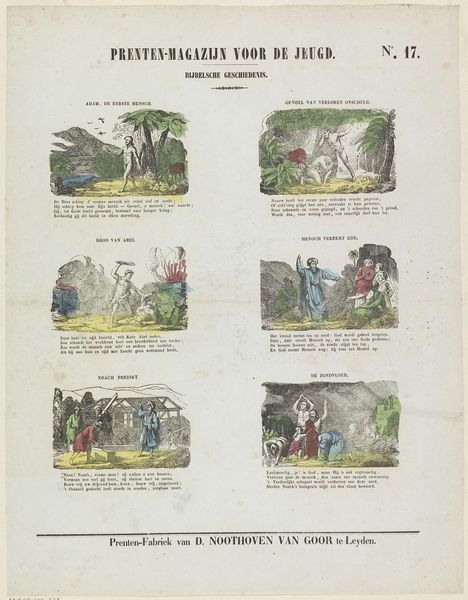
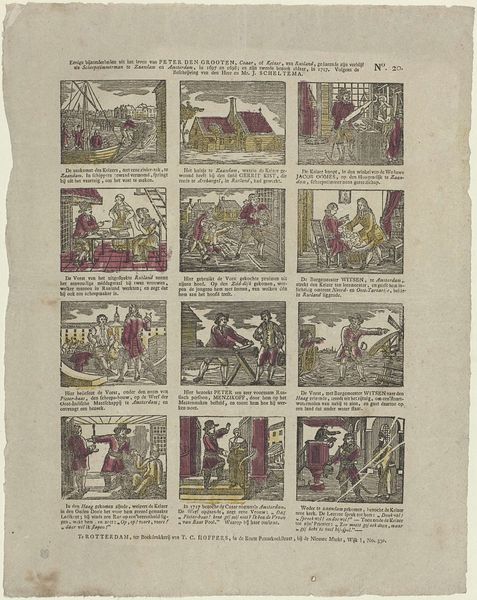
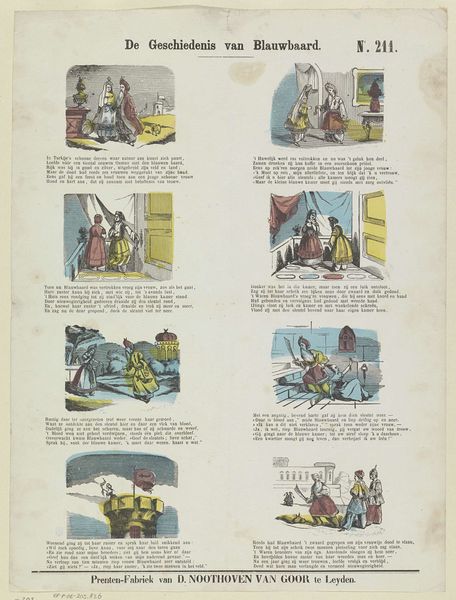
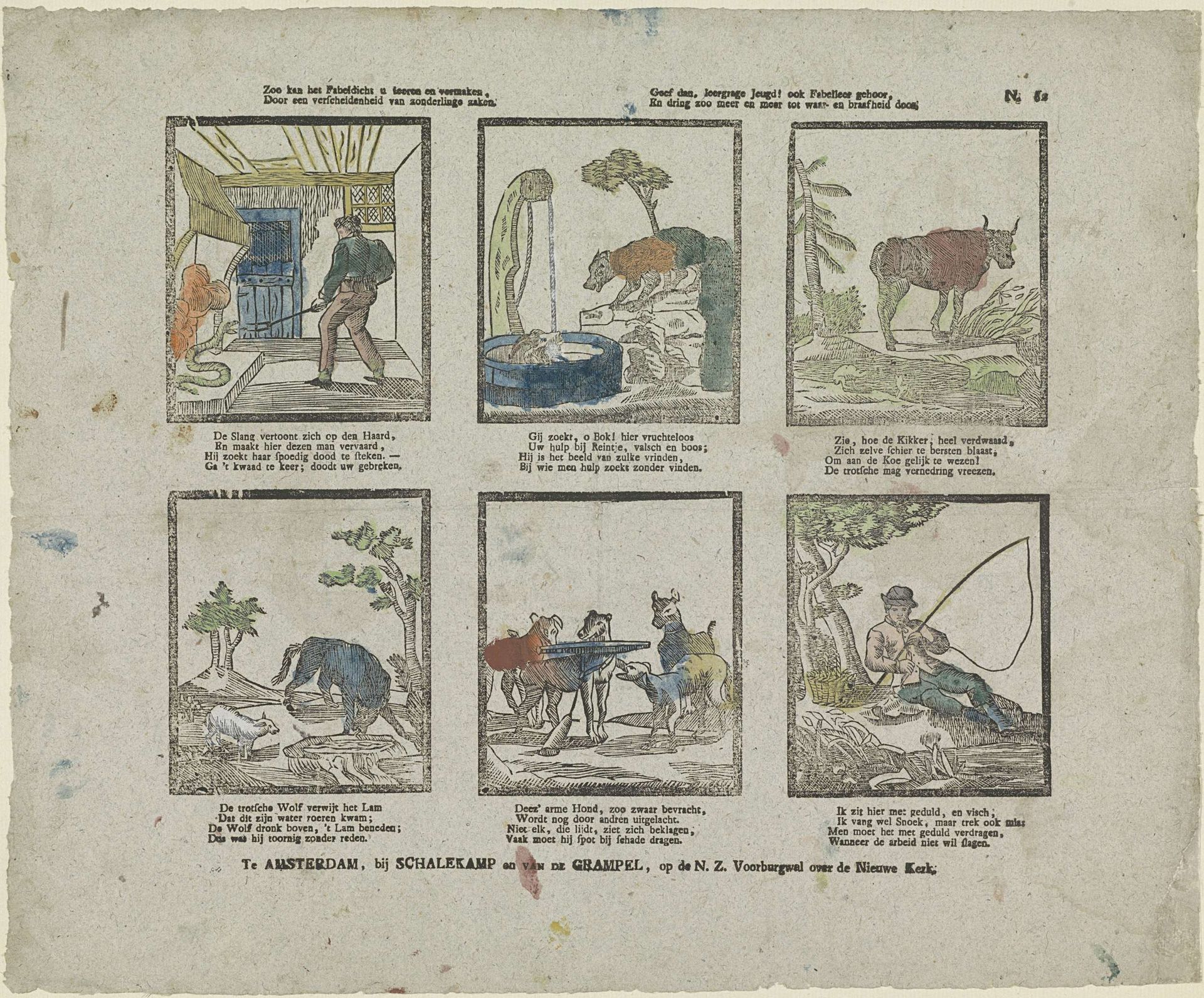
This undated print by Schalekamp & Van de Grampel, presents six narrative scenes in small, rectangular frames, each with a distinct composition and textural quality achieved through etching and hand-coloring. The coarse lines and muted tones create an archaic, fable-like atmosphere. The structure of the print, arranged in a grid, suggests a sequential reading, almost like a comic strip conveying moral lessons through animal allegories. Each scene, despite its simplicity, utilizes spatial depth and symbolic elements to construct its message. The interplay between text and image invites us to decode the print’s layered meanings. The print functions as a semiotic system where animals and humans represent broader concepts of vice and virtue. The combination of visual and textual elements challenges any singular interpretation, encouraging a continuous engagement with the work's philosophical underpinnings.
Zoo kan het fabeldicht u leeren en vermaken, / Door een verscheidenheid van zonderlinge zaken. / Geef dan, leergrage jeugd! ook fabelleer gehoor, / En dring zoo meer en meer tot waar- en braafheid door
c. 1806 - 1837

Schalekamp & Van de Grampel
@schalekampvandegrampelLocation
RijksmuseumArtwork details
- Medium
- print, engraving
- Dimensions
- height 336 mm, width 408 mm
- Location
- Rijksmuseum
- Copyright
- Rijks Museum: Open Domain
Tags
Comments
Share your thoughts
About this artwork
This undated print by Schalekamp & Van de Grampel, presents six narrative scenes in small, rectangular frames, each with a distinct composition and textural quality achieved through etching and hand-coloring. The coarse lines and muted tones create an archaic, fable-like atmosphere. The structure of the print, arranged in a grid, suggests a sequential reading, almost like a comic strip conveying moral lessons through animal allegories. Each scene, despite its simplicity, utilizes spatial depth and symbolic elements to construct its message. The interplay between text and image invites us to decode the print’s layered meanings. The print functions as a semiotic system where animals and humans represent broader concepts of vice and virtue. The combination of visual and textual elements challenges any singular interpretation, encouraging a continuous engagement with the work's philosophical underpinnings.
Comments
Share your thoughts