About this artwork
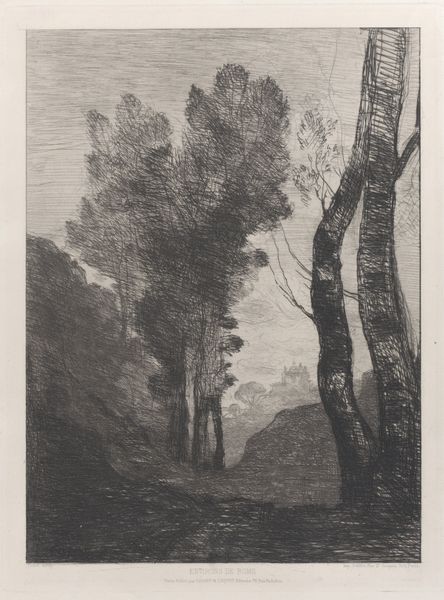
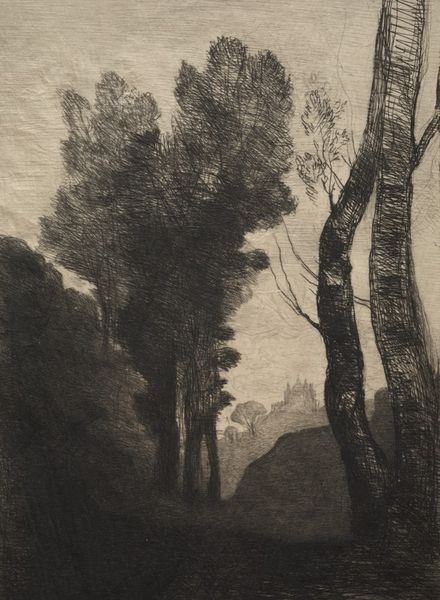
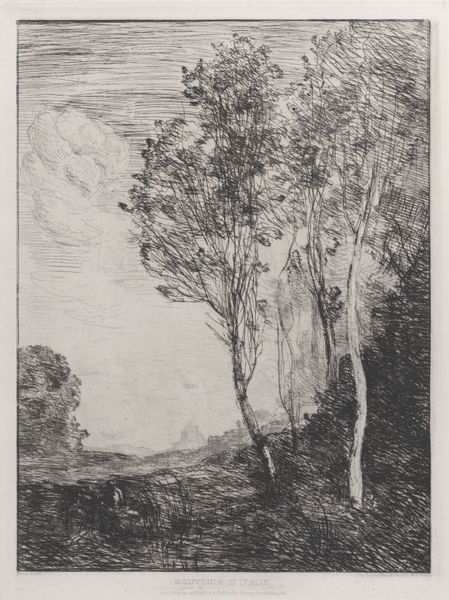
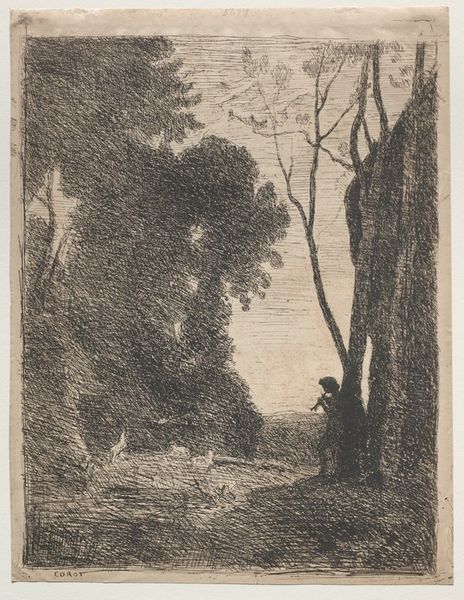
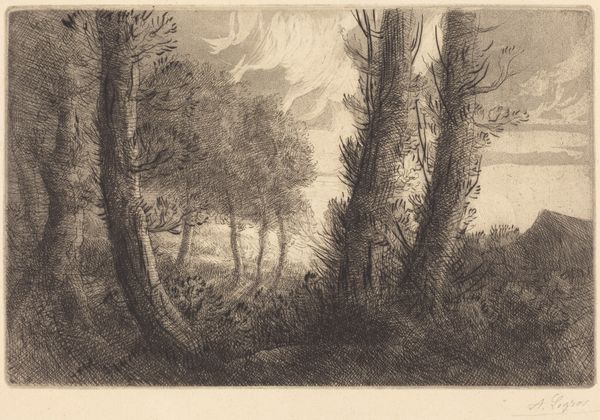
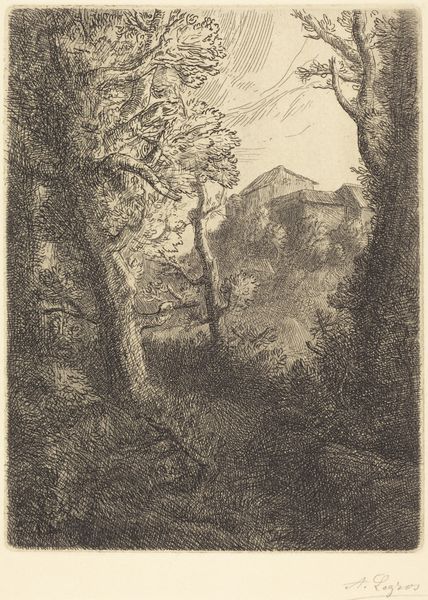
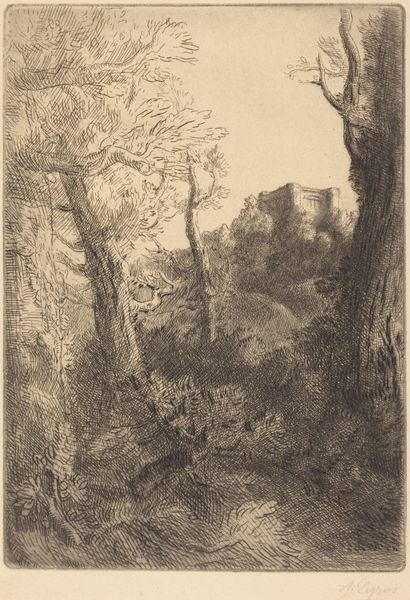
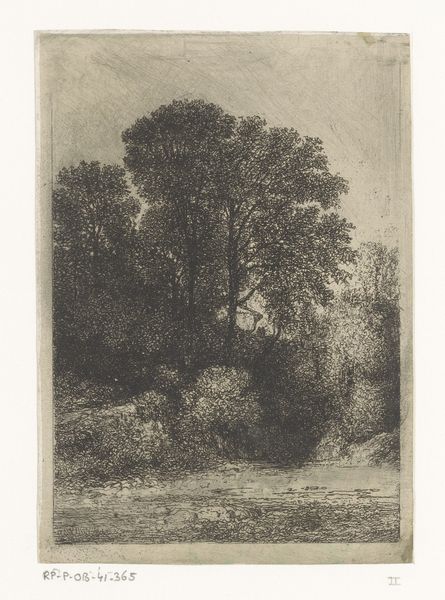
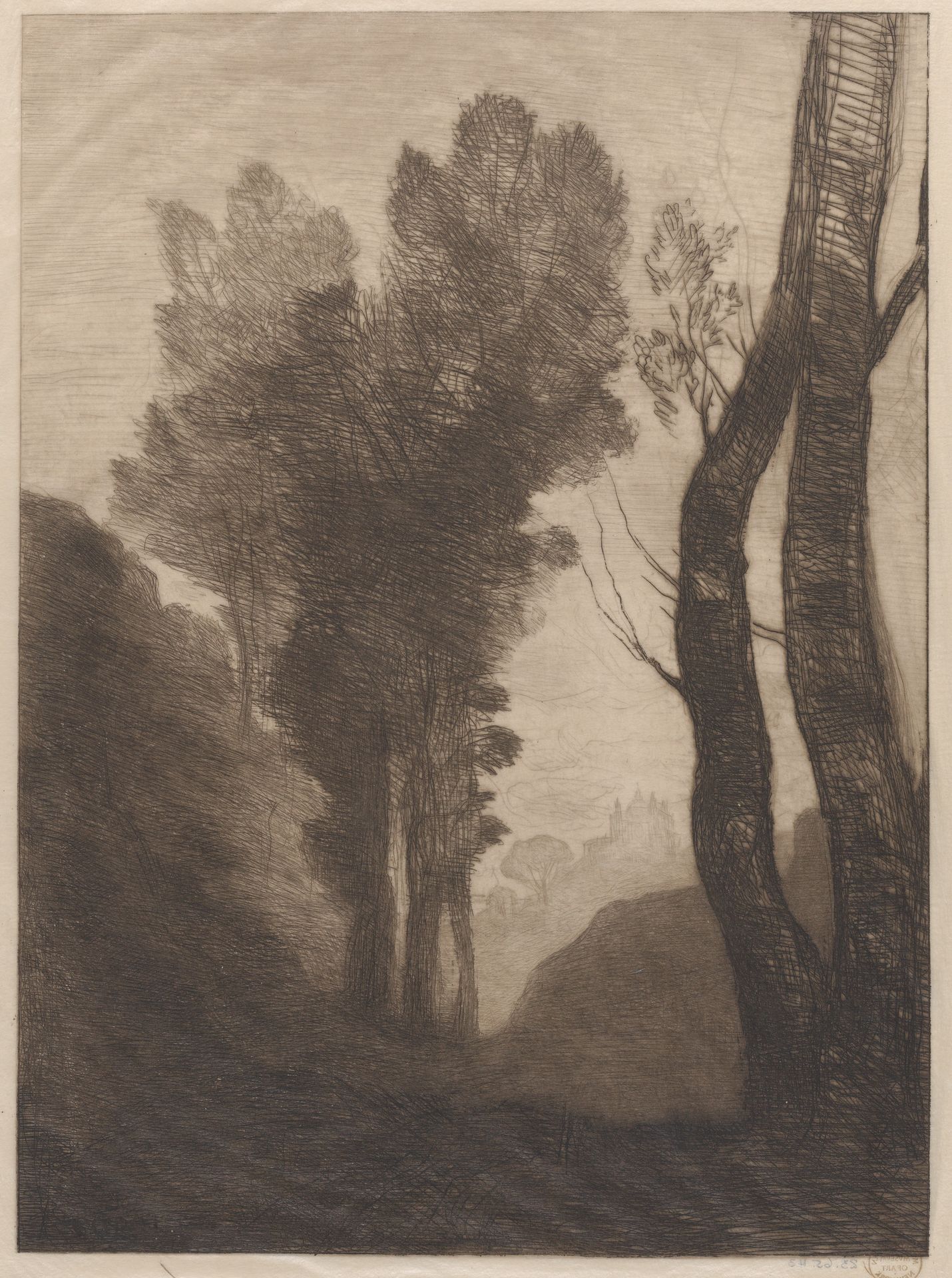
Camille Corot etched this print, Environs of Rome, capturing the landscape with a delicate dance of light and shadow. Dominating the scene are the trees, symbols deeply rooted in cultural memory. From ancient myths to Renaissance paintings, trees have represented life, growth, and connection to the earth. Think of the Tree of Knowledge, or the sacred groves of classical antiquity. Here, the trees reach upwards, almost yearning, and they remind us of similar motifs found in earlier works, like Caspar David Friedrich's solitary trees, embodying a longing for nature and the sublime. Yet, Corot’s trees possess a unique quality. The bare branches evoke feelings of melancholy, a sense of impermanence. This emotional landscape echoes through time, reappearing in various forms, reflecting our enduring, subconscious connection to the natural world. The cycle continues, as symbols do, through art and human experience.
Environs of Rome 1866


Artwork details
- Medium
- drawing, print, etching, intaglio
- Dimensions
- Plate: 11 3/8 × 8 3/8 in. (28.9 × 21.2 cm) Sheet: 14 3/8 × 10 13/16 in. (36.5 × 27.5 cm)
- Location
- Metropolitan Museum of Art, New York, NY
- Copyright
- Public Domain
Tags
tree
drawing
impressionism
etching
intaglio
landscape
figuration
pencil drawing
line
realism
Comments
No comments
About this artwork
Camille Corot etched this print, Environs of Rome, capturing the landscape with a delicate dance of light and shadow. Dominating the scene are the trees, symbols deeply rooted in cultural memory. From ancient myths to Renaissance paintings, trees have represented life, growth, and connection to the earth. Think of the Tree of Knowledge, or the sacred groves of classical antiquity. Here, the trees reach upwards, almost yearning, and they remind us of similar motifs found in earlier works, like Caspar David Friedrich's solitary trees, embodying a longing for nature and the sublime. Yet, Corot’s trees possess a unique quality. The bare branches evoke feelings of melancholy, a sense of impermanence. This emotional landscape echoes through time, reappearing in various forms, reflecting our enduring, subconscious connection to the natural world. The cycle continues, as symbols do, through art and human experience.
Comments
No comments