About this artwork
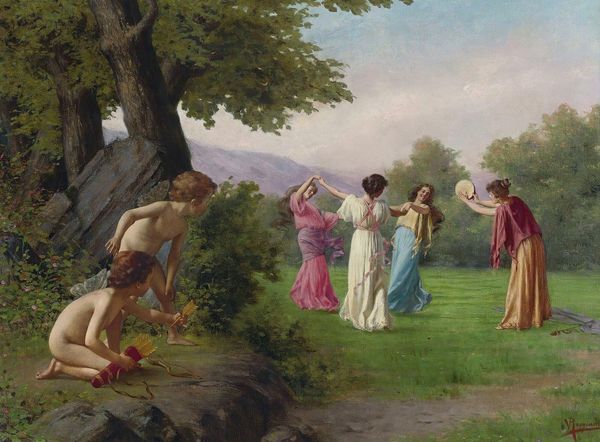
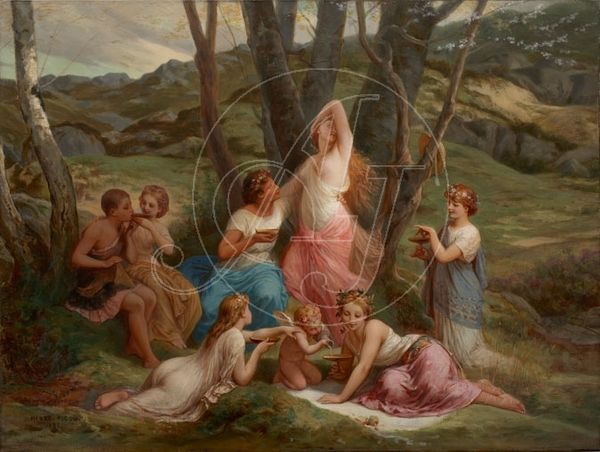
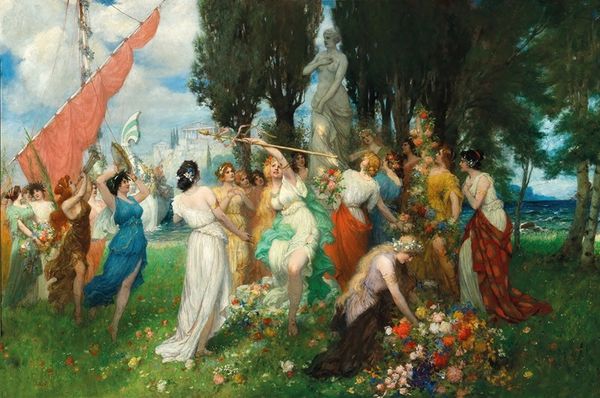
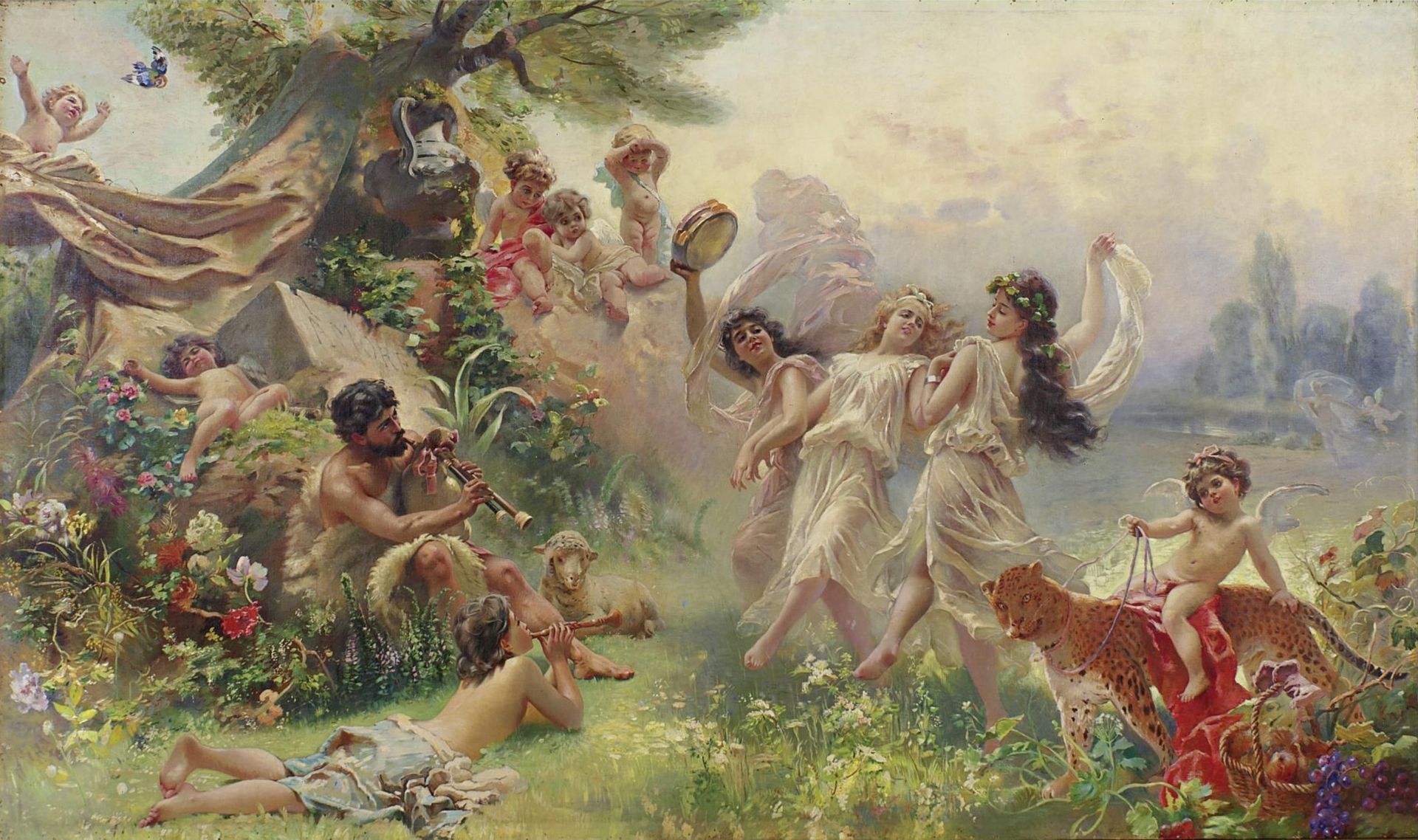
Konstantin Makovsky created this oil on canvas, titled Happy Arcadia, which presents a classical scene infused with a vibrant, almost dreamlike quality. The composition, organized into distinct foreground and background elements, draws you into a world of mythical delight. The arrangement and soft color palette evoke a sense of idealized naturalism. In the foreground, observe the lively scene with dancing nymphs, playing cupids, and a reclining satyr. Note the artist's use of light and shadow to define form. The figures seem to float and dance in a carefree abandon. The semiotic potential here is the contrast between the earthly and ethereal planes. The background, with its blurred, hazy landscape, provides a stage for the unfolding drama. The artist emphasizes the painting's formal qualities to convey a sense of timelessness and aesthetic harmony. This artwork invites viewers to contemplate the enduring relevance of classical themes in art and culture.

Artwork details
- Dimensions
- 220 x 364 cm
- Location
- Private Collection
- Copyright
- Public domain
Comments
Share your thoughts
About this artwork
Konstantin Makovsky created this oil on canvas, titled Happy Arcadia, which presents a classical scene infused with a vibrant, almost dreamlike quality. The composition, organized into distinct foreground and background elements, draws you into a world of mythical delight. The arrangement and soft color palette evoke a sense of idealized naturalism. In the foreground, observe the lively scene with dancing nymphs, playing cupids, and a reclining satyr. Note the artist's use of light and shadow to define form. The figures seem to float and dance in a carefree abandon. The semiotic potential here is the contrast between the earthly and ethereal planes. The background, with its blurred, hazy landscape, provides a stage for the unfolding drama. The artist emphasizes the painting's formal qualities to convey a sense of timelessness and aesthetic harmony. This artwork invites viewers to contemplate the enduring relevance of classical themes in art and culture.
Comments
Share your thoughts