1938
Arabesques


Listen to curator's interpretation
Curatorial notes
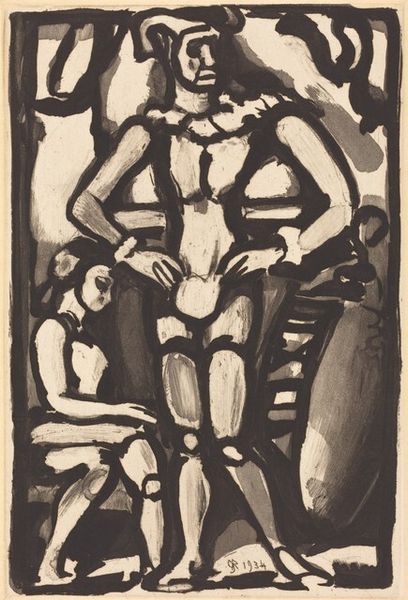
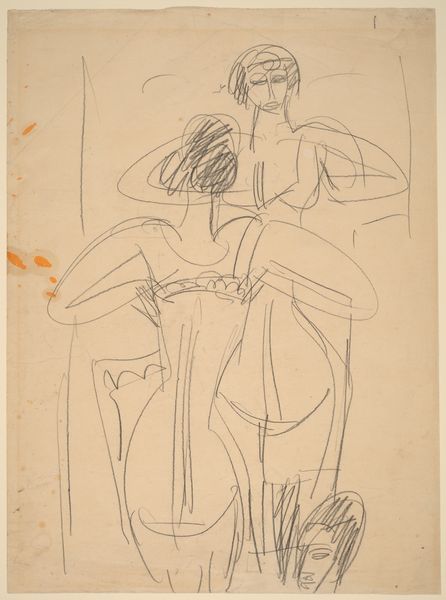
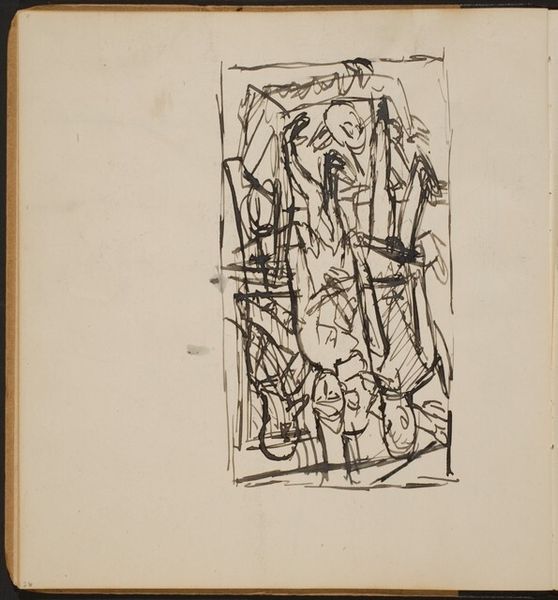
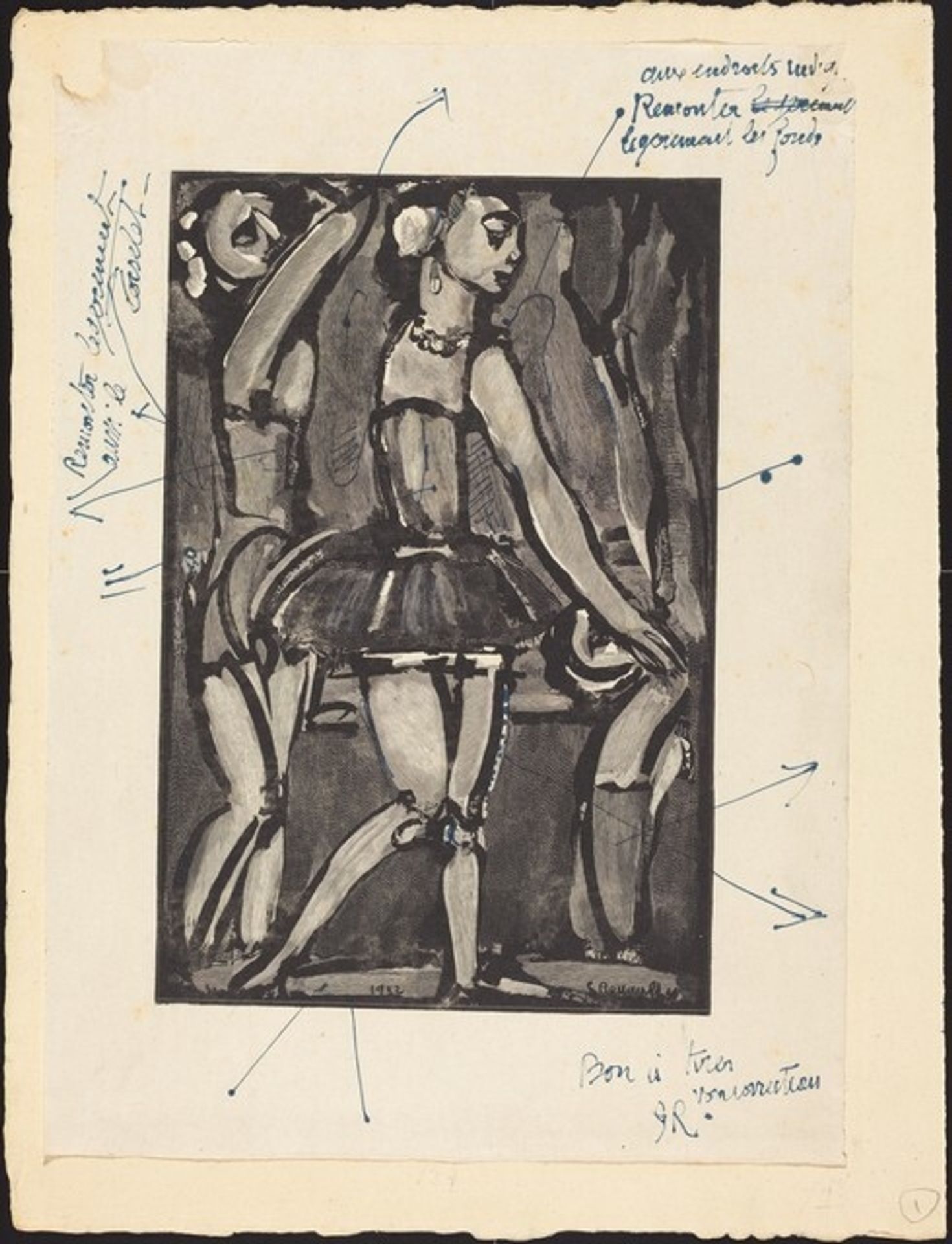
This black ink drawing, “Arabesques,” is by Georges Rouault, though the date of production is unknown. Rouault's fluid and gestural approach to the figures’ contours hints at a fascination with the art-making process itself. He creates a dynamic interplay between light and shadow, with stark contrasts that lend the figures a weighty, almost sculptural presence. Look at the ballerina's tutu. The strokes are both delicate and forceful, capturing the fabric's lightness while giving it depth. He manages to create a sense of volume and movement, as if we are seeing the dancer mid-twirl. It’s not too dissimilar to the work of Degas, who also loved dancers, though this has a much more brutal, less romantic quality. Ultimately, "Arabesques" reminds us that art isn't about capturing a single, definitive truth. Instead, it's about embracing ambiguity, celebrating the ever-evolving dance between the artist, the subject, and the viewer.