About this artwork
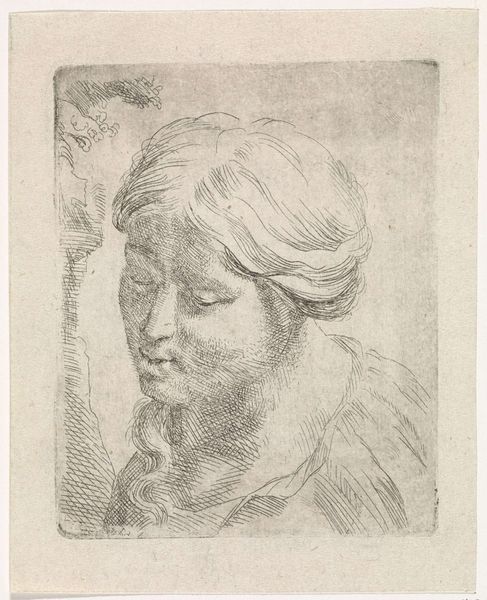
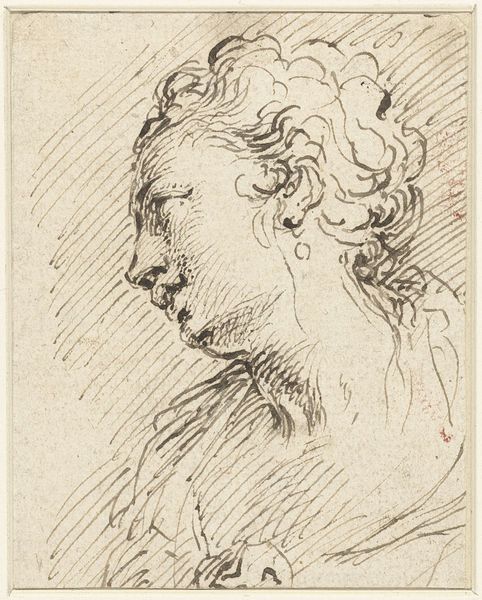
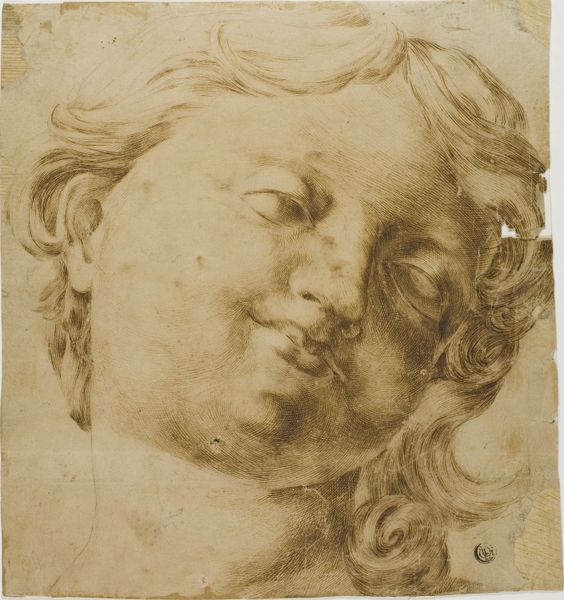
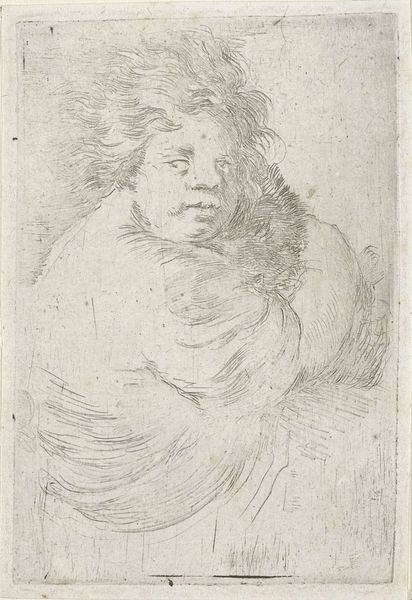
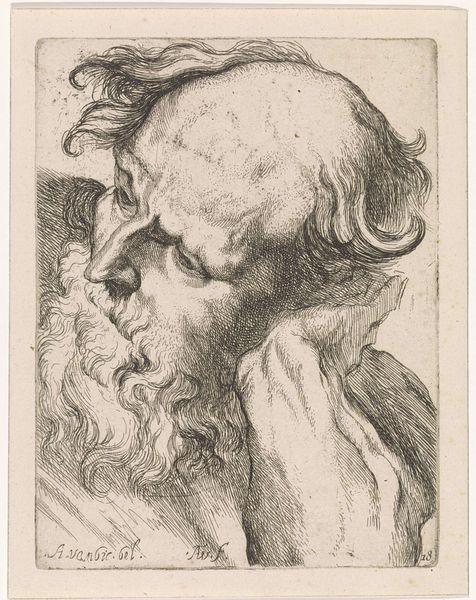
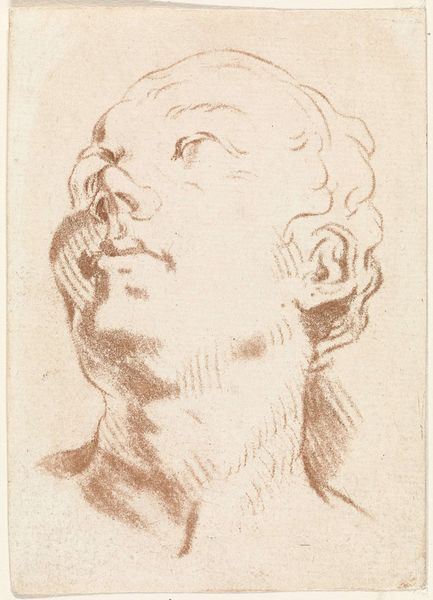
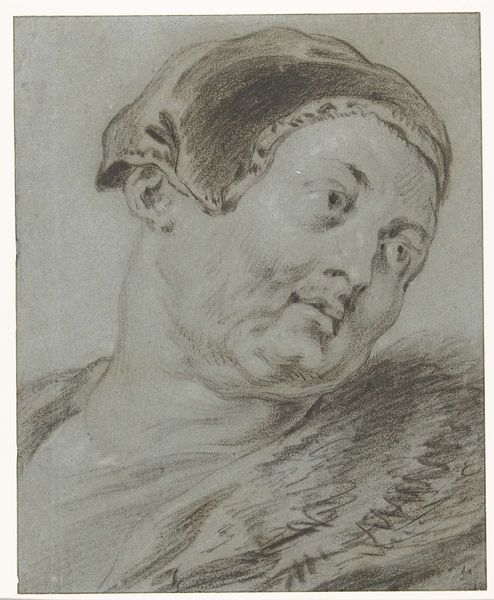
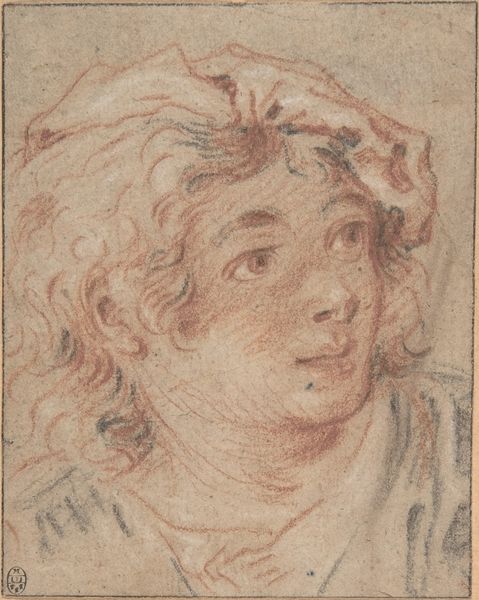
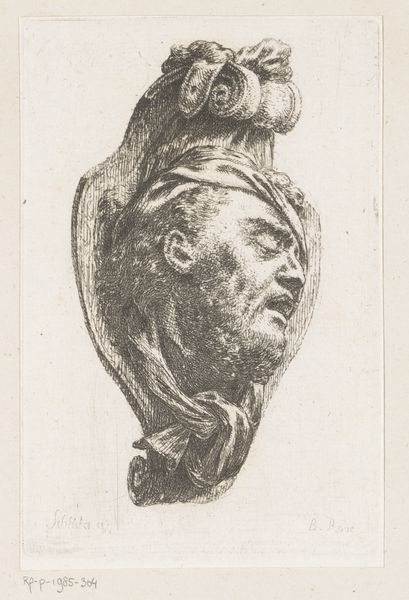
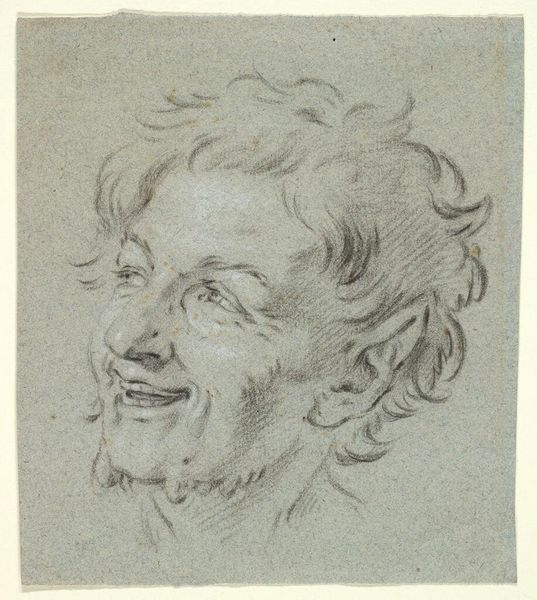
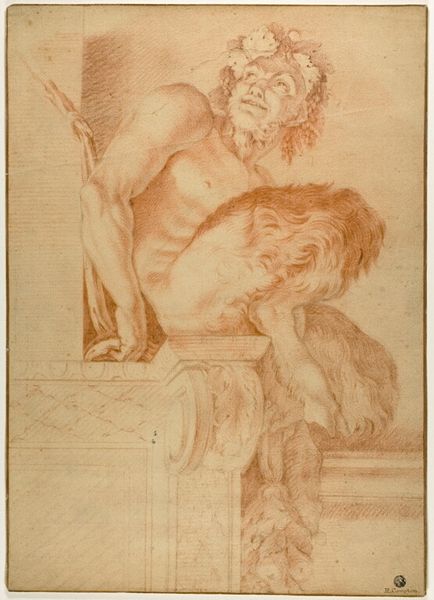
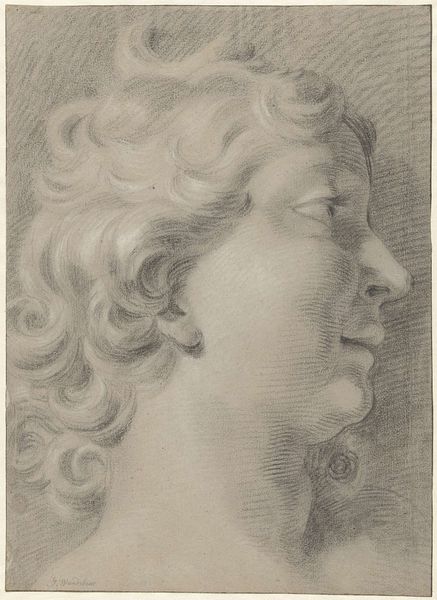
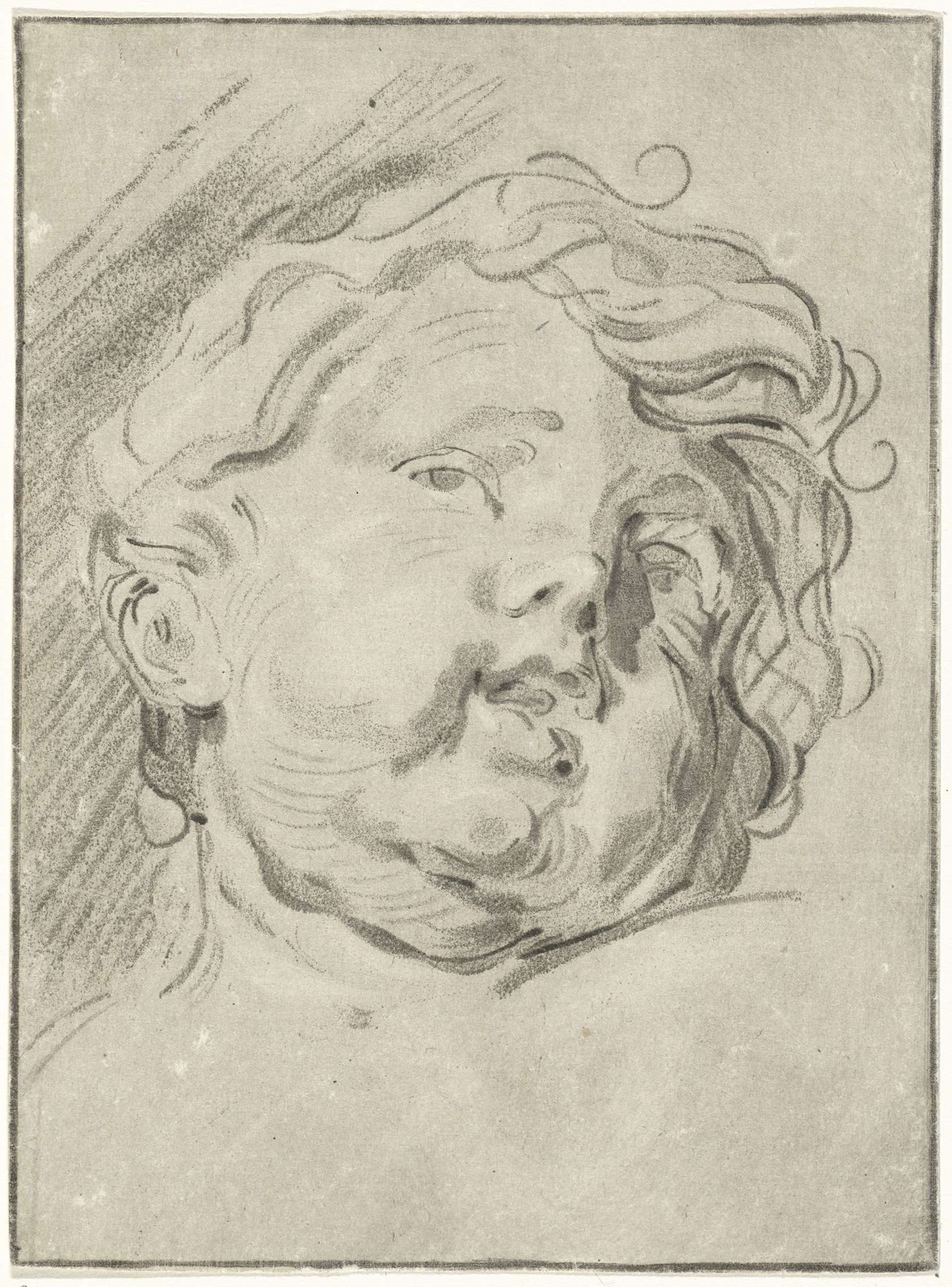
Bernhard Schreuder rendered this study of an angel or putto in graphite around the late 1700s. Notice how Schreuder carefully applied graphite to paper, using a range of tones to create form and volume. With the softness of the graphite, he captured the plumpness of the cherubic face. Drawing was a fundamental skill for artists and artisans of this time. Graphite, easily erasable, was the perfect medium for preparatory studies. Consider the labor involved, not just in the artist's hand, but in the production of the paper and the graphite itself. These materials, now commonplace, were once precious commodities, reflecting a complex web of trade and industry. Paying attention to the materials and the process, we see how the humblest of drawings connects to broader economic and social histories.

Artwork details
- Dimensions
- height 136 mm, width 101 mm
- Location
- Rijksmuseum
- Copyright
- Rijks Museum: Open Domain
Comments
Share your thoughts
About this artwork
Bernhard Schreuder rendered this study of an angel or putto in graphite around the late 1700s. Notice how Schreuder carefully applied graphite to paper, using a range of tones to create form and volume. With the softness of the graphite, he captured the plumpness of the cherubic face. Drawing was a fundamental skill for artists and artisans of this time. Graphite, easily erasable, was the perfect medium for preparatory studies. Consider the labor involved, not just in the artist's hand, but in the production of the paper and the graphite itself. These materials, now commonplace, were once precious commodities, reflecting a complex web of trade and industry. Paying attention to the materials and the process, we see how the humblest of drawings connects to broader economic and social histories.
Comments
Share your thoughts