About this artwork
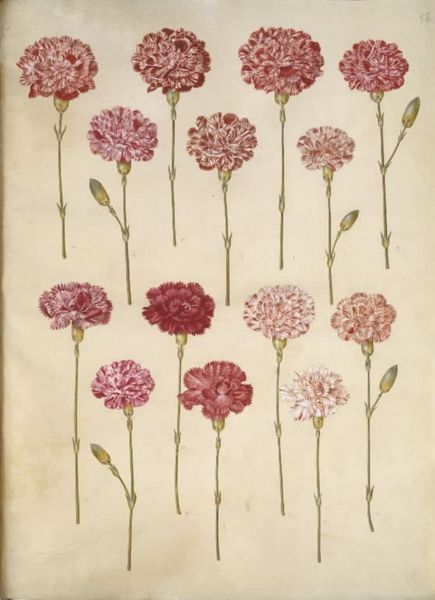
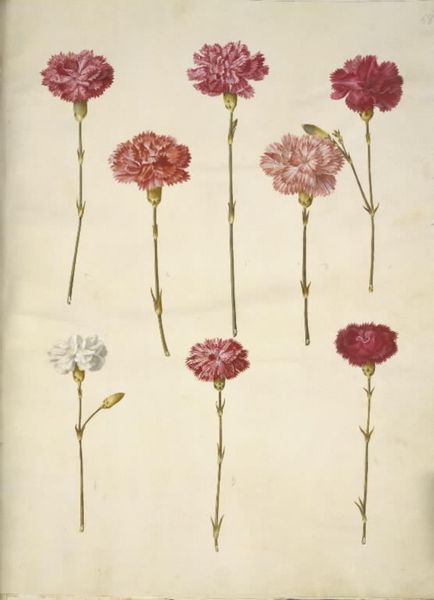
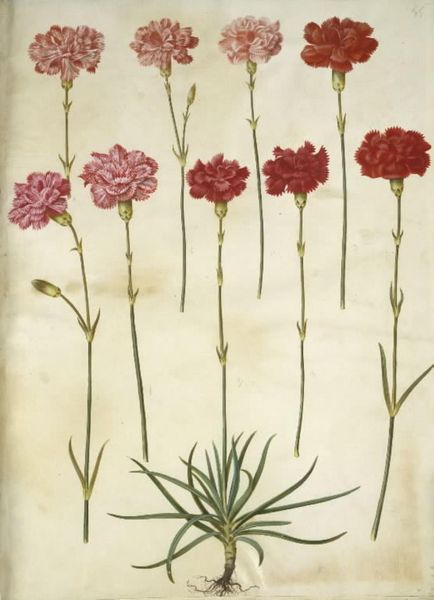
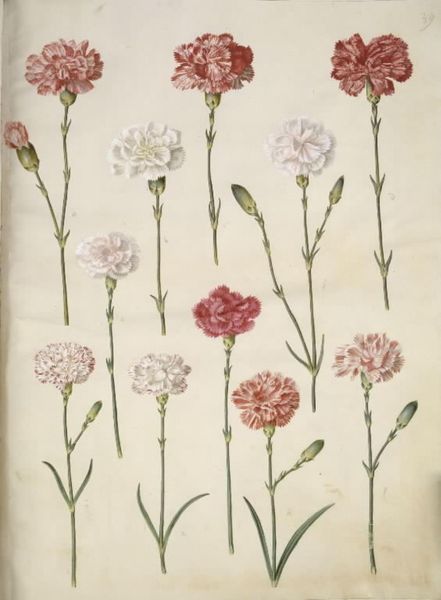
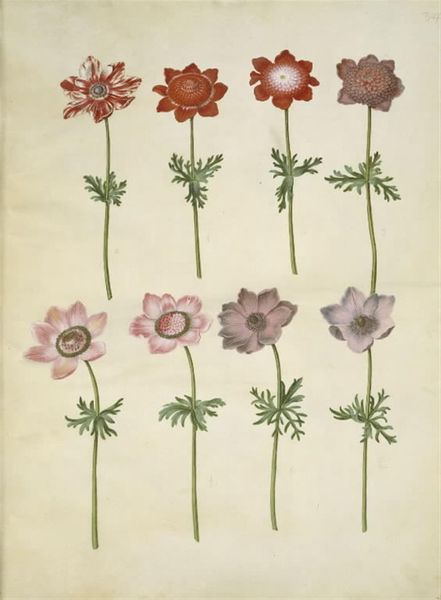
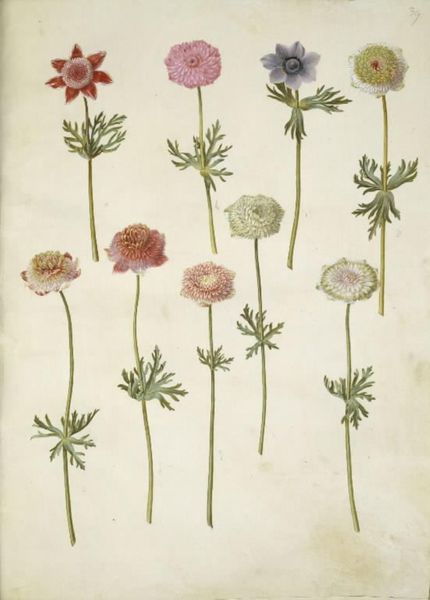
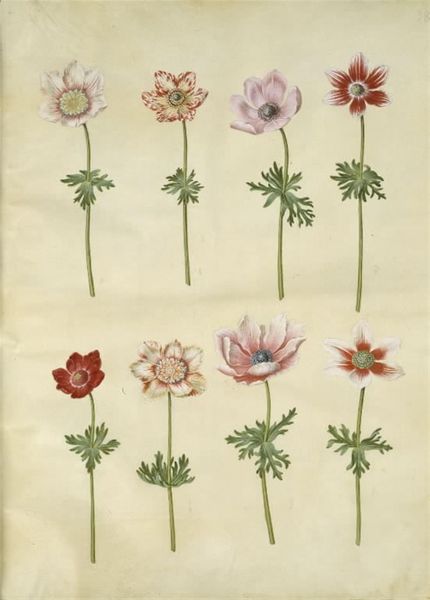
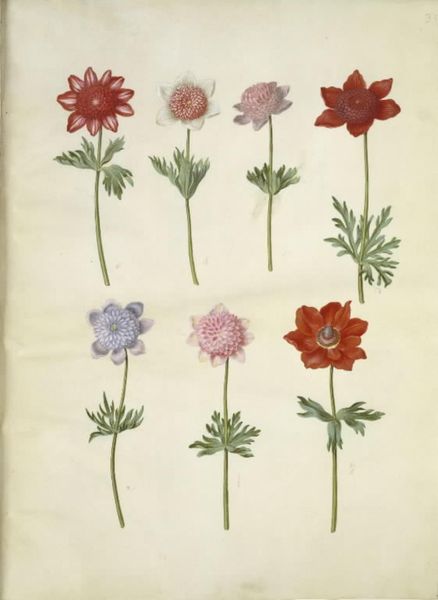
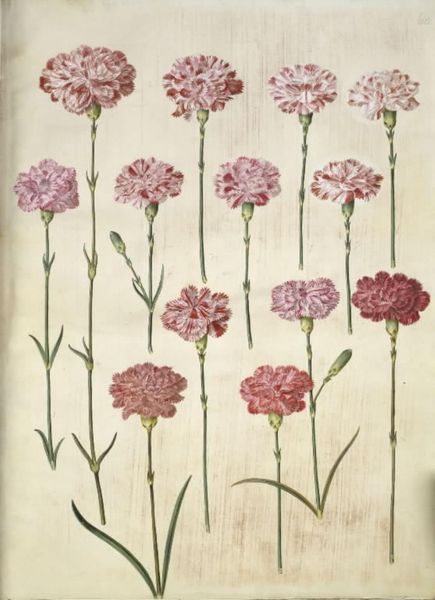
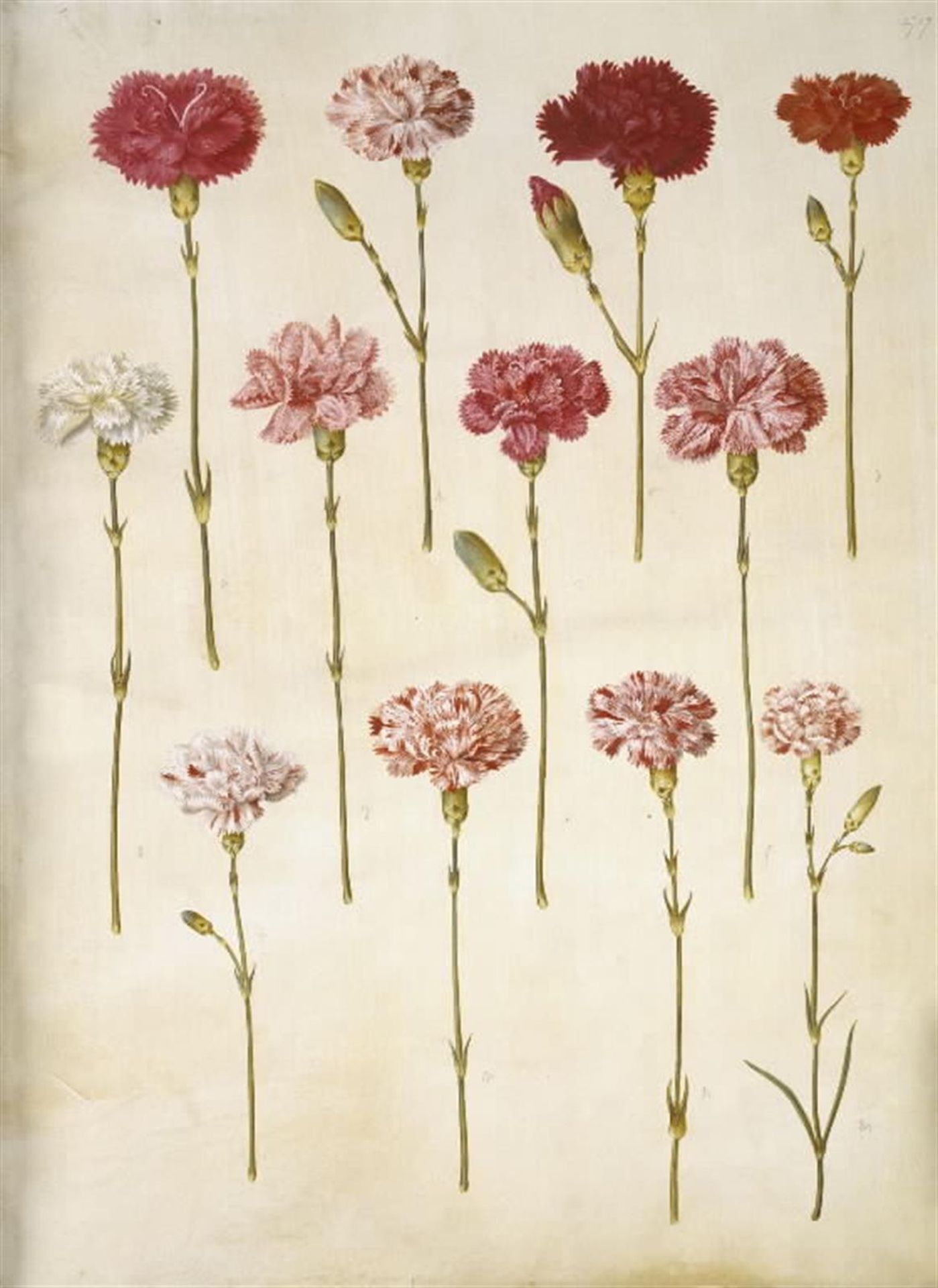
Hans Simon Holtzbecker rendered this image of Dianthus caryophyllus, or carnations, with watercolor on parchment. The composition arranges twelve carnations of varying shades and states of bloom in a grid. This regimented order creates a visual rhythm. Each flower is meticulously depicted, showcasing Holtzbecker's masterful rendering of form and texture. The color palette is dominated by shades of pink and red, which lends a delicate, almost ethereal quality to the work. The grid-like composition nods to scientific classification, organizing nature into a structured taxonomy. Holtzbecker uses the formal structure of the grid to explore our impulse to organize and classify the natural world. The effect is one of both scientific precision and aesthetic appreciation. Note the rendering of the flowers themselves. How do their varying forms, colors, and textures work to simultaneously create harmony and individuation within the broader composition? The subtle differences in each flower's form and color invite us to consider themes of variation and identity.
Dianthus caryophyllus (have-nellike)
1649 - 1659


Artwork details
- Medium
- drawing, tempera, gouache, watercolor
- Dimensions
- 505 mm (height) x 385 mm (width) (bladmaal)
- Location
- SMK - Statens Museum for Kunst
Tags
Comments
Share your thoughts
About this artwork
Hans Simon Holtzbecker rendered this image of Dianthus caryophyllus, or carnations, with watercolor on parchment. The composition arranges twelve carnations of varying shades and states of bloom in a grid. This regimented order creates a visual rhythm. Each flower is meticulously depicted, showcasing Holtzbecker's masterful rendering of form and texture. The color palette is dominated by shades of pink and red, which lends a delicate, almost ethereal quality to the work. The grid-like composition nods to scientific classification, organizing nature into a structured taxonomy. Holtzbecker uses the formal structure of the grid to explore our impulse to organize and classify the natural world. The effect is one of both scientific precision and aesthetic appreciation. Note the rendering of the flowers themselves. How do their varying forms, colors, and textures work to simultaneously create harmony and individuation within the broader composition? The subtle differences in each flower's form and color invite us to consider themes of variation and identity.
Comments
Share your thoughts