About this artwork
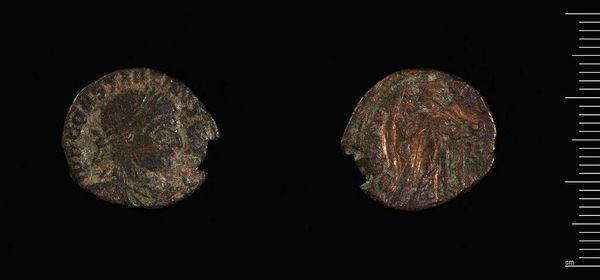
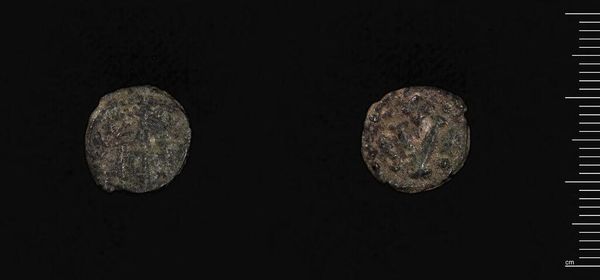
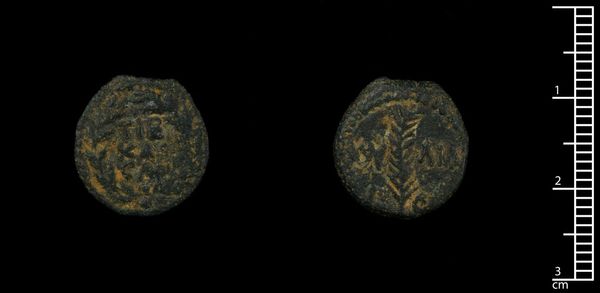
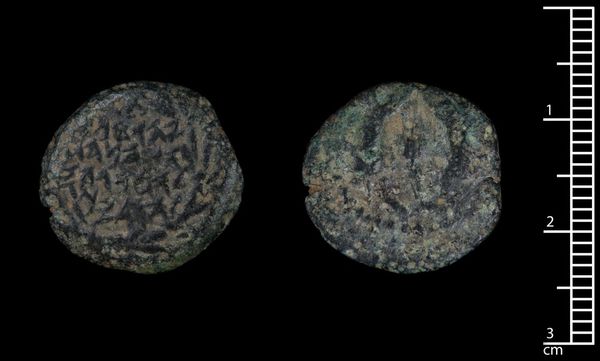
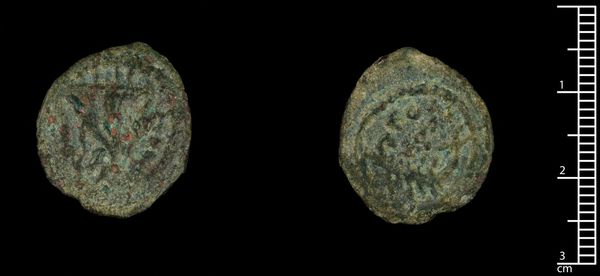
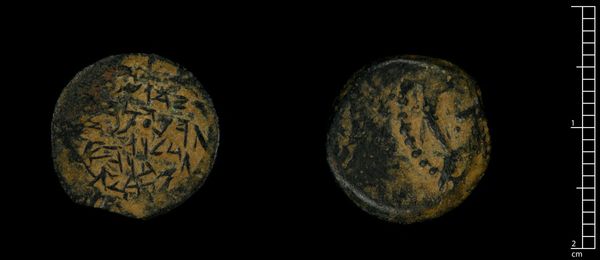
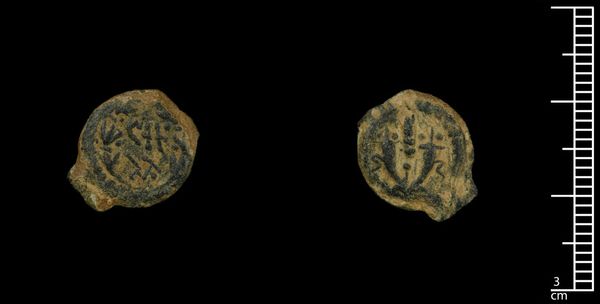
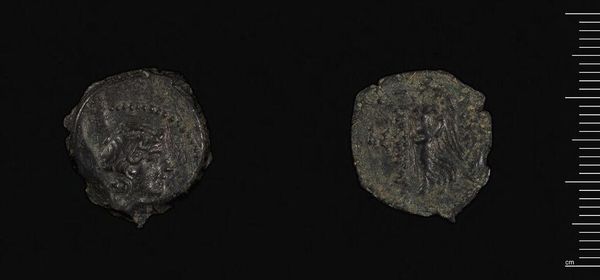
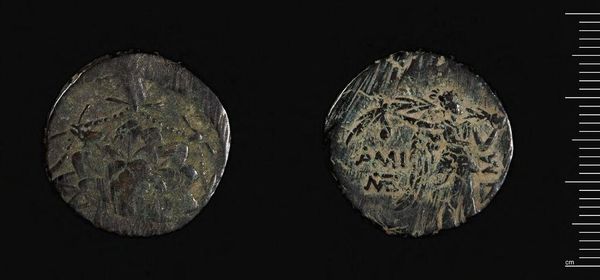
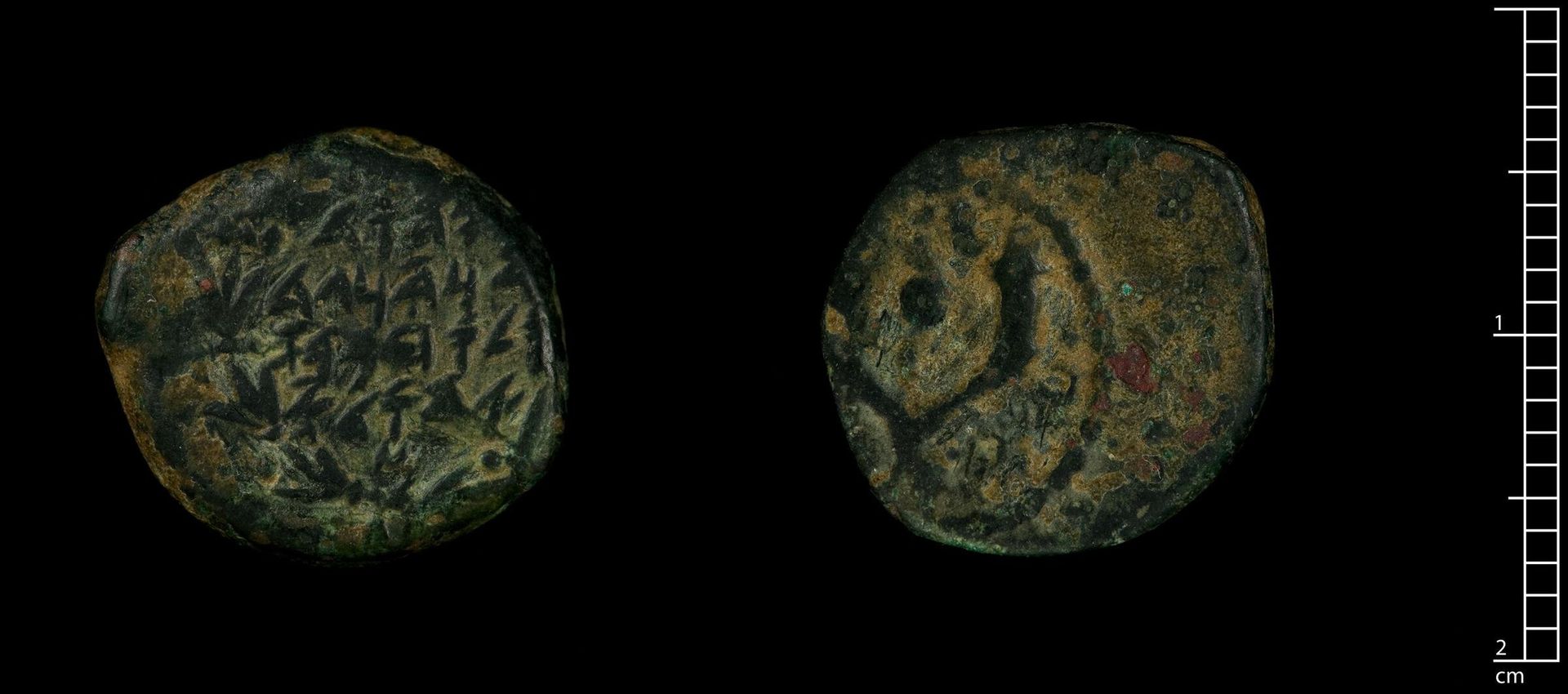
Editor: So, this is a Prutah, a coin, from Judah Aristobulus I. It's really small. The details seem worn, but the imagery feels important. What do you see in this piece? Curator: It’s a vital artifact. Currency isn't just about economics; it's a declaration of power and identity. Aristobulus, a Hasmonean ruler, claimed both kingship and high priesthood, challenging existing religious and political norms. Do you see that symbol? Editor: I think so, maybe a barely visible anchor? Curator: Right, anchors appear on Seleucid coins, signifying naval power. By adopting it, Aristobulus visually asserted dominance, appropriating symbols of empire. What does that appropriation tell us about his ambitions and the complex relationship between Judea and its overlords? Editor: It’s like he's rewriting the narrative. I hadn't thought of it as a statement. Curator: Exactly. Each coin whispers a story of cultural negotiation and resistance.
Prutah of Judah Aristobulus I
c. 104

Artwork details
- Dimensions
- 2.00g
- Location
- Harvard Art Museums
- Copyright
- CC0 1.0
Comments
Share your thoughts
About this artwork
Editor: So, this is a Prutah, a coin, from Judah Aristobulus I. It's really small. The details seem worn, but the imagery feels important. What do you see in this piece? Curator: It’s a vital artifact. Currency isn't just about economics; it's a declaration of power and identity. Aristobulus, a Hasmonean ruler, claimed both kingship and high priesthood, challenging existing religious and political norms. Do you see that symbol? Editor: I think so, maybe a barely visible anchor? Curator: Right, anchors appear on Seleucid coins, signifying naval power. By adopting it, Aristobulus visually asserted dominance, appropriating symbols of empire. What does that appropriation tell us about his ambitions and the complex relationship between Judea and its overlords? Editor: It’s like he's rewriting the narrative. I hadn't thought of it as a statement. Curator: Exactly. Each coin whispers a story of cultural negotiation and resistance.
Comments
Share your thoughts