About this artwork
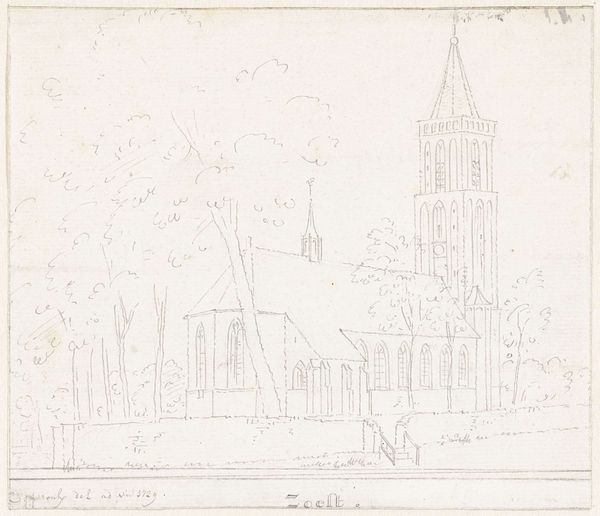
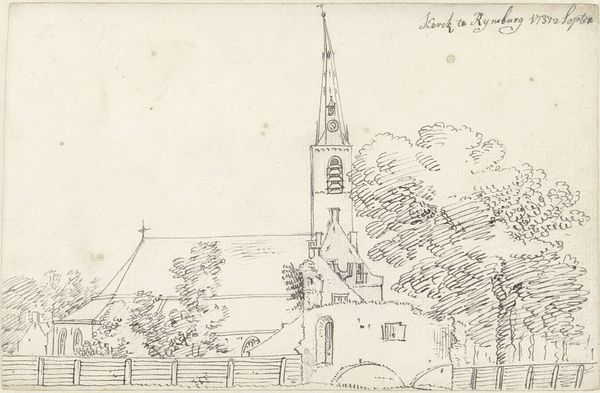
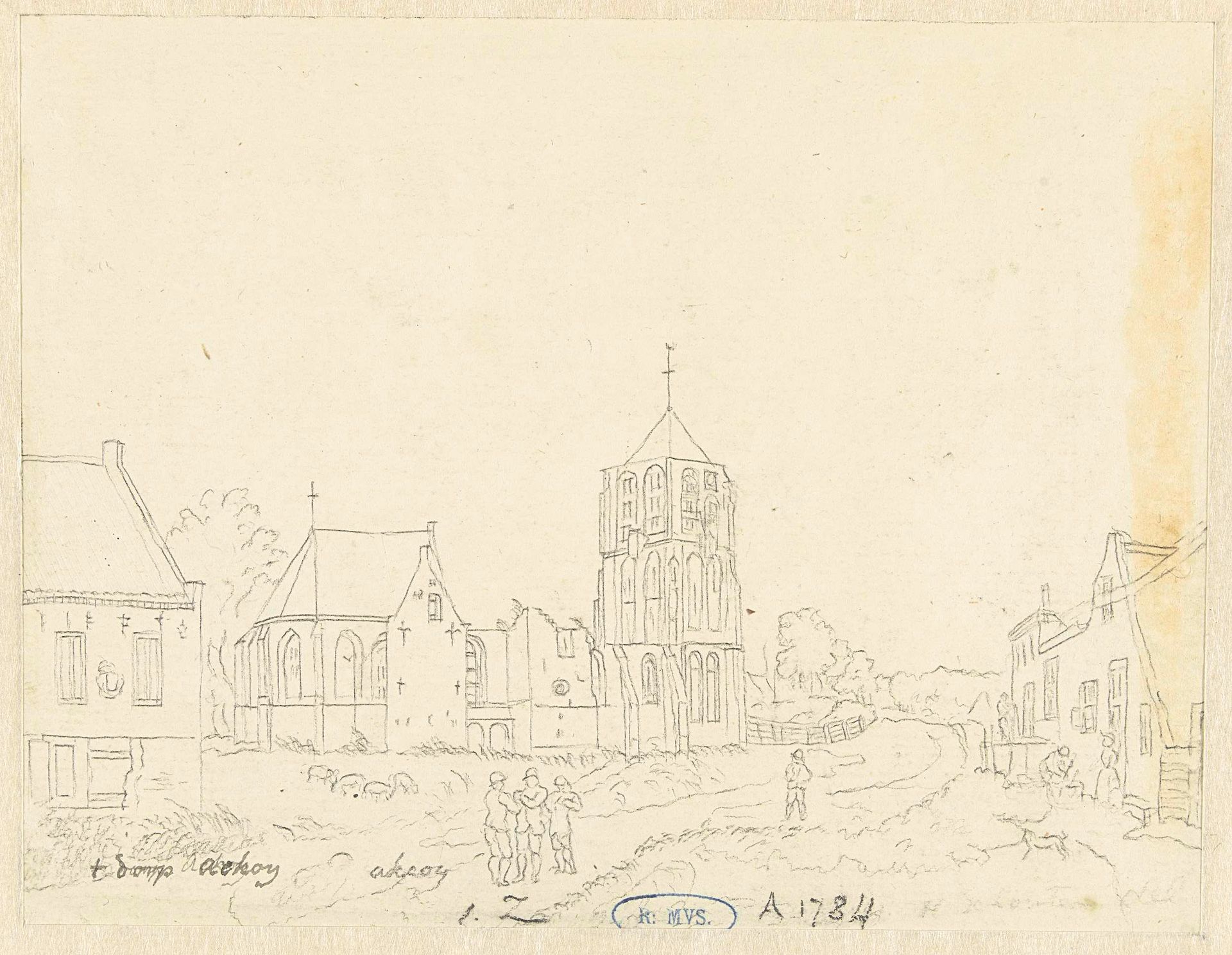
Hermanus Petrus Schouten rendered this drawing of the church in Acquoy using pen in 1784. The church, crowned with a cross, symbolizes not only faith but also the enduring spirit of community. Look at the cross atop the church steeple; its vertical line reaches to the heavens, while the horizontal embraces the earthly realm. This symbol transcends its immediate religious meaning. We can recall similar imagery in ancient Egyptian obelisks, or even the Roman standards, each acting as a focal point for communal identity. The presence of these symbols speaks to a collective yearning for order and meaning, and the comfort of familiar forms passed down. It engages us on a subconscious level by offering an echo of ancestral beliefs and societal continuity. The cross here reminds us that cultural symbols never truly disappear; instead, they resurface, evolve, and take on new meanings in different historical contexts.
De kerk in het dorp Acquoy 1757 - 1822

Hermanus Petrus Schouten
1747 - 1822Location
RijksmuseumArtwork details
- Medium
- drawing, pencil
- Dimensions
- height 142 mm, width 184 mm
- Location
- Rijksmuseum
- Copyright
- Rijks Museum: Open Domain
Tags
drawing
dutch-golden-age
landscape
pencil
line
cityscape
realism
Comments
No comments
About this artwork
Hermanus Petrus Schouten rendered this drawing of the church in Acquoy using pen in 1784. The church, crowned with a cross, symbolizes not only faith but also the enduring spirit of community. Look at the cross atop the church steeple; its vertical line reaches to the heavens, while the horizontal embraces the earthly realm. This symbol transcends its immediate religious meaning. We can recall similar imagery in ancient Egyptian obelisks, or even the Roman standards, each acting as a focal point for communal identity. The presence of these symbols speaks to a collective yearning for order and meaning, and the comfort of familiar forms passed down. It engages us on a subconscious level by offering an echo of ancestral beliefs and societal continuity. The cross here reminds us that cultural symbols never truly disappear; instead, they resurface, evolve, and take on new meanings in different historical contexts.
Comments
No comments