About this artwork
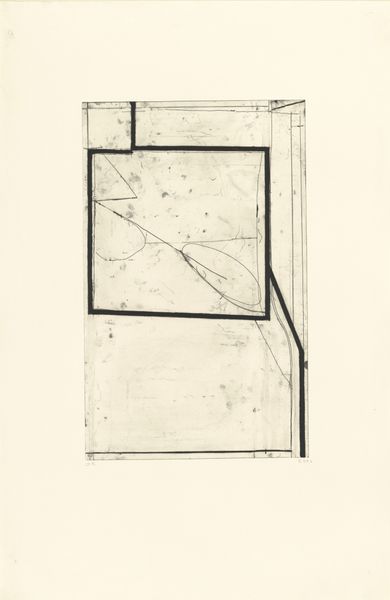
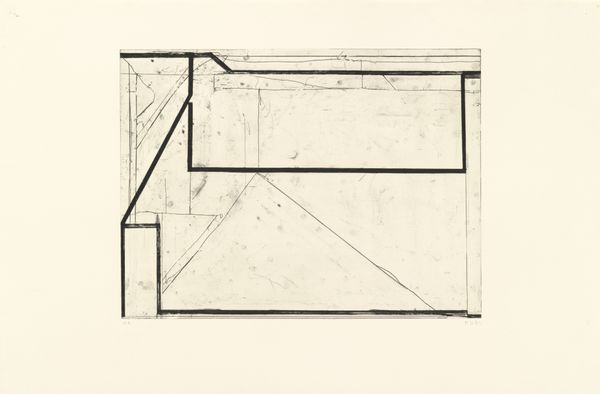
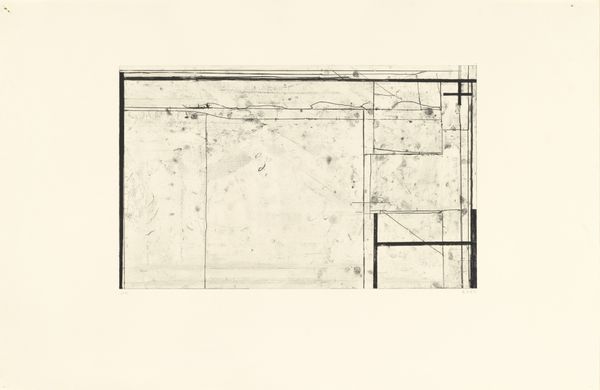
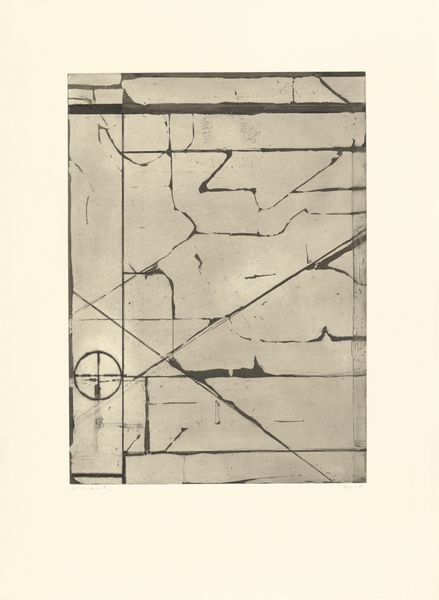
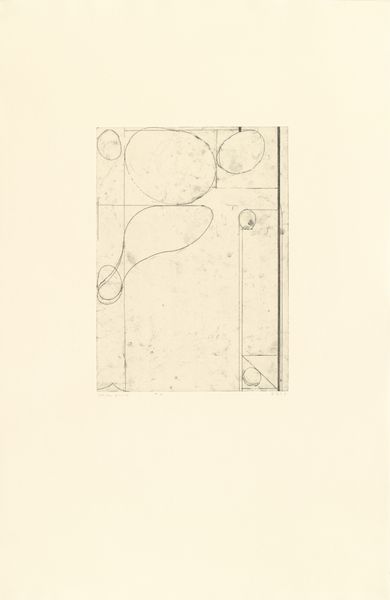
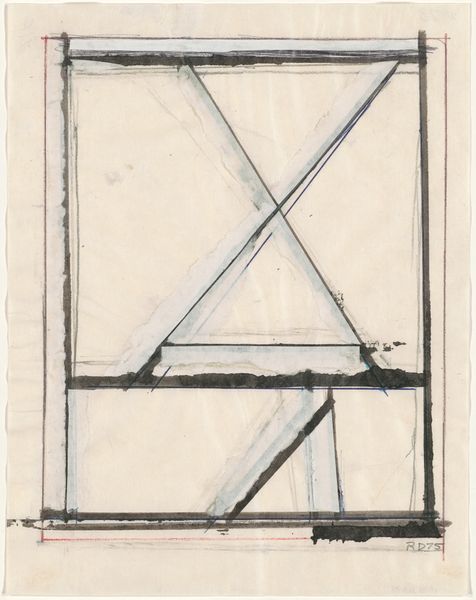
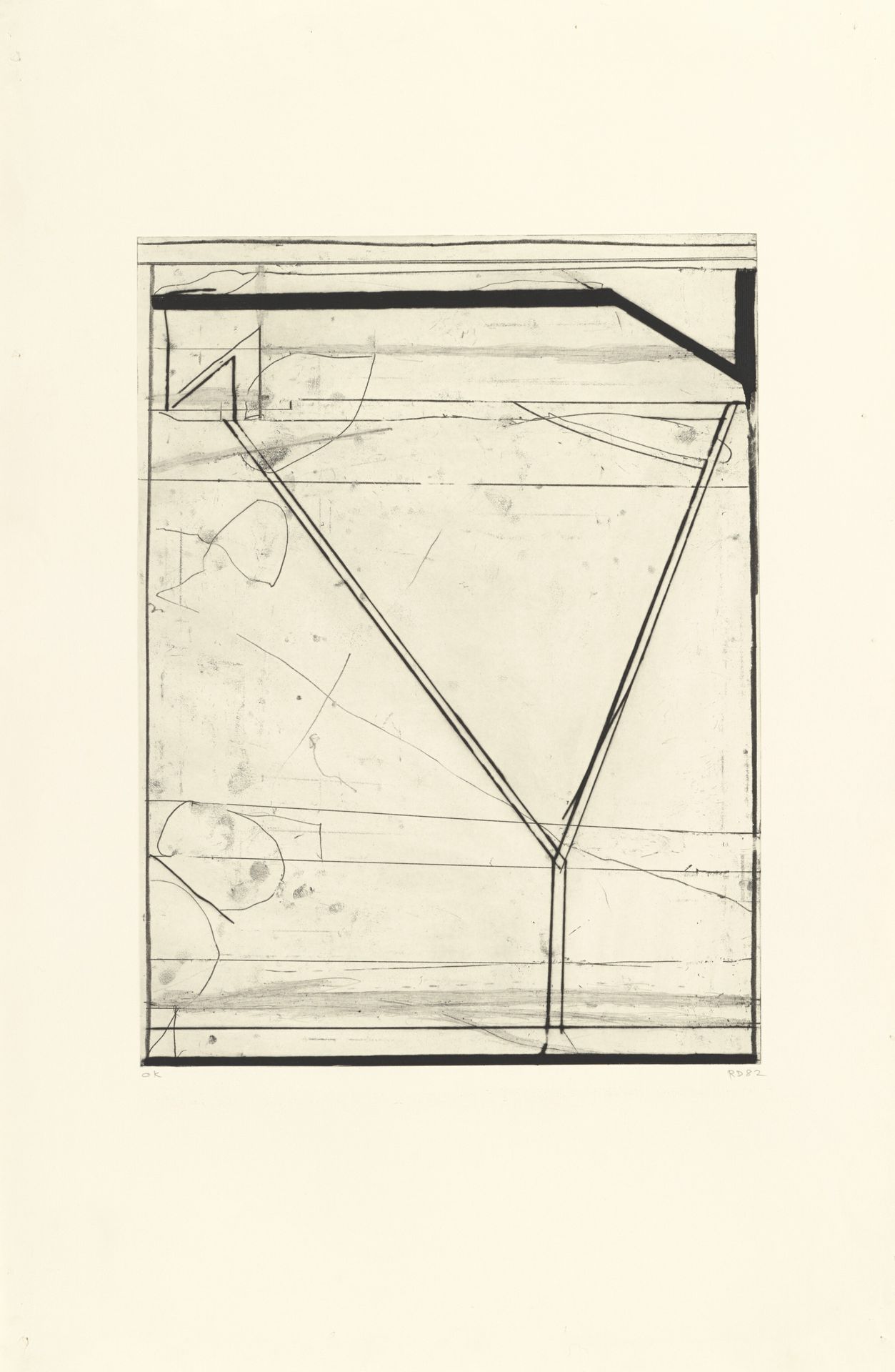
Richard Diebenkorn made this print, "Softground Y," using etching, a traditional printmaking technique. An etcher covers a metal plate with a waxy ground, then draws through it with a needle to expose the metal. The plate is then immersed in acid, which bites into the exposed lines, creating grooves. Ink is applied to the plate, filling these grooves, and then the surface is wiped clean. Finally, the image is transferred to paper under high pressure. The softground technique allows for more textural lines, capturing the artist's hand in a direct way, like a drawing. You can see this in the blurred edges of the Y shape, as well as the other marks on the print. This laborious method stands apart from the mass production typically associated with industrial printing. The print's subdued tones and geometric forms are typical of Diebenkorn’s style, hinting at the artist's engagement with both abstract expressionism and representational landscape. By emphasizing the handmade process of printmaking, Diebenkorn elevates the status of craft within the realm of fine art.


Artwork details
- Medium
- Dimensions
- image: 60.6 x 45.4 cm (23 7/8 x 17 7/8 in.) sheet: 101.6 x 67 cm (40 x 26 3/8 in.)
- Copyright
- National Gallery of Art: CC0 1.0
Tags
thin stroke sketch
quirky sketch
shading to add clarity
old engraving style
personal sketchbook
bay-area-figurative-movement
idea generation sketch
dynamic sketch
pen-ink sketch
sketchbook drawing
initial sketch
Comments
No comments
About this artwork
Richard Diebenkorn made this print, "Softground Y," using etching, a traditional printmaking technique. An etcher covers a metal plate with a waxy ground, then draws through it with a needle to expose the metal. The plate is then immersed in acid, which bites into the exposed lines, creating grooves. Ink is applied to the plate, filling these grooves, and then the surface is wiped clean. Finally, the image is transferred to paper under high pressure. The softground technique allows for more textural lines, capturing the artist's hand in a direct way, like a drawing. You can see this in the blurred edges of the Y shape, as well as the other marks on the print. This laborious method stands apart from the mass production typically associated with industrial printing. The print's subdued tones and geometric forms are typical of Diebenkorn’s style, hinting at the artist's engagement with both abstract expressionism and representational landscape. By emphasizing the handmade process of printmaking, Diebenkorn elevates the status of craft within the realm of fine art.
Comments
No comments