About this artwork
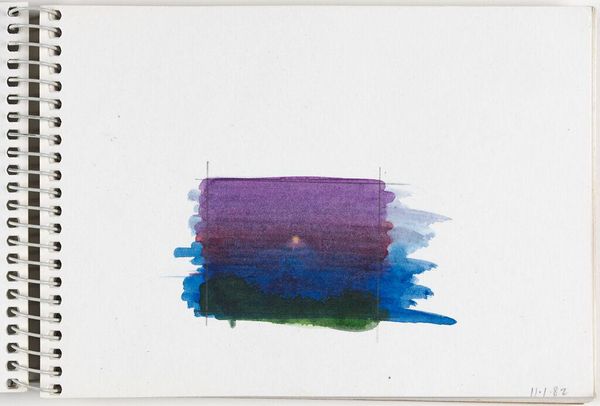
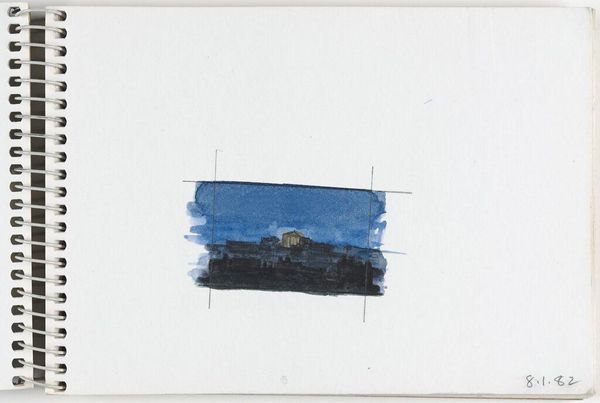
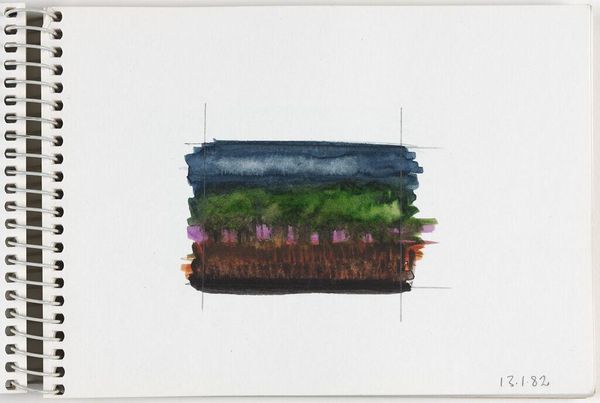
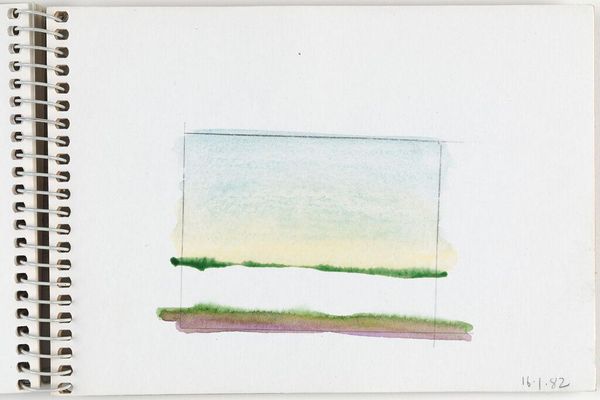
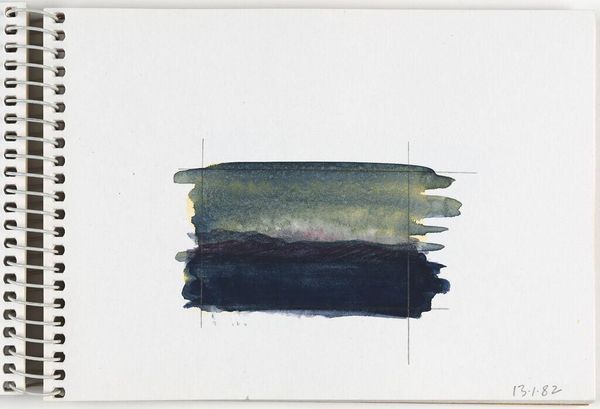
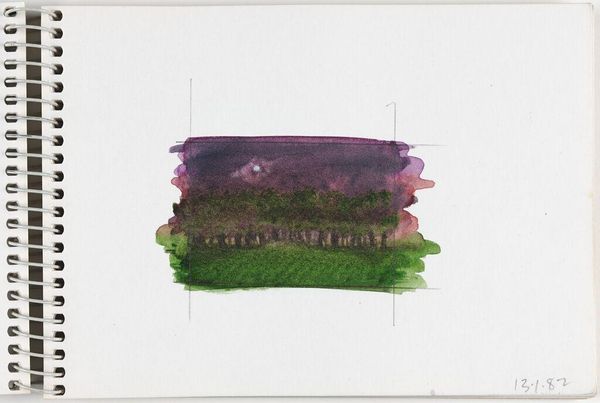
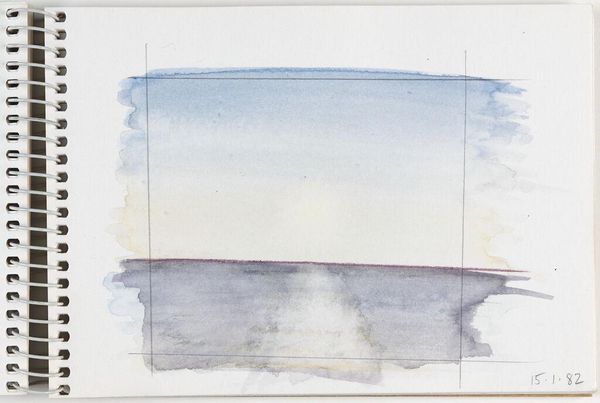
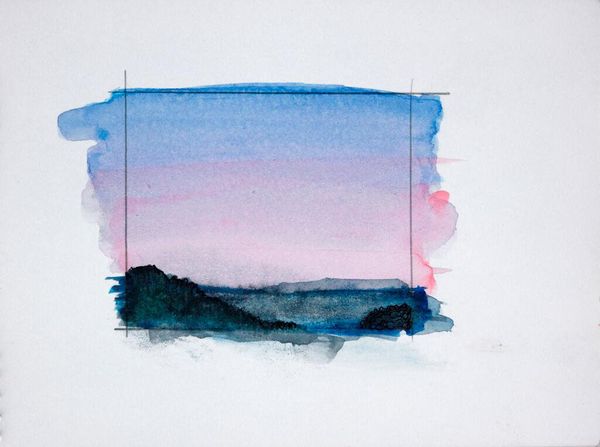
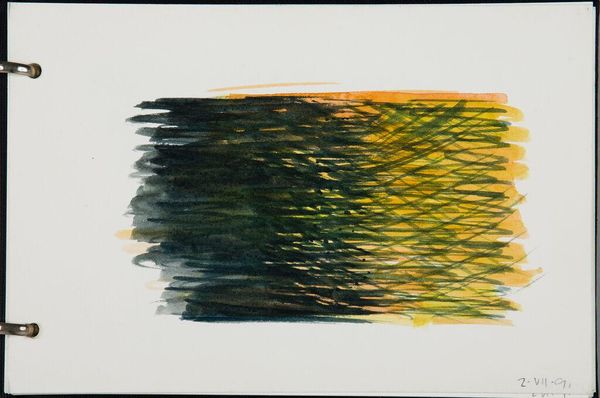
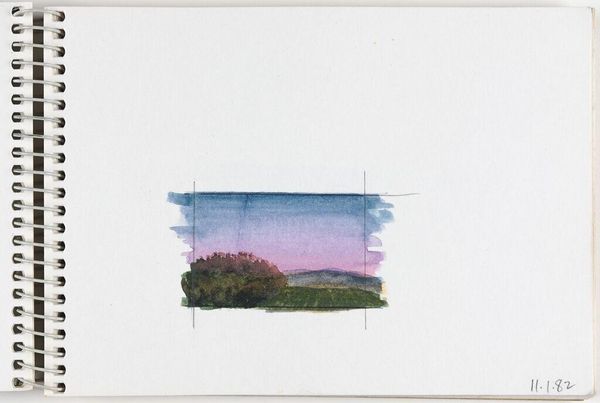
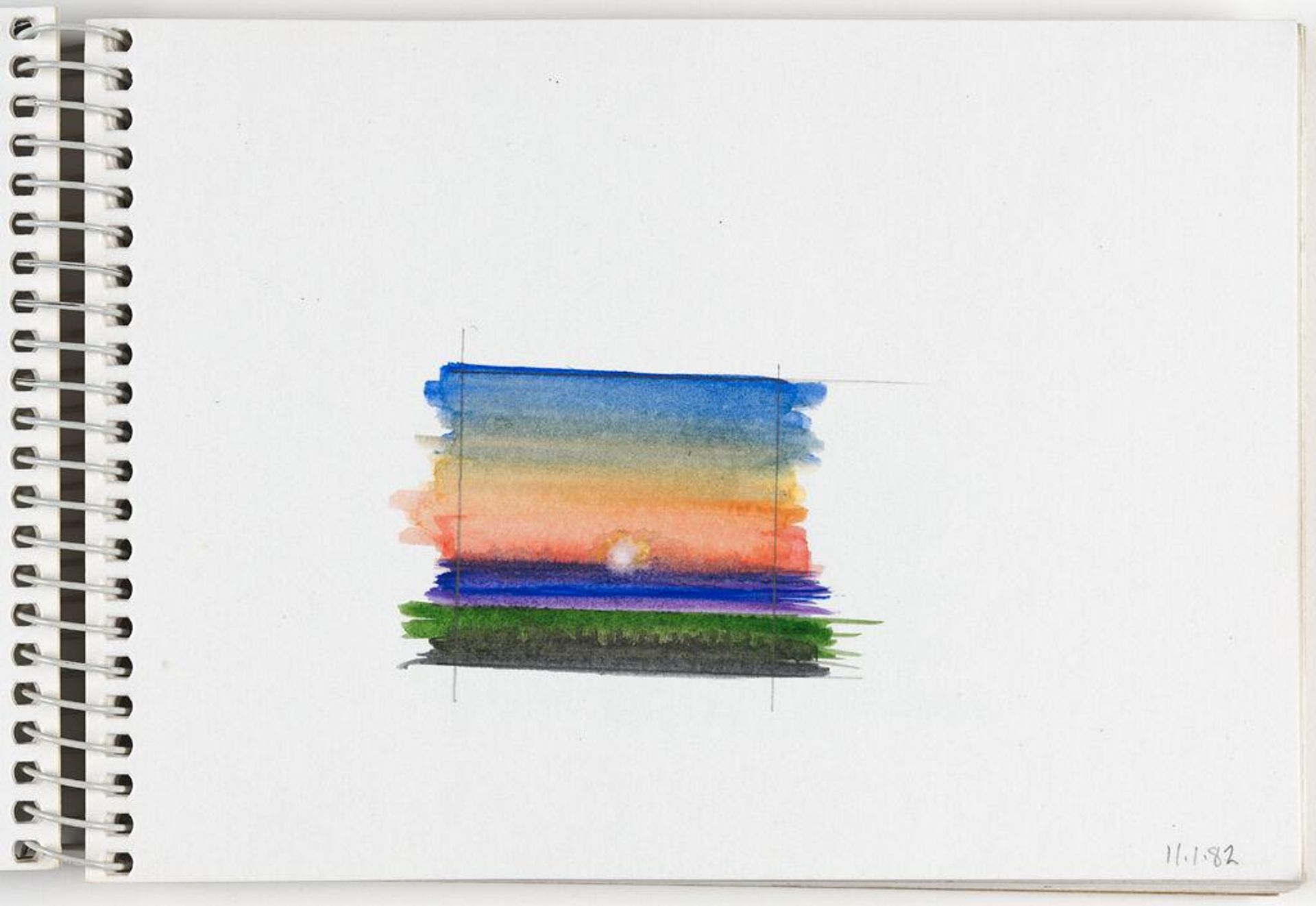
Curator: Elena Prentice's small watercolor, titled "Landscape," captures such a fleeting moment. It is a minimal color field, really, a rectangular block on a page. It looks like a postcard sketch, dated November 1, 1982. Editor: I’m struck by how the vibrant hues almost bleed off the page. It evokes a sense of immediacy and the transient nature of sunsets, as if Prentice was trying to capture the essence of a specific sunset right then and there. Curator: Indeed! And while the date places it firmly in a particular moment, the style feels timeless. Think about how the medium allows for such soft transitions, almost like an impressionistic approach to color theory. Editor: I wonder how the social context of 1982 influenced Prentice’s decision to capture such a seemingly simple scene? Was it a rejection of the grand narratives, finding beauty in the everyday? Curator: It's tempting to see it as a quiet, personal rebellion, a conscious choice to focus on the beauty of the natural world against a backdrop of... well, everything else going on in the world at that time. Editor: Absolutely, and what does this say about the role of art? Can a simple landscape become a political statement simply by its existence? Curator: Maybe. Ultimately, "Landscape" encourages us to pause, to really see, and appreciate the fleeting moments of beauty that surround us. Editor: Yes, I think it speaks volumes despite its humble size, and maybe invites us to make our own quick and simple sketches to catch the light as it fades.

Artwork details
- Dimensions
- 10.9 x 15.3 cm (4 5/16 x 6 in.)
- Location
- Harvard Art Museums
- Copyright
- CC0 1.0
Comments
Share your thoughts
About this artwork
Curator: Elena Prentice's small watercolor, titled "Landscape," captures such a fleeting moment. It is a minimal color field, really, a rectangular block on a page. It looks like a postcard sketch, dated November 1, 1982. Editor: I’m struck by how the vibrant hues almost bleed off the page. It evokes a sense of immediacy and the transient nature of sunsets, as if Prentice was trying to capture the essence of a specific sunset right then and there. Curator: Indeed! And while the date places it firmly in a particular moment, the style feels timeless. Think about how the medium allows for such soft transitions, almost like an impressionistic approach to color theory. Editor: I wonder how the social context of 1982 influenced Prentice’s decision to capture such a seemingly simple scene? Was it a rejection of the grand narratives, finding beauty in the everyday? Curator: It's tempting to see it as a quiet, personal rebellion, a conscious choice to focus on the beauty of the natural world against a backdrop of... well, everything else going on in the world at that time. Editor: Absolutely, and what does this say about the role of art? Can a simple landscape become a political statement simply by its existence? Curator: Maybe. Ultimately, "Landscape" encourages us to pause, to really see, and appreciate the fleeting moments of beauty that surround us. Editor: Yes, I think it speaks volumes despite its humble size, and maybe invites us to make our own quick and simple sketches to catch the light as it fades.
Comments
Share your thoughts