About this artwork
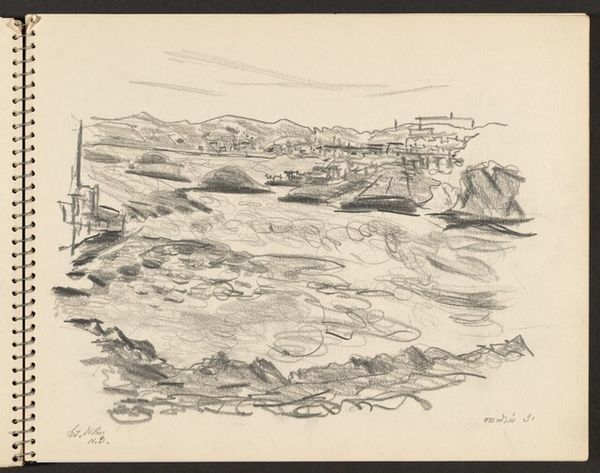
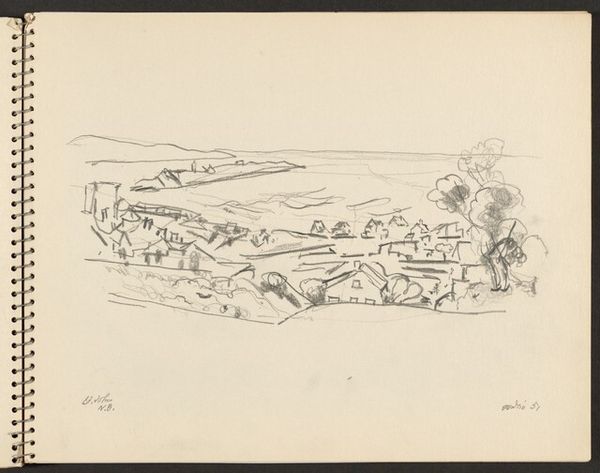
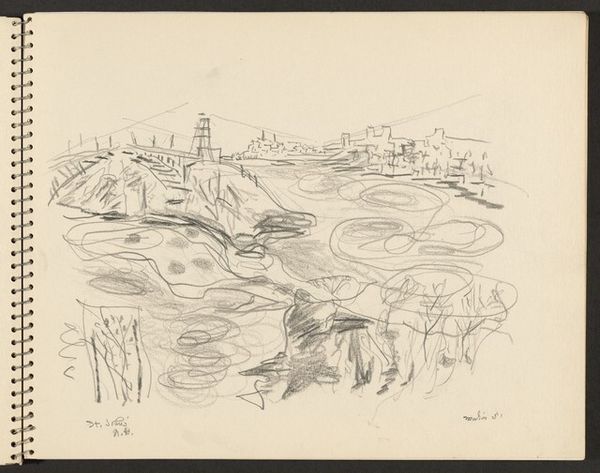
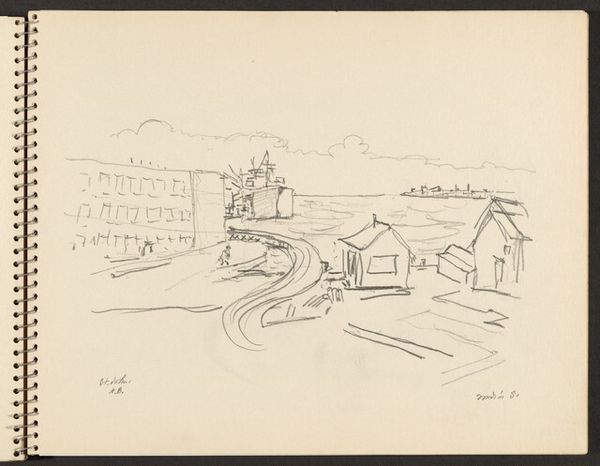
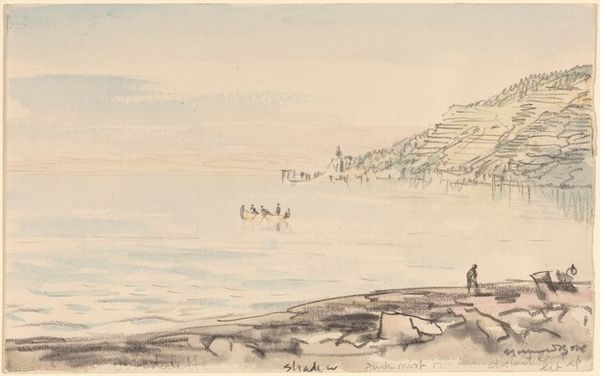
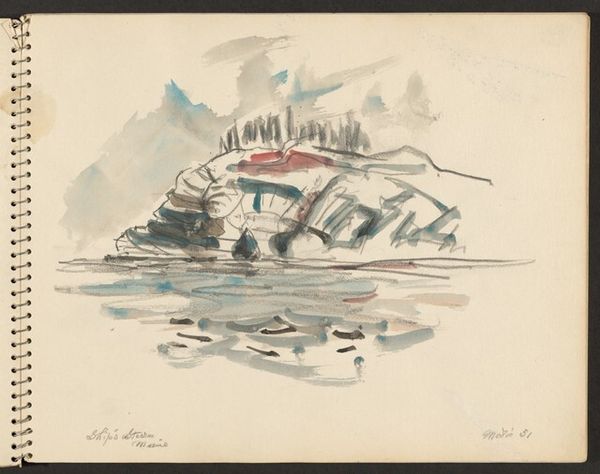
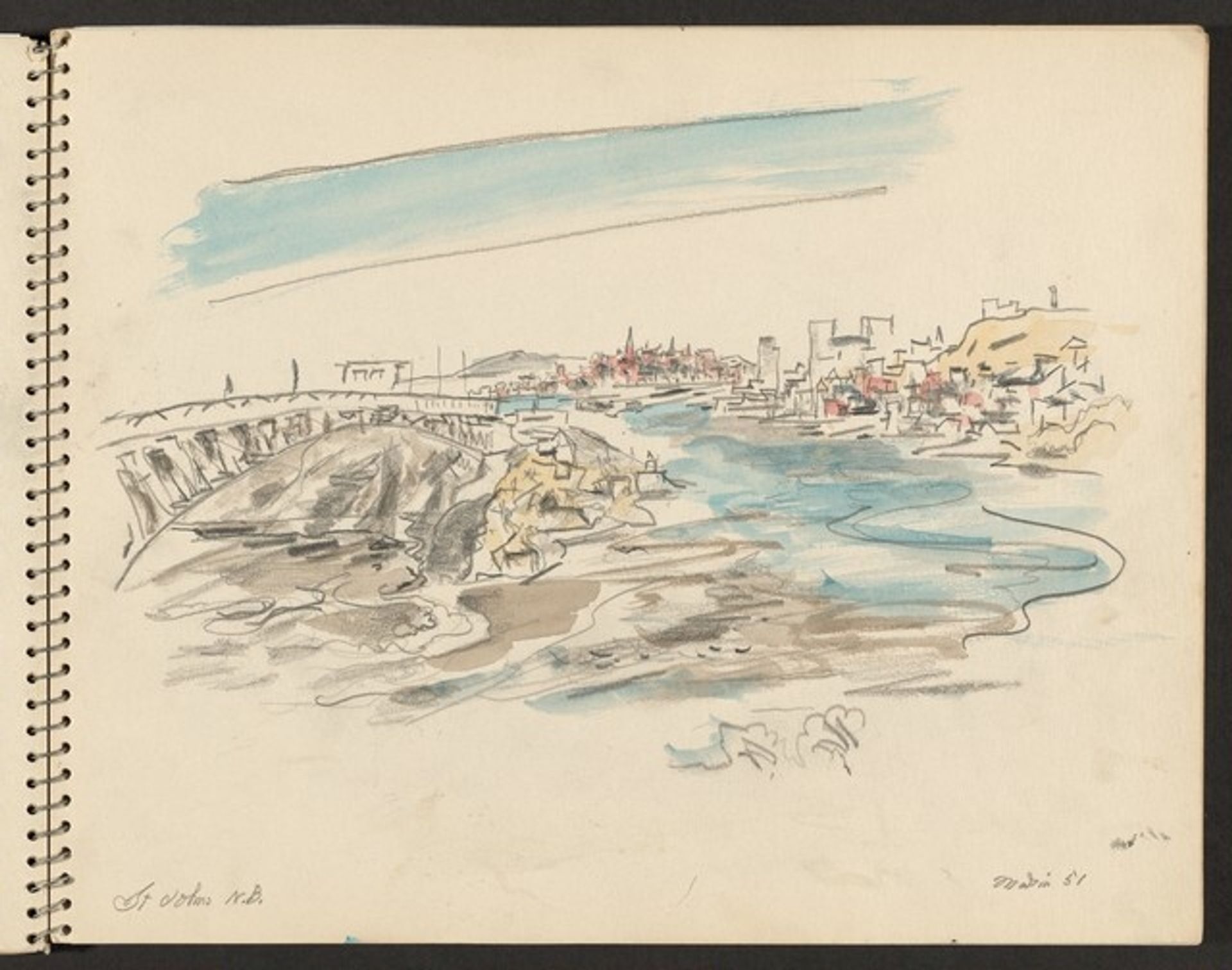
John Marin’s watercolor and graphite sketch, St. Johns, New Brunswick, Canada, presents a scene where the industrial and natural meet. The city emerges distantly on the right side of the page in a flurry of red marks, seemingly weighed down by the heaviness of a grey stone bridge on the left. Look at how Marin organizes space. He destabilizes traditional perspective. The sky is reduced to a mere horizontal band of blue, and the water flattens into abstract curves of blue-grey. Marin uses line not to define objects but to suggest movement. It's as if the city and its environment are in constant flux. This piece is less about representing a place and more about capturing a feeling. Marin uses his medium and his intuitive marks to convey a modern sense of dynamism. Through these formal choices, the artwork speaks to a broader modernist concern: the re-evaluation of perception in a rapidly changing world.
St. Johns, New Brunswick, Canada
1951


Artwork details
- Medium
- drawing, ink
- Dimensions
- sheet: 27.94 × 35.24 cm (11 × 13 7/8 in.)
- Copyright
- National Gallery of Art: CC0 1.0
Tags
drawing
ink drawing
landscape
ink
cityscape
modernism
Comments
Be the first to share your thoughts about this work.
About this artwork
John Marin’s watercolor and graphite sketch, St. Johns, New Brunswick, Canada, presents a scene where the industrial and natural meet. The city emerges distantly on the right side of the page in a flurry of red marks, seemingly weighed down by the heaviness of a grey stone bridge on the left. Look at how Marin organizes space. He destabilizes traditional perspective. The sky is reduced to a mere horizontal band of blue, and the water flattens into abstract curves of blue-grey. Marin uses line not to define objects but to suggest movement. It's as if the city and its environment are in constant flux. This piece is less about representing a place and more about capturing a feeling. Marin uses his medium and his intuitive marks to convey a modern sense of dynamism. Through these formal choices, the artwork speaks to a broader modernist concern: the re-evaluation of perception in a rapidly changing world.
Comments
Be the first to share your thoughts about this work.