About this artwork
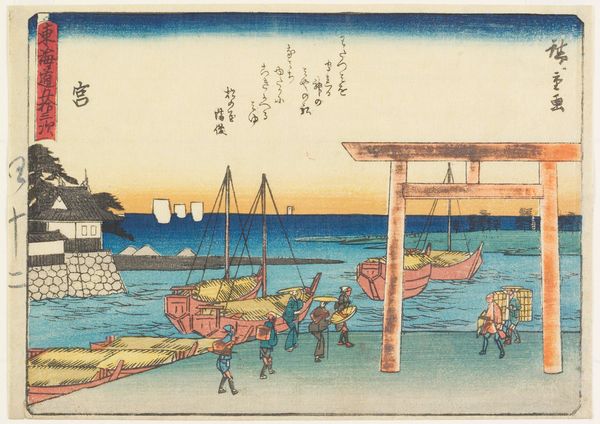
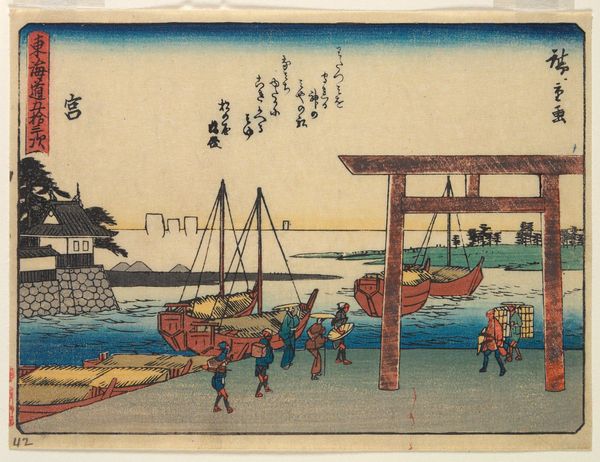
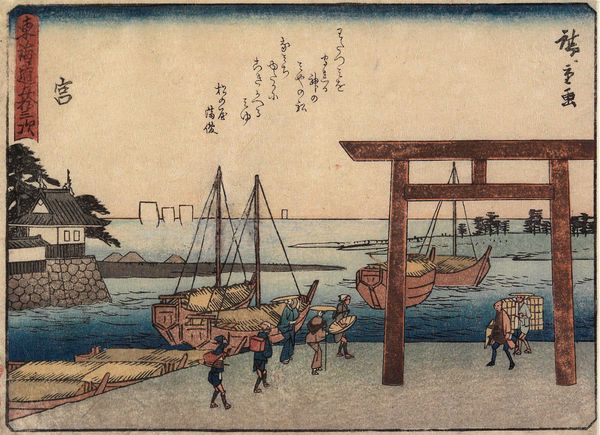
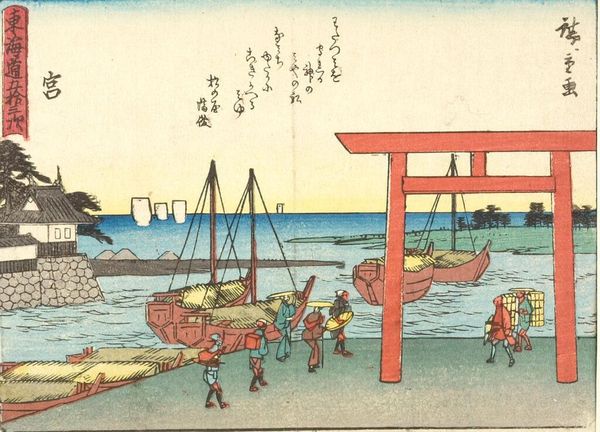
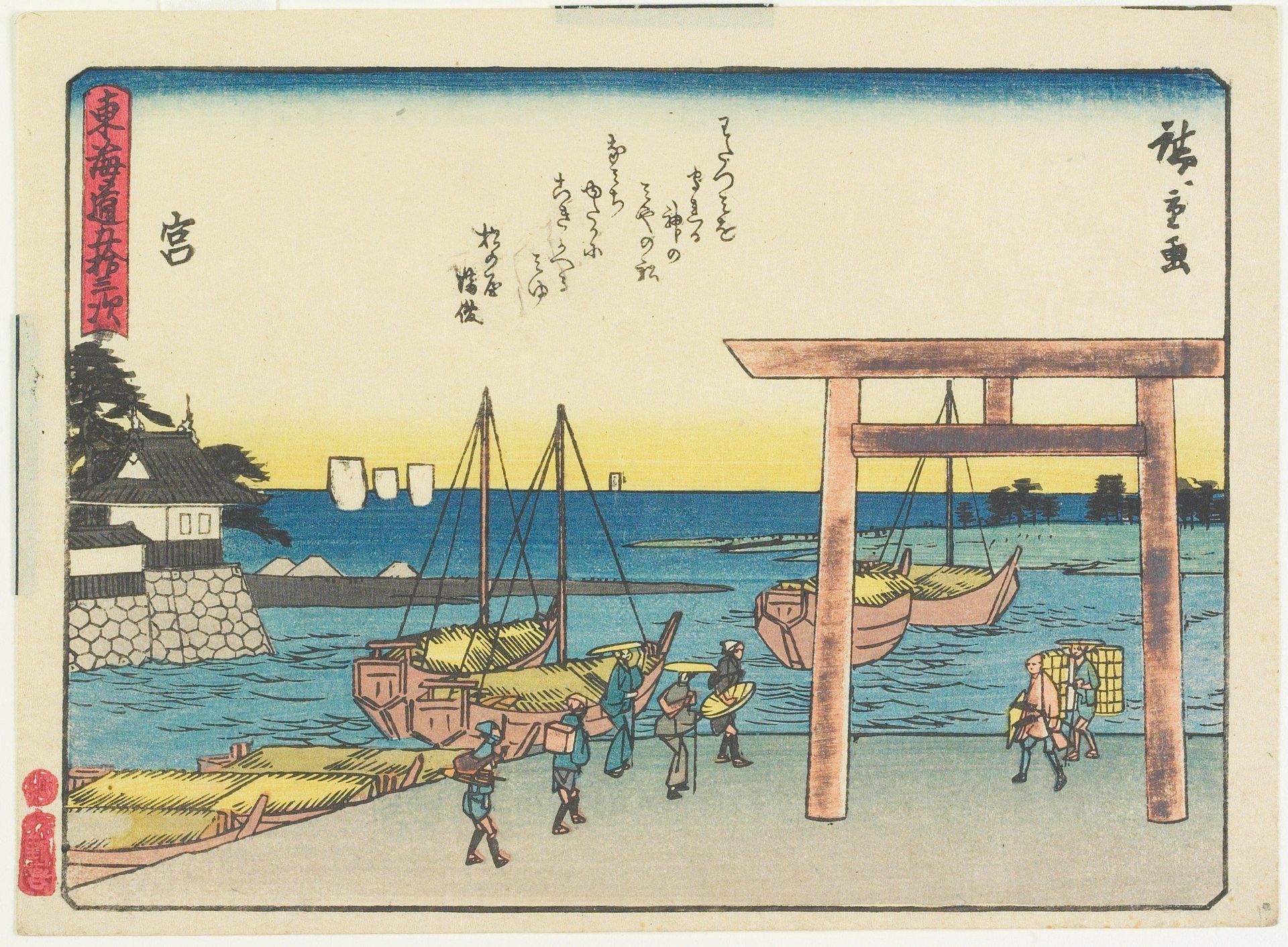
Utagawa Hiroshige created this woodblock print titled 'Miya', presenting a scene imbued with cultural significance. Dominating the foreground is a Shinto torii gate, a potent symbol marking the transition from the mundane to the sacred. Such gateways are far from static emblems; they resonate deeply with humanity's quest for meaning across epochs. Consider, for instance, the triumphal arches of ancient Rome, erected to honor emperors and military victories. These structures, like the torii, serve as thresholds, framing experiences and inviting reflection. The torii in 'Miya' speaks to the Japanese reverence for nature and spirituality. It invites viewers to pause, to contemplate the delicate balance between the earthly realm and the divine. It's a powerful reminder of how symbols evolve, carrying ancestral memories and shaping our perception of the world.
Miya
c. 1840 - 1842


Artwork details
- Medium
- print, ink, woodblock-print
- Dimensions
- 6 x 8 3/8 in. (15.3 x 21.2 cm) (image)6 9/16 x 9 in. (16.6 x 22.9 cm) (sheet)14 x 17 15/16 in. (35.5 x 45.5 cm) (mat)
- Location
- Minneapolis Institute of Art
- Copyright
- Public Domain
Tags
Comments
Share your thoughts
About this artwork
Utagawa Hiroshige created this woodblock print titled 'Miya', presenting a scene imbued with cultural significance. Dominating the foreground is a Shinto torii gate, a potent symbol marking the transition from the mundane to the sacred. Such gateways are far from static emblems; they resonate deeply with humanity's quest for meaning across epochs. Consider, for instance, the triumphal arches of ancient Rome, erected to honor emperors and military victories. These structures, like the torii, serve as thresholds, framing experiences and inviting reflection. The torii in 'Miya' speaks to the Japanese reverence for nature and spirituality. It invites viewers to pause, to contemplate the delicate balance between the earthly realm and the divine. It's a powerful reminder of how symbols evolve, carrying ancestral memories and shaping our perception of the world.
Comments
Share your thoughts