About this artwork
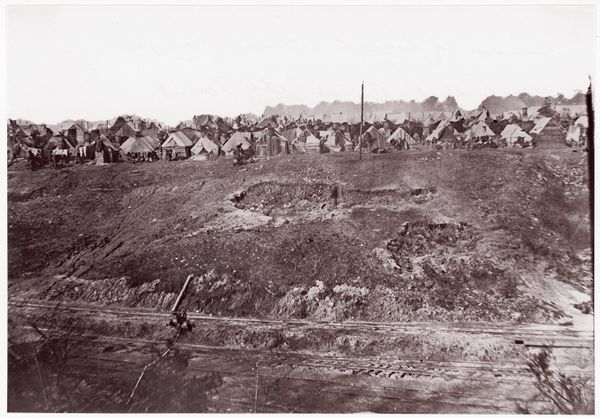
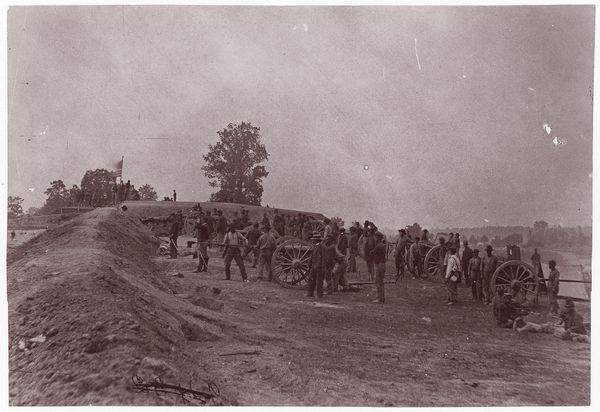
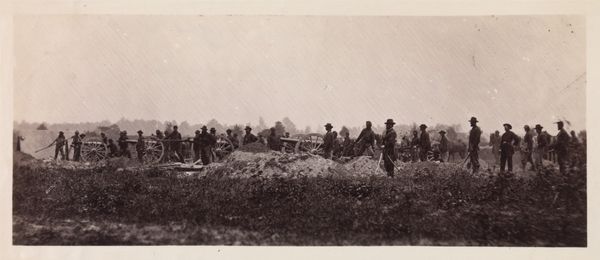
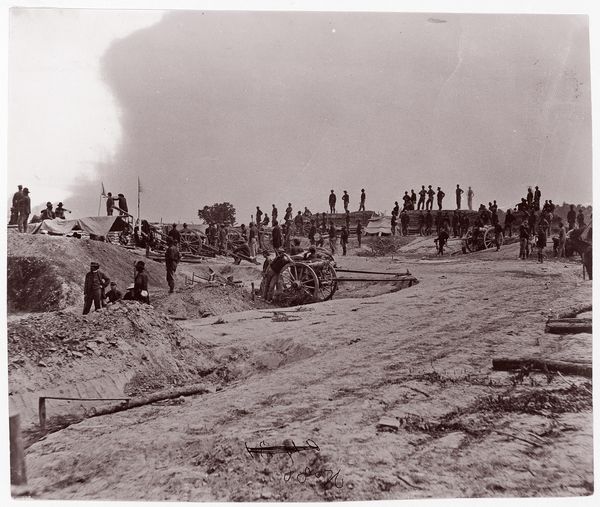
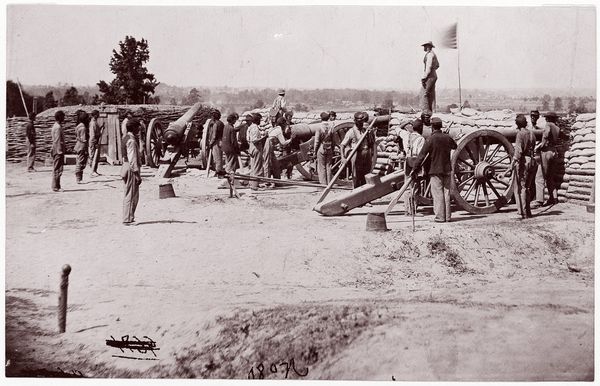
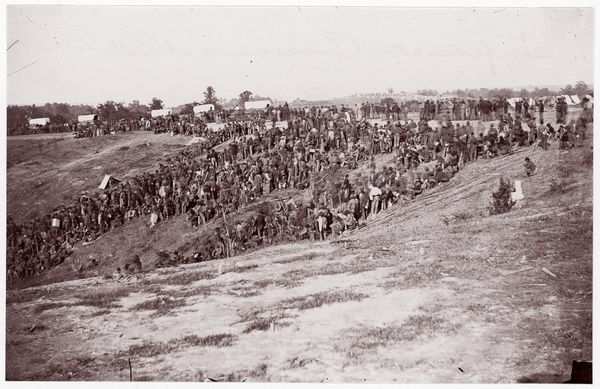
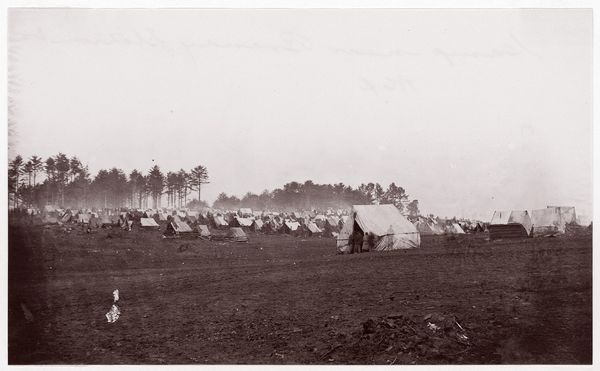
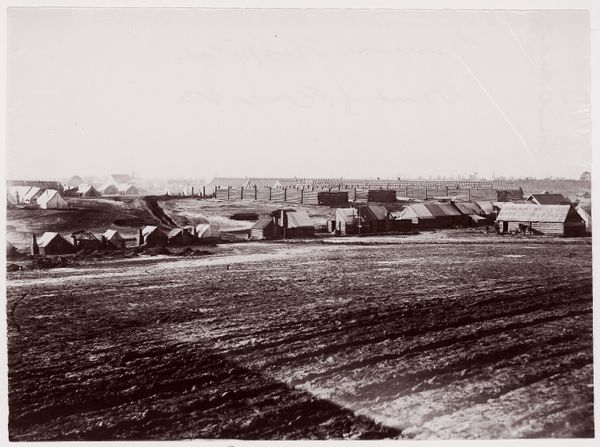
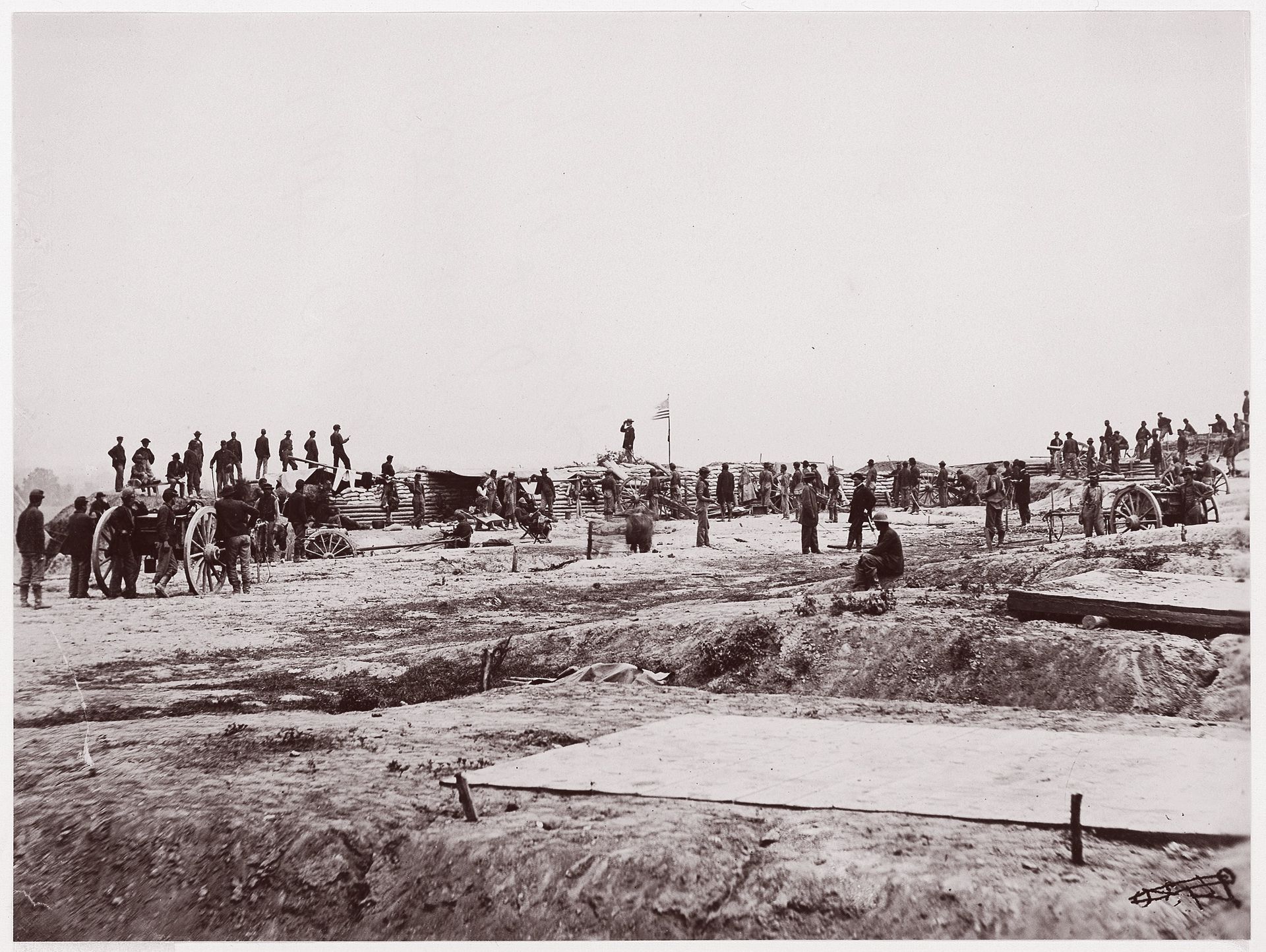
Timothy O’Sullivan made this albumen silver print in June 1864, capturing the aftermath of battle at the Outer Confederate Line in Petersburg. The photograph’s materiality lies in its stark depiction of conflict and capture. O’Sullivan’s choice of photography was not only a documentary tool, but also a means of representing the harsh realities of war. The albumen print process, using egg whites to bind the image to the paper, lends a crisp, almost clinical quality to the scene. Consider the labor involved: from the extraction of silver for the print, to the soldiers who fought and died on this land. O’Sullivan's composition invites reflection on the scale of human effort and sacrifice inherent in the war, and the industrial processes that facilitated it. By focusing on the material realities – the broken earth, the captured armaments, and the bodies present – O’Sullivan elevates photography beyond mere representation, making it a profound statement on conflict, industry, and the human cost of war.
Outer Confederate Line at Petersburg. Captured by 18th Corps, June 15, 1864 1864


Artwork details
- Medium
- photography, gelatin-silver-print
- Location
- Metropolitan Museum of Art, New York, NY
- Copyright
- Public Domain
Tags
photorealism
war
landscape
photography
soldier
gelatin-silver-print
monochrome photography
history-painting
realism
monochrome
Comments
No comments
About this artwork
Timothy O’Sullivan made this albumen silver print in June 1864, capturing the aftermath of battle at the Outer Confederate Line in Petersburg. The photograph’s materiality lies in its stark depiction of conflict and capture. O’Sullivan’s choice of photography was not only a documentary tool, but also a means of representing the harsh realities of war. The albumen print process, using egg whites to bind the image to the paper, lends a crisp, almost clinical quality to the scene. Consider the labor involved: from the extraction of silver for the print, to the soldiers who fought and died on this land. O’Sullivan's composition invites reflection on the scale of human effort and sacrifice inherent in the war, and the industrial processes that facilitated it. By focusing on the material realities – the broken earth, the captured armaments, and the bodies present – O’Sullivan elevates photography beyond mere representation, making it a profound statement on conflict, industry, and the human cost of war.
Comments
No comments