About this artwork
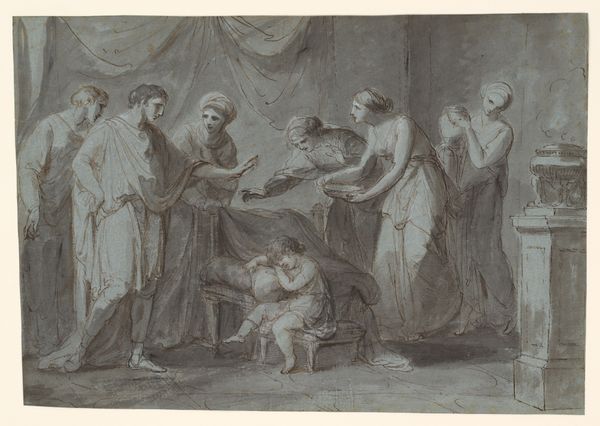
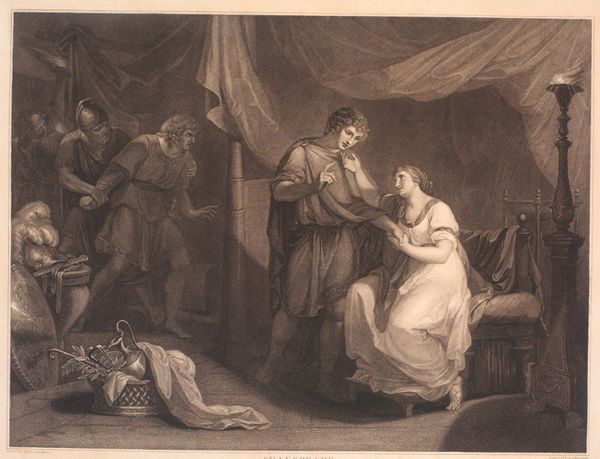
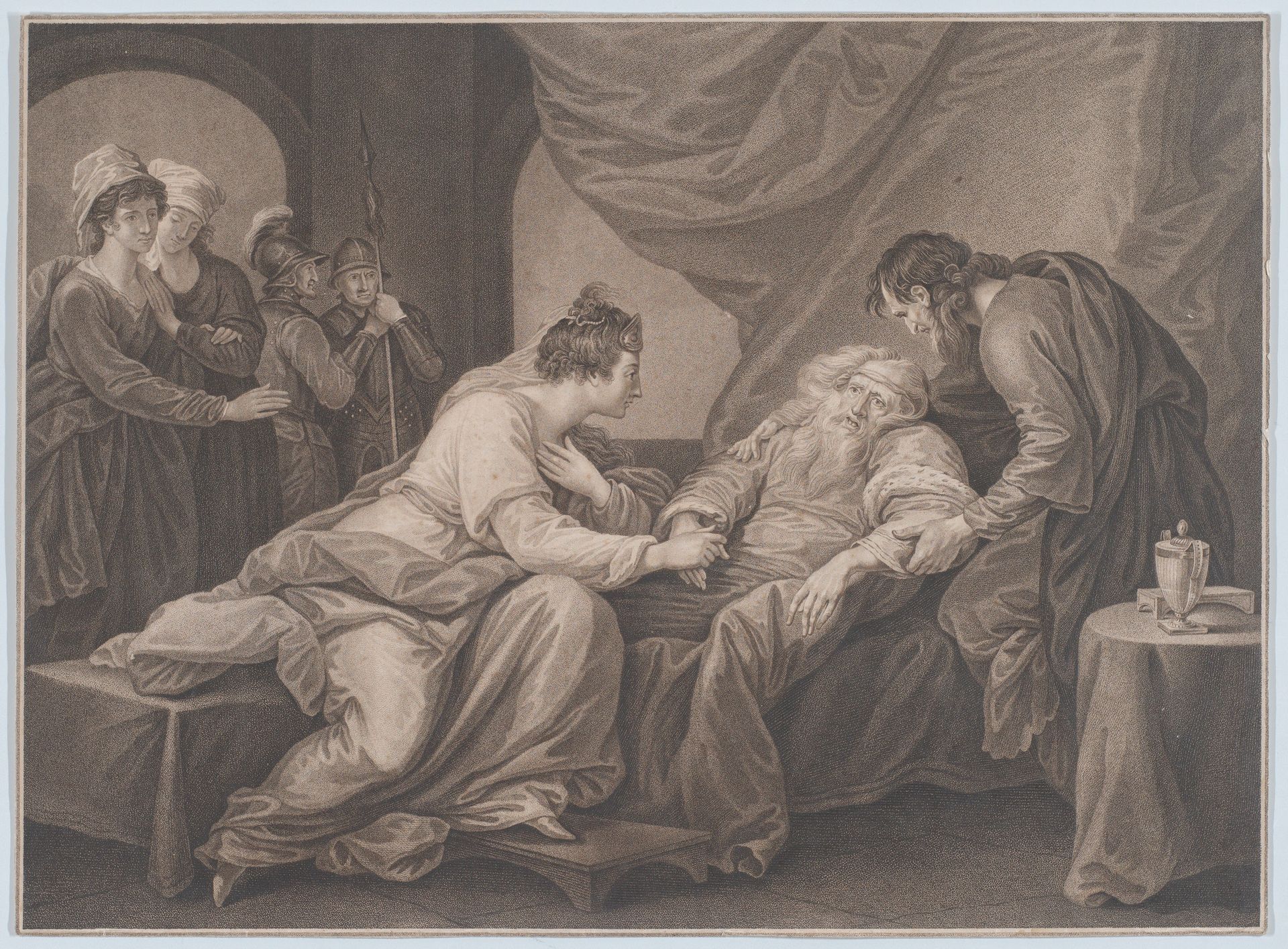
Francesco Bartolozzi created this print, “King Lear and Cordelia”, based on Act 4, Scene 7 of Shakespeare’s King Lear. Bartolozzi was working in late 18th century London, a place gripped by debates around sensibility and the emotional life. Here, we witness Cordelia’s tender reconciliation with her father, King Lear. What strikes me is not only the intimacy, but how it departs from traditional representations of femininity. Cordelia embodies compassion and political strength, challenging the stereotype of women as purely domestic figures. As Lear awakens, he asks, “Pray, do not mock me: I am a very foolish fond old man.” His vulnerability is palpable. Cordelia kneels beside him, not in submission, but in loving support, her hand gently clasped in his. Bartolozzi captures a moment of profound emotional and social complexity. Through Cordelia’s character, he offers a commentary on power, gender, and the possibility of redemption. It’s as if Bartolozzi asks us to consider how societal roles can be redefined through empathy.
King Lear and Cordelia (Shakespeare, King Lear, Act 4, Scene 7) 1778 - 1788

Francesco Bartolozzi
1728 - 1815
The Metropolitan Museum of Art
Metropolitan Museum of Art, New York, NYArtwork details
- Dimensions
- Sheet (trimmed within plate): 12 5/8 × 17 3/16 in. (32.1 × 43.7 cm)
- Location
- Metropolitan Museum of Art, New York, NY
- Copyright
- Public Domain
Comments
No comments
About this artwork
Francesco Bartolozzi created this print, “King Lear and Cordelia”, based on Act 4, Scene 7 of Shakespeare’s King Lear. Bartolozzi was working in late 18th century London, a place gripped by debates around sensibility and the emotional life. Here, we witness Cordelia’s tender reconciliation with her father, King Lear. What strikes me is not only the intimacy, but how it departs from traditional representations of femininity. Cordelia embodies compassion and political strength, challenging the stereotype of women as purely domestic figures. As Lear awakens, he asks, “Pray, do not mock me: I am a very foolish fond old man.” His vulnerability is palpable. Cordelia kneels beside him, not in submission, but in loving support, her hand gently clasped in his. Bartolozzi captures a moment of profound emotional and social complexity. Through Cordelia’s character, he offers a commentary on power, gender, and the possibility of redemption. It’s as if Bartolozzi asks us to consider how societal roles can be redefined through empathy.
Comments
No comments