About this artwork
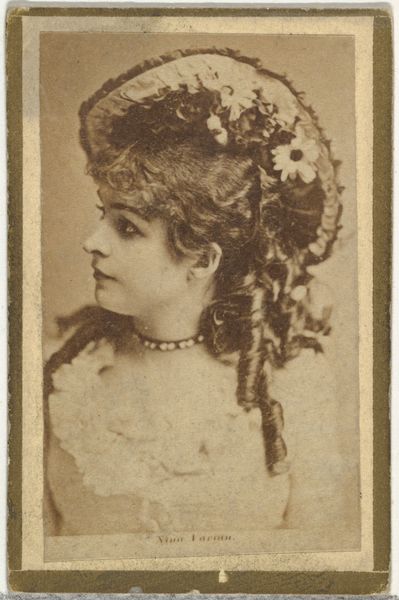
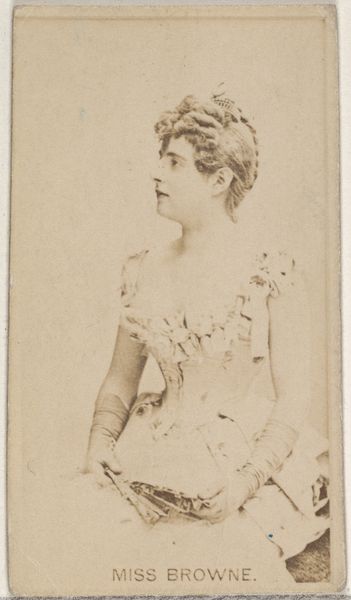
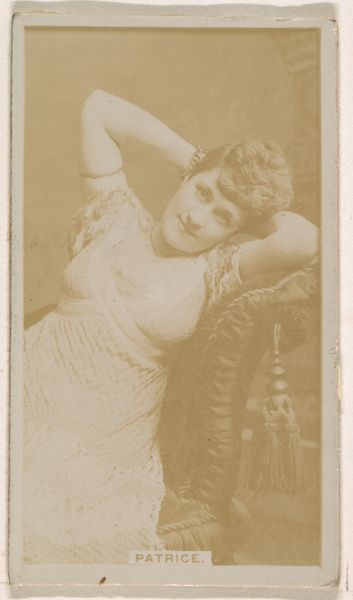
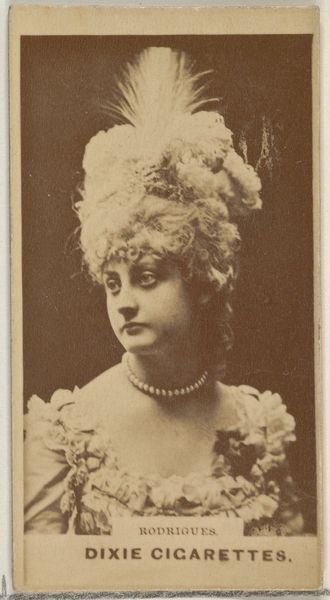
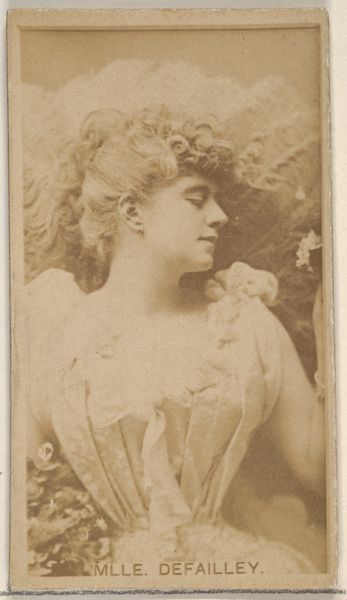
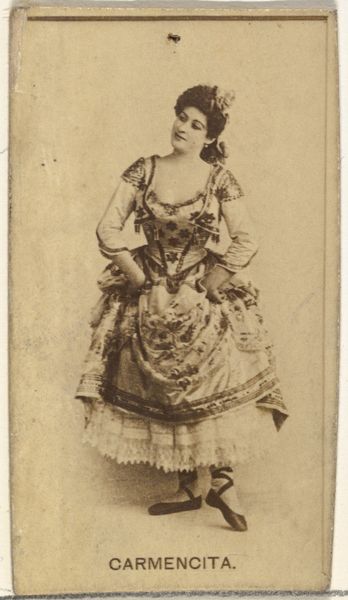
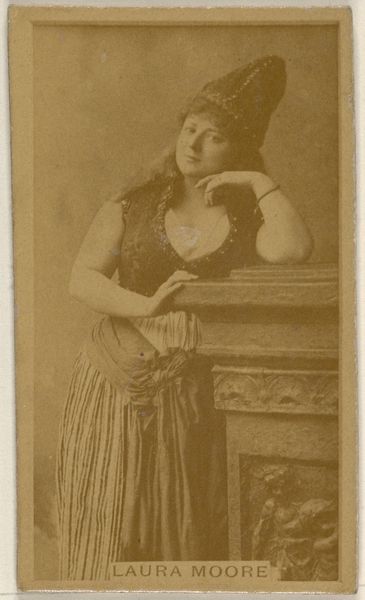
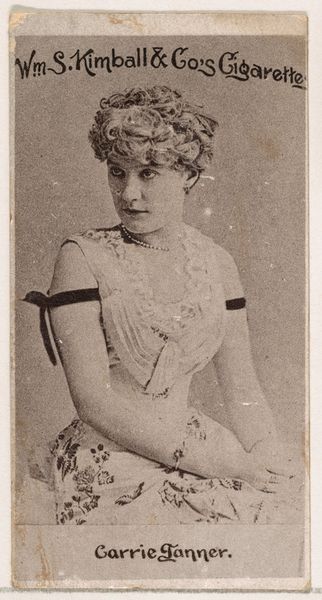
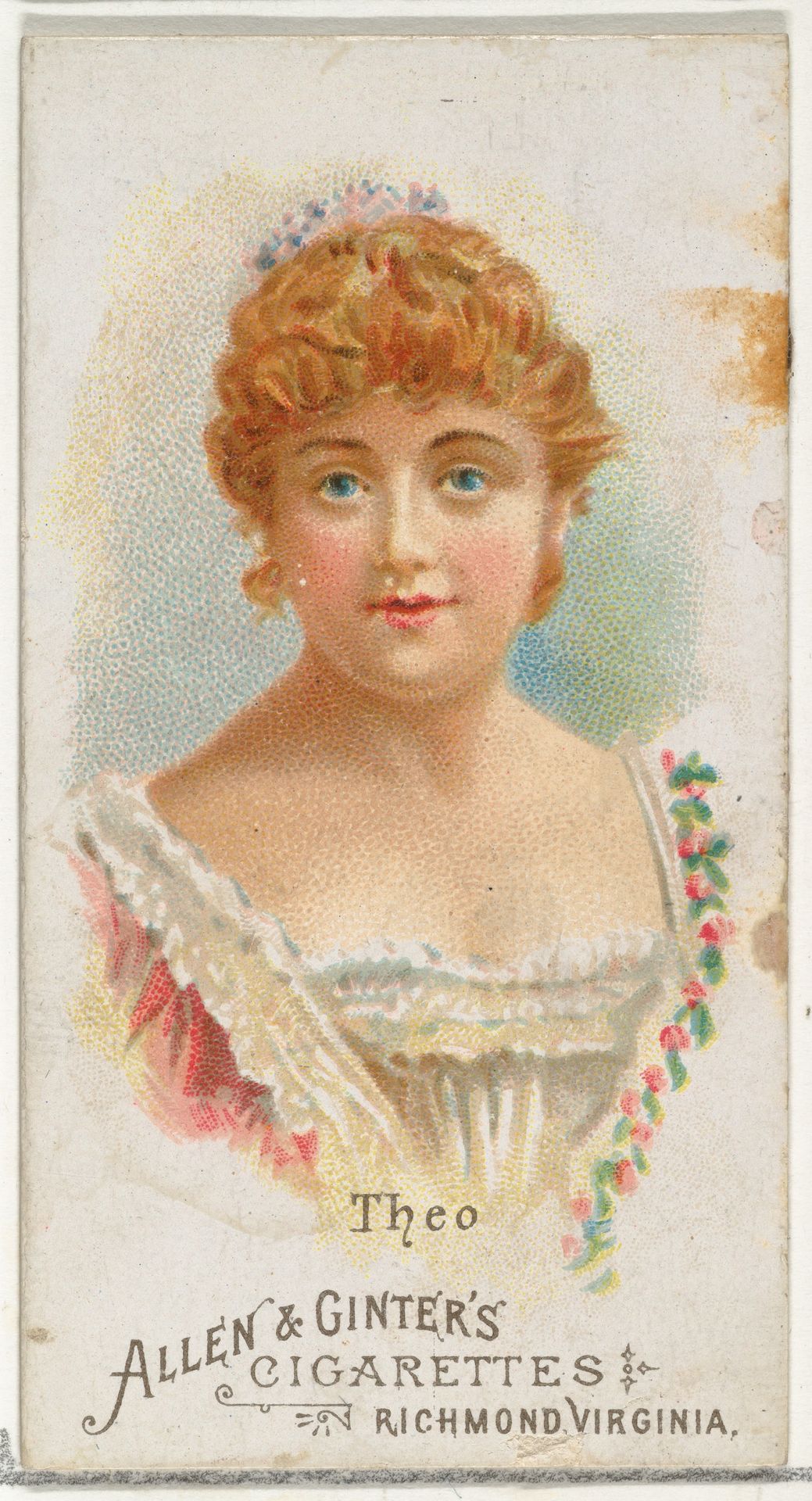
This small chromolithograph, "Theo," was printed by Allen & Ginter, a cigarette company in Richmond, Virginia, as part of their "World’s Beauties" series. These cards were collected and traded, offering a glimpse into the idealized images of women circulating in the late 19th century. Note the delicate features and fashionable attire, signifiers of beauty and status during this period. But also consider the broader context: these images were commodities, distributed to promote the consumption of tobacco, and they reflect the male gaze that dominated both advertising and art. The "World’s Beauties" series suggests an attempt to appeal to consumers through the allure of global culture, but in doing so, it also reinforced notions of exoticism and racial difference. “Theo” is a window into the complex ways in which beauty, commerce, and cultural identity were intertwined in this historical moment. The piece invites us to consider how these representations may have shaped the perceptions and aspirations of women and men alike.
Theo, from World's Beauties, Series 1 (N26) for Allen & Ginter Cigarettes 1888


Artwork details
- Dimensions
- Sheet: 2 3/4 x 1 1/2 in. (7 x 3.8 cm)
- Location
- Metropolitan Museum of Art, New York, NY
- Copyright
- Public Domain
Comments
No comments
About this artwork
This small chromolithograph, "Theo," was printed by Allen & Ginter, a cigarette company in Richmond, Virginia, as part of their "World’s Beauties" series. These cards were collected and traded, offering a glimpse into the idealized images of women circulating in the late 19th century. Note the delicate features and fashionable attire, signifiers of beauty and status during this period. But also consider the broader context: these images were commodities, distributed to promote the consumption of tobacco, and they reflect the male gaze that dominated both advertising and art. The "World’s Beauties" series suggests an attempt to appeal to consumers through the allure of global culture, but in doing so, it also reinforced notions of exoticism and racial difference. “Theo” is a window into the complex ways in which beauty, commerce, and cultural identity were intertwined in this historical moment. The piece invites us to consider how these representations may have shaped the perceptions and aspirations of women and men alike.
Comments
No comments