About this artwork
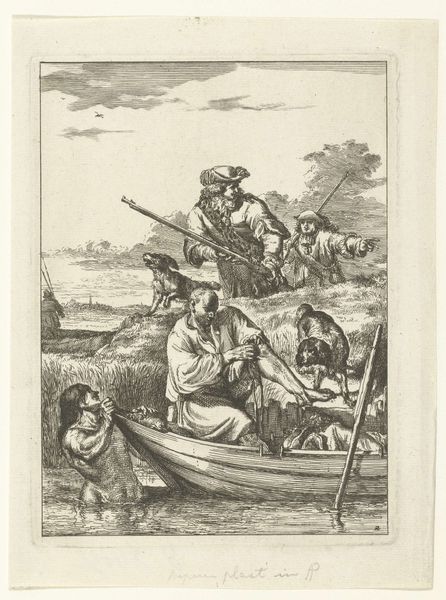
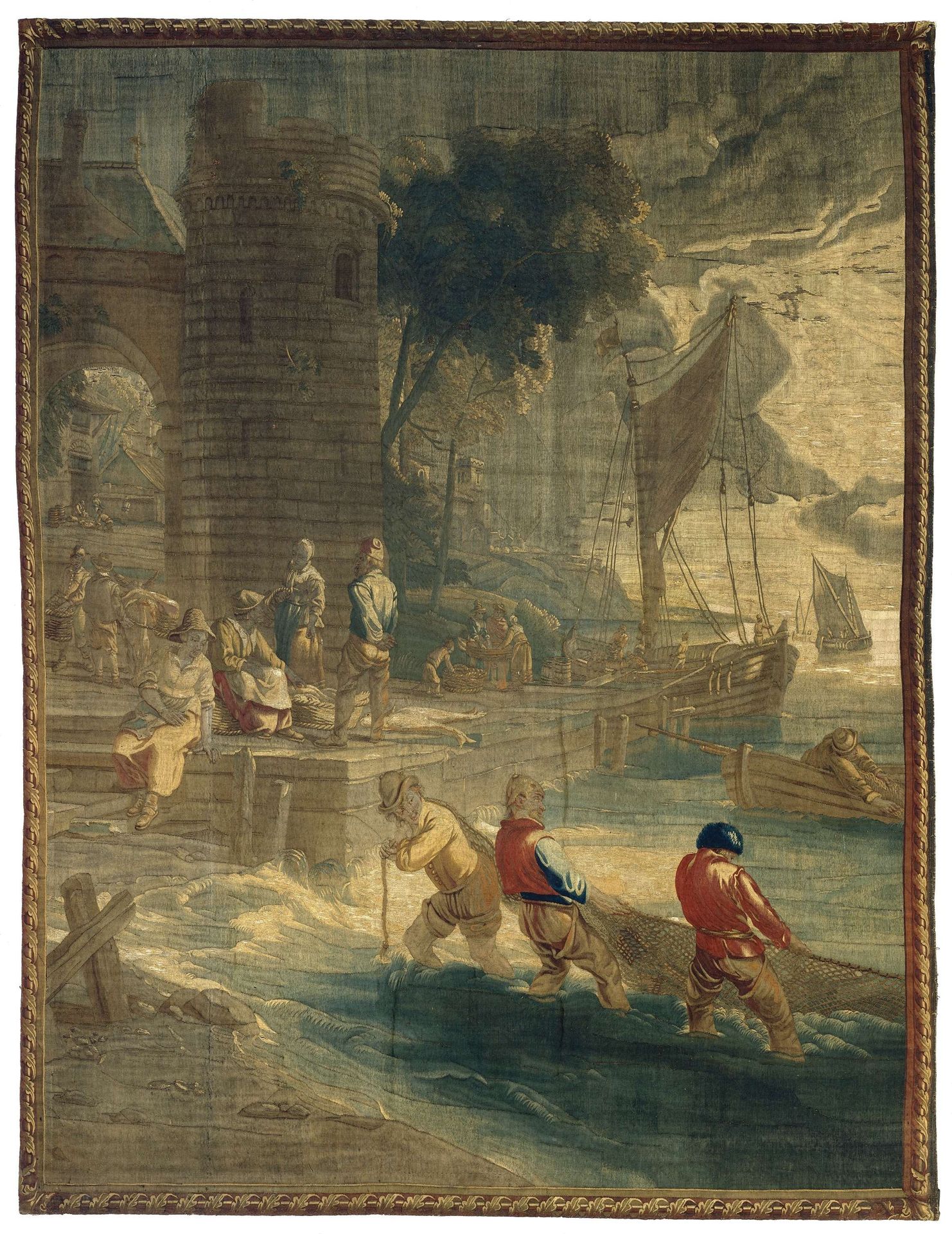
Urbanus Leyniers created 'De viskade' as a large-scale woven tapestry. Crafted from wool and silk, this tapestry depicts a bustling fishing scene. Tapestry is one of the most labor-intensive art forms, requiring skilled artisans to interlace threads on a loom. The subtle gradations of color and intricate details reveal the weaver's mastery, transforming simple strands into a rich panorama. Leyniers likely designed the composition, with the time-consuming weaving executed by other workshop members. The monumental size of the work underscores the immense amount of labor involved, reflecting both the value placed on skilled craftsmanship and the social hierarchies of the time. Consider also the context in which such a tapestry would have been displayed. Likely adorning the walls of a wealthy home, it served as both decoration and a symbol of status, showcasing the patron’s ability to command luxury goods and skilled labor. It’s important to remember that objects like these are not just beautiful things, but also evidence of how making and consumption are always tied to wider economic and social realities.

Artwork details
- Medium
- weaving, textile
- Dimensions
- height 336.0 cm, width 260.0 cm
- Copyright
- Rijks Museum: Open Domain
Tags
narrative-art
baroque
weaving
landscape
textile
genre-painting
mixed media
Comments
No comments
About this artwork
Urbanus Leyniers created 'De viskade' as a large-scale woven tapestry. Crafted from wool and silk, this tapestry depicts a bustling fishing scene. Tapestry is one of the most labor-intensive art forms, requiring skilled artisans to interlace threads on a loom. The subtle gradations of color and intricate details reveal the weaver's mastery, transforming simple strands into a rich panorama. Leyniers likely designed the composition, with the time-consuming weaving executed by other workshop members. The monumental size of the work underscores the immense amount of labor involved, reflecting both the value placed on skilled craftsmanship and the social hierarchies of the time. Consider also the context in which such a tapestry would have been displayed. Likely adorning the walls of a wealthy home, it served as both decoration and a symbol of status, showcasing the patron’s ability to command luxury goods and skilled labor. It’s important to remember that objects like these are not just beautiful things, but also evidence of how making and consumption are always tied to wider economic and social realities.
Comments
No comments