About this artwork
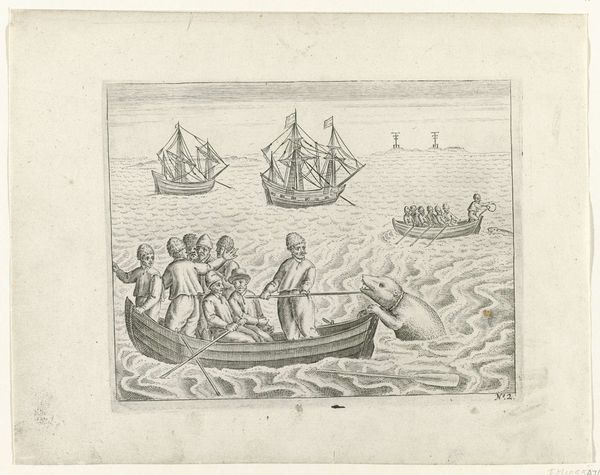
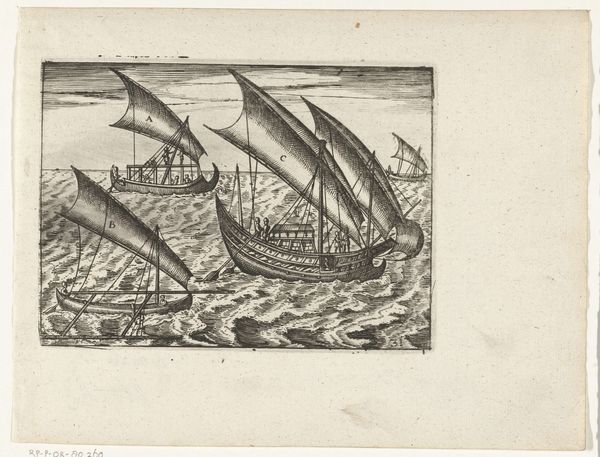
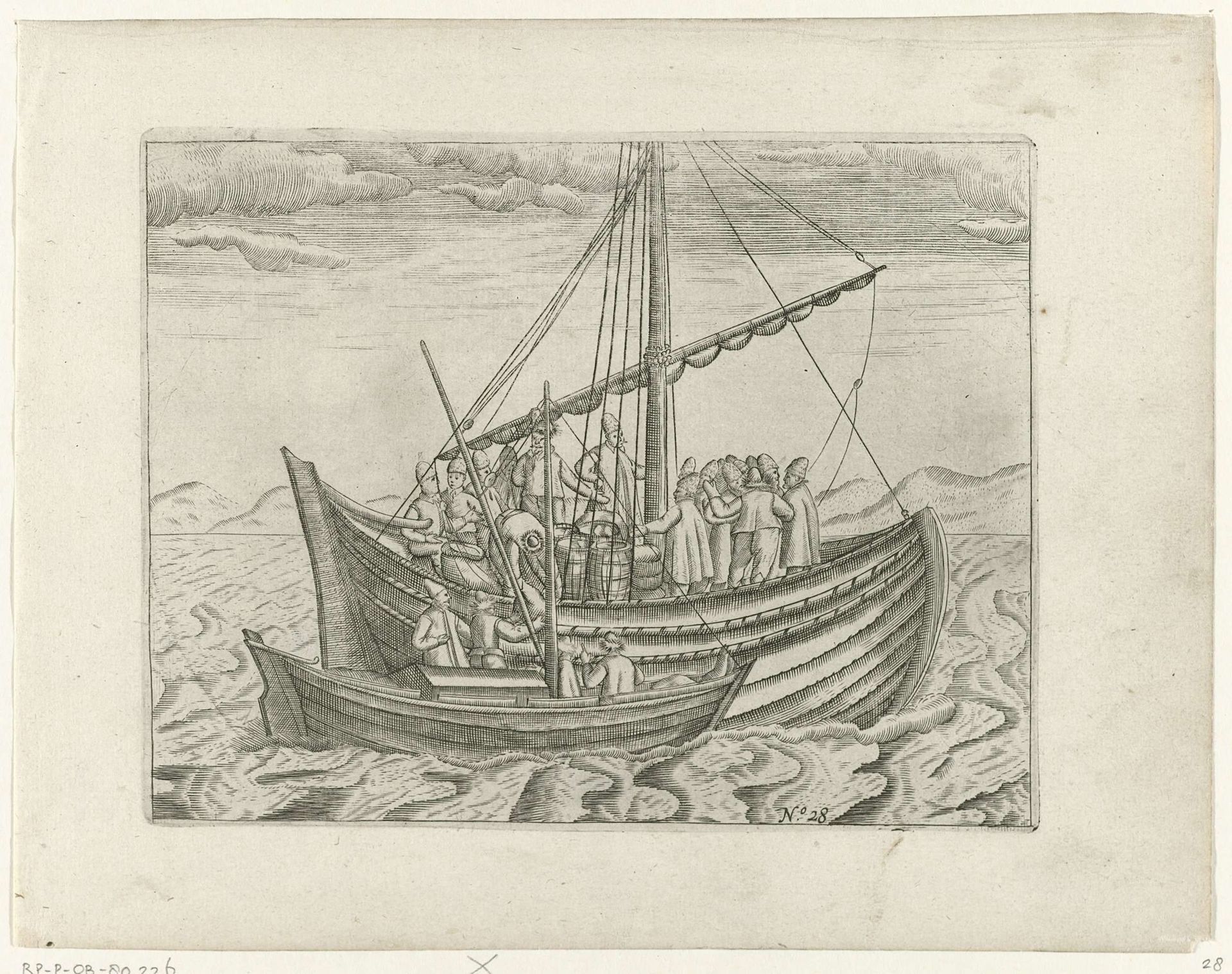
Editor: Here we have "De ontmoeting met een Russische lodja, 1597", created between 1615 and 1617 by an anonymous artist. It's currently housed in the Rijksmuseum. This ink drawing possesses a captivating old engraving style, with figures huddled on a boat battling what appears to be very choppy seas. What statements does it make, or questions does it pose about the relationship between cultures during this period? Curator: Well, seeing this, I immediately think about the loaded history of encounters. What does "meeting" or "encounter" really signify in the context of 16th-century European expansion? I think it is important to consider this artwork as participating in the rhetoric of exploration and perhaps even a subtle glorification of power dynamics that often overshadow the human cost. How do you think the depiction of the figures contributes to this narrative? Editor: It's interesting that you highlight the figures – their depiction appears almost incidental. Does their placement and representation then downplay any sense of individuality or potential conflict during these "encounters?" Curator: Precisely. This stylistic choice has socio-political implications. It could normalize the dominance of one culture over another, making any potential exploitation or displacement less visible. The turbulent seas perhaps offer a metaphor, yet it is essential to ask who controls the narrative about navigating such challenges, and whose stories remain untold. What do you make of the religious undertones? Editor: I hadn’t considered religious interpretations. So it prompts the questions of whose religious views were centered and whose were suppressed during encounters and exchanges. It encourages looking beyond face value. Thanks! Curator: Exactly! And by looking at the piece in this light, we can explore whose perspectives might be missing and consider the complex realities of these historical interactions.
De ontmoeting met een Russische lodja, 1597
1615 - 1617

Anonymous
@anonymousLocation
RijksmuseumArtwork details
- Dimensions
- height 142 mm, width 182 mm
- Location
- Rijksmuseum
- Copyright
- Rijks Museum: Open Domain
Tags
Comments
Share your thoughts
About this artwork
Editor: Here we have "De ontmoeting met een Russische lodja, 1597", created between 1615 and 1617 by an anonymous artist. It's currently housed in the Rijksmuseum. This ink drawing possesses a captivating old engraving style, with figures huddled on a boat battling what appears to be very choppy seas. What statements does it make, or questions does it pose about the relationship between cultures during this period? Curator: Well, seeing this, I immediately think about the loaded history of encounters. What does "meeting" or "encounter" really signify in the context of 16th-century European expansion? I think it is important to consider this artwork as participating in the rhetoric of exploration and perhaps even a subtle glorification of power dynamics that often overshadow the human cost. How do you think the depiction of the figures contributes to this narrative? Editor: It's interesting that you highlight the figures – their depiction appears almost incidental. Does their placement and representation then downplay any sense of individuality or potential conflict during these "encounters?" Curator: Precisely. This stylistic choice has socio-political implications. It could normalize the dominance of one culture over another, making any potential exploitation or displacement less visible. The turbulent seas perhaps offer a metaphor, yet it is essential to ask who controls the narrative about navigating such challenges, and whose stories remain untold. What do you make of the religious undertones? Editor: I hadn’t considered religious interpretations. So it prompts the questions of whose religious views were centered and whose were suppressed during encounters and exchanges. It encourages looking beyond face value. Thanks! Curator: Exactly! And by looking at the piece in this light, we can explore whose perspectives might be missing and consider the complex realities of these historical interactions.
Comments
Share your thoughts