About this artwork
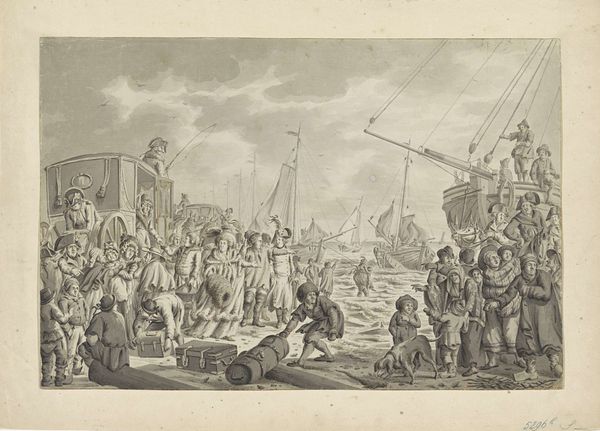
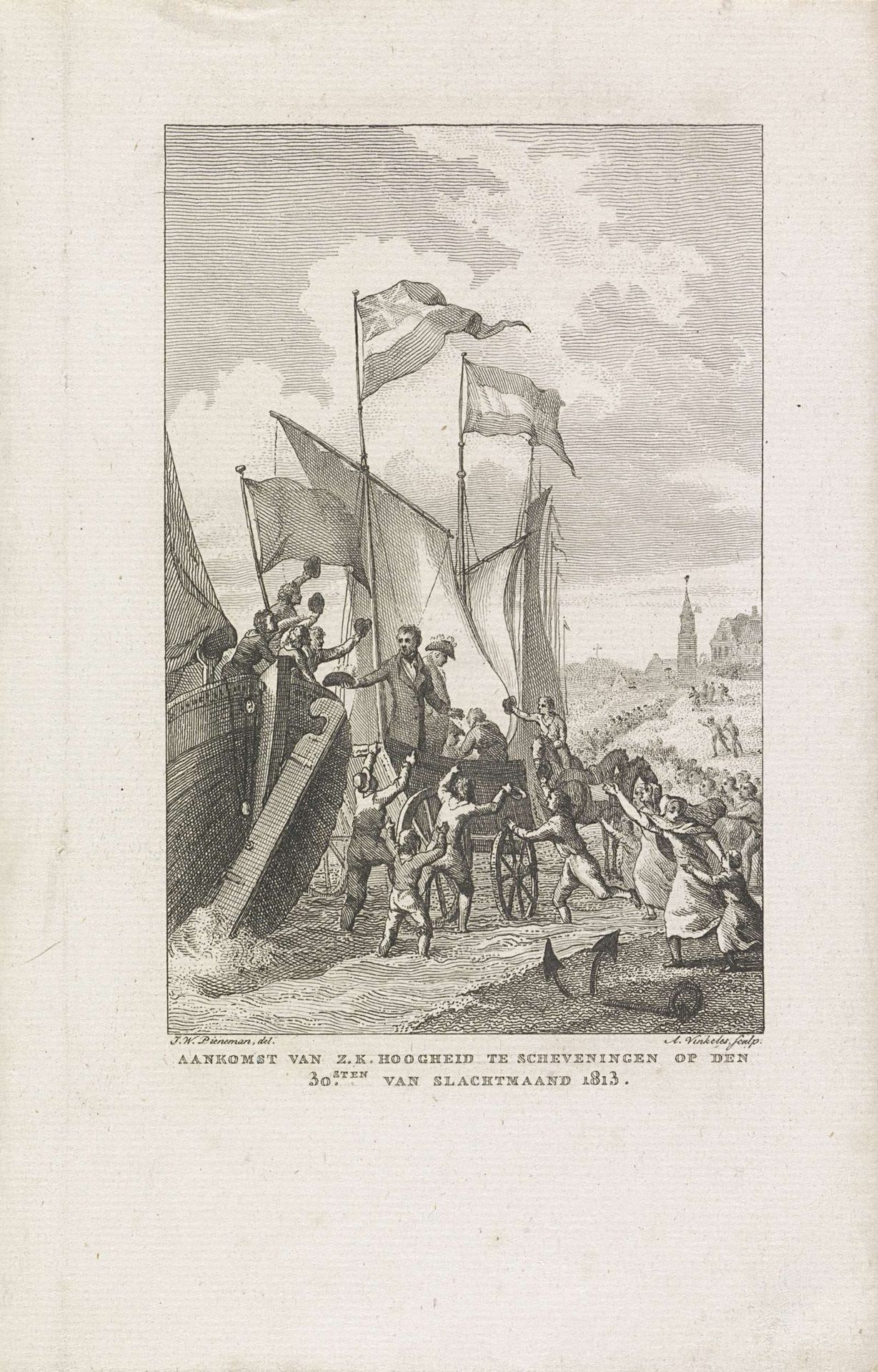
Abraham Vinkeles captured the arrival of King William I at Scheveningen in 1813 with ink on paper. This piece depicts a pivotal moment following the end of French rule, marking a shift in Dutch identity and sovereignty. The print shows King William I's triumphant return, stepping onto Dutch soil amidst cheering crowds. But it's worth noting who is pulling the King’s carriage and what the waving figures on the boat look like. How might race and class play a role in this ‘triumphant’ moment? It's fascinating to consider how Vinkeles, creating this artwork shortly after the depicted event, contributed to the construction of a national narrative. He captured not just a historical moment, but also the hopes and expectations of a nation reborn, while perhaps overlooking some of the complexities of the moment. What do you think this print tells us about power, identity, and the stories we tell ourselves about who we are?
Aankomst van koning Willem I te Scheveningen, 1813
1814 - 1816

Abraham Vinkeles
1790 - 1864Location
RijksmuseumArtwork details
- Medium
- print, engraving
- Dimensions
- height 227 mm, width 145 mm
- Location
- Rijksmuseum
- Copyright
- Rijks Museum: Open Domain
Tags
Comments
Share your thoughts
About this artwork
Abraham Vinkeles captured the arrival of King William I at Scheveningen in 1813 with ink on paper. This piece depicts a pivotal moment following the end of French rule, marking a shift in Dutch identity and sovereignty. The print shows King William I's triumphant return, stepping onto Dutch soil amidst cheering crowds. But it's worth noting who is pulling the King’s carriage and what the waving figures on the boat look like. How might race and class play a role in this ‘triumphant’ moment? It's fascinating to consider how Vinkeles, creating this artwork shortly after the depicted event, contributed to the construction of a national narrative. He captured not just a historical moment, but also the hopes and expectations of a nation reborn, while perhaps overlooking some of the complexities of the moment. What do you think this print tells us about power, identity, and the stories we tell ourselves about who we are?
Comments
Share your thoughts