About this artwork
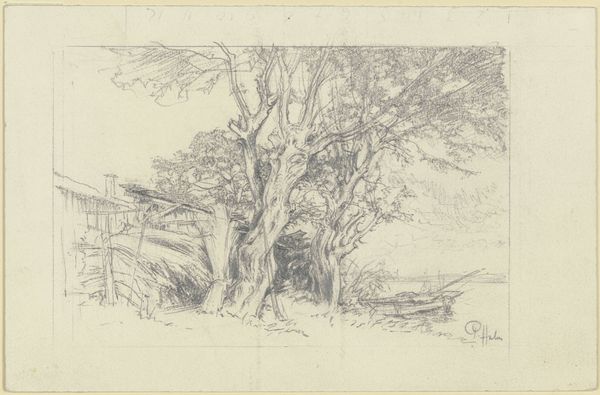
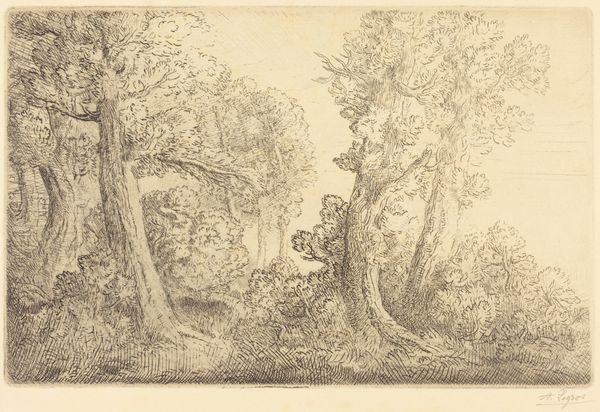
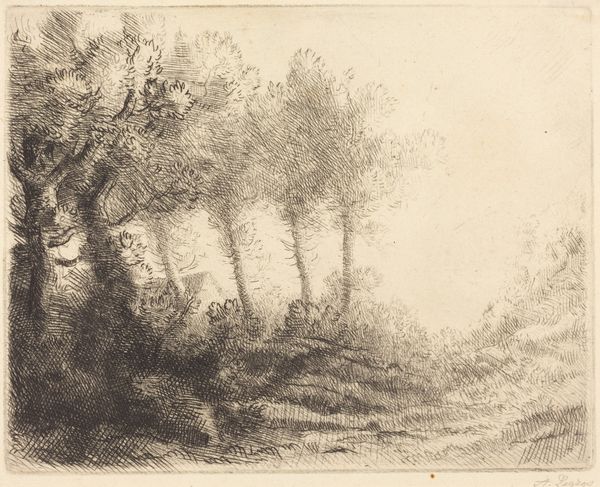
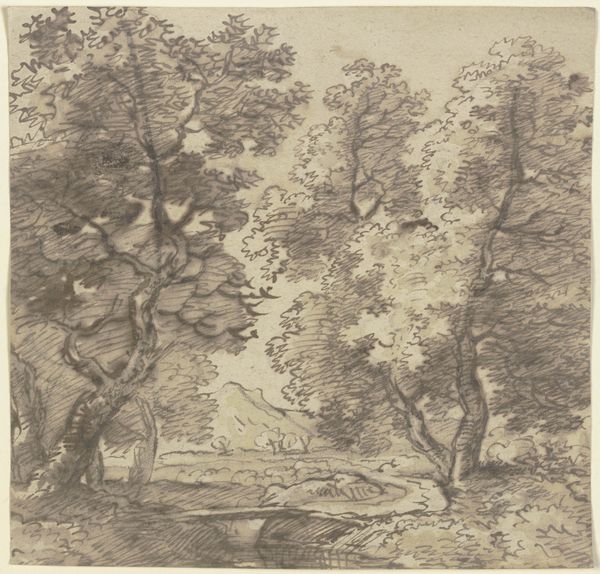
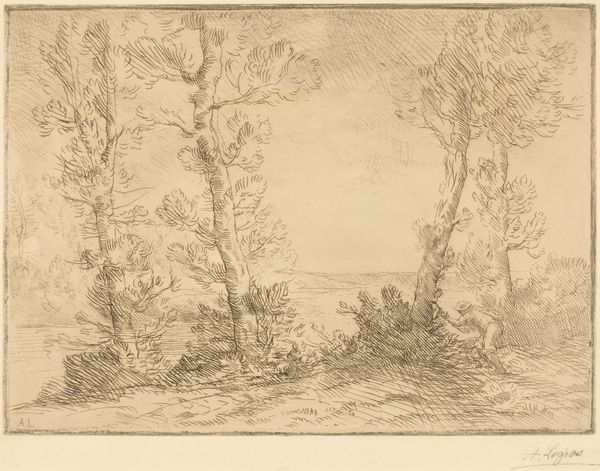
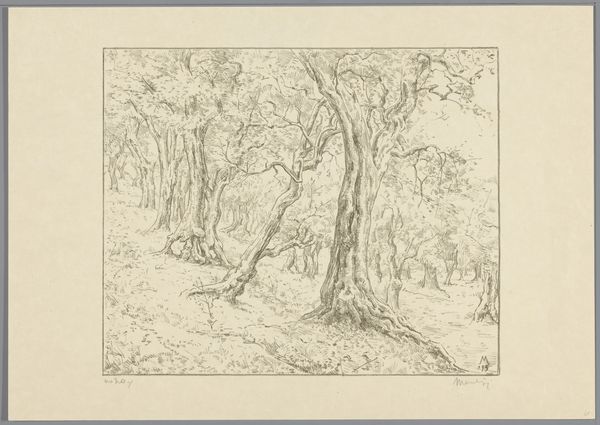
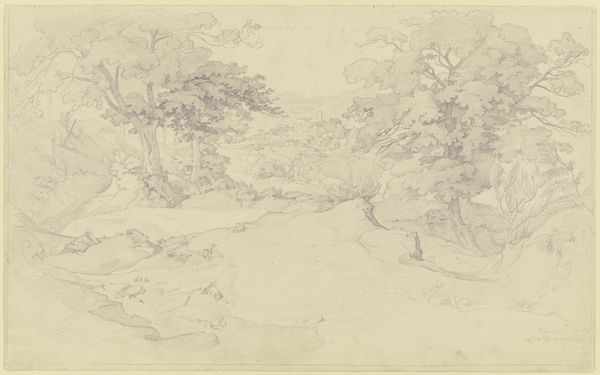
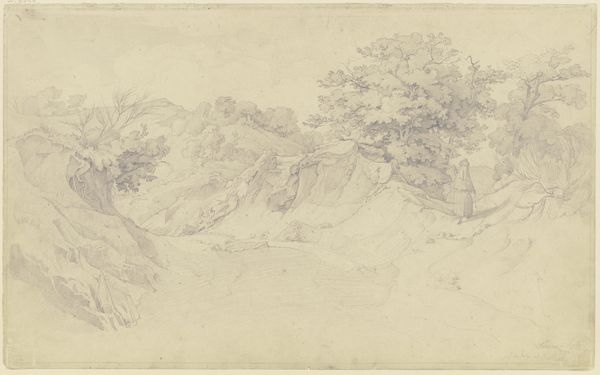
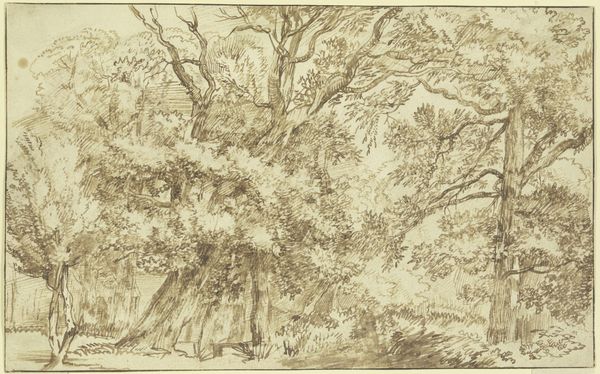
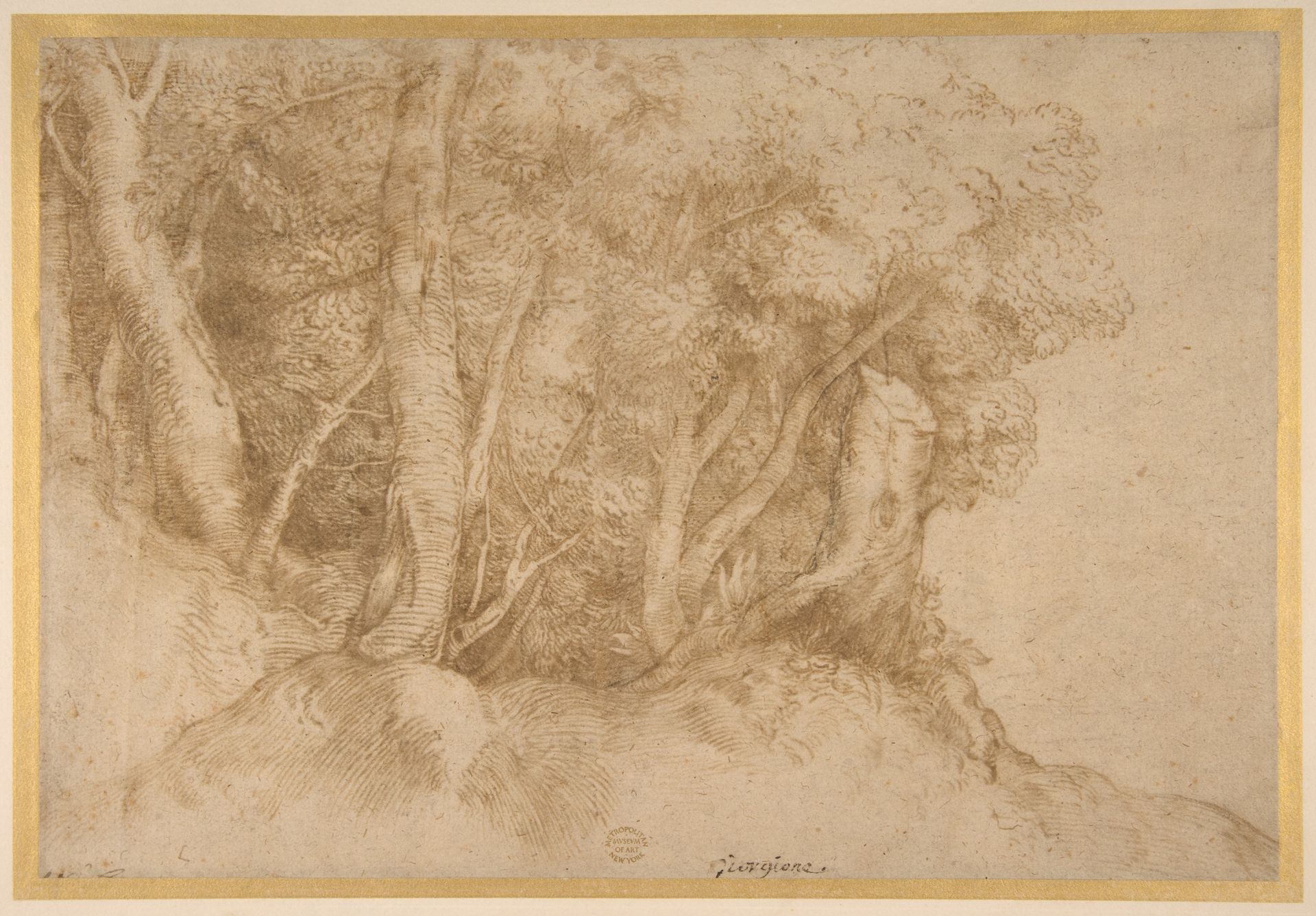
This drawing, "Group of Trees," was made by Titian sometime in the 16th century, using pen and brown ink on paper. Notice how the cluster of trees dominates the composition, their trunks and foliage filling almost the entire frame. Titian's drawing teems with a sense of dynamic growth and organic vitality. Look closely at the repetitive use of lines, which creates a dense, textured surface, especially in the foliage, that merges into a singular entity. The trees create a screen that obscures depth, drawing us into a space that feels both inviting and impenetrable. This drawing destabilizes traditional landscape conventions; it's not about panoramic views but rather about an intimate encounter with nature's forms. There is a shift from idealized landscapes to an exploration of the natural world. This approach mirrors broader artistic and philosophical movements of the time, where empirical observation began to challenge established ideals, opening new ways of thinking about perception. Here, the density of the lines functions not just aesthetically but embodies a shift toward a more direct and immediate engagement with the complexities of the natural world.
Group of Trees 1485 - 1576


Artwork details
- Medium
- drawing, print, pencil
- Dimensions
- 8 9/16 x 12 9/16in. (21.8 x 31.9cm)
- Location
- Metropolitan Museum of Art, New York, NY
- Copyright
- Public Domain
Tags
drawing
pencil sketch
landscape
etching
11_renaissance
pencil
Comments
No comments
About this artwork
This drawing, "Group of Trees," was made by Titian sometime in the 16th century, using pen and brown ink on paper. Notice how the cluster of trees dominates the composition, their trunks and foliage filling almost the entire frame. Titian's drawing teems with a sense of dynamic growth and organic vitality. Look closely at the repetitive use of lines, which creates a dense, textured surface, especially in the foliage, that merges into a singular entity. The trees create a screen that obscures depth, drawing us into a space that feels both inviting and impenetrable. This drawing destabilizes traditional landscape conventions; it's not about panoramic views but rather about an intimate encounter with nature's forms. There is a shift from idealized landscapes to an exploration of the natural world. This approach mirrors broader artistic and philosophical movements of the time, where empirical observation began to challenge established ideals, opening new ways of thinking about perception. Here, the density of the lines functions not just aesthetically but embodies a shift toward a more direct and immediate engagement with the complexities of the natural world.
Comments
No comments