About this artwork
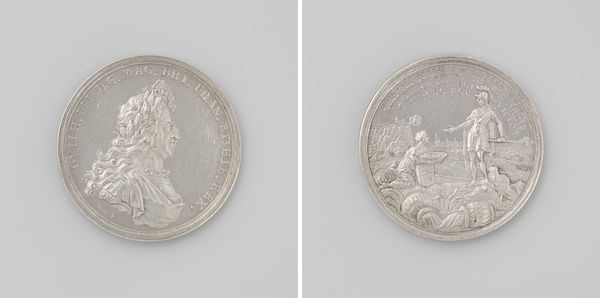
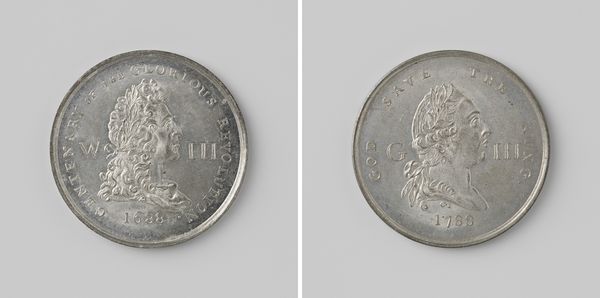
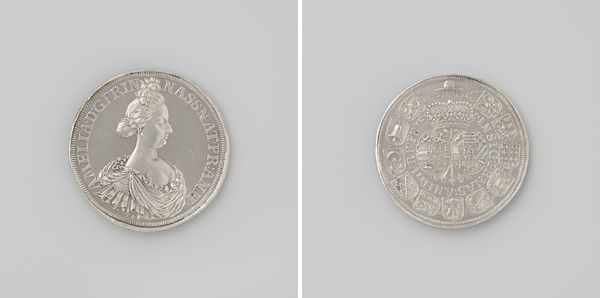
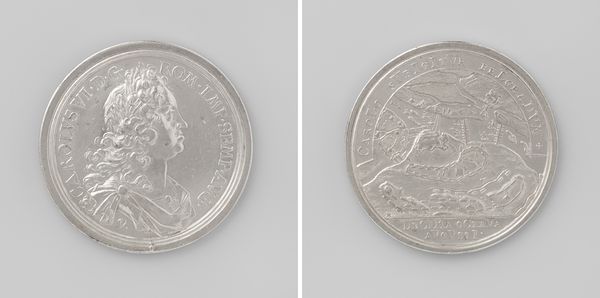
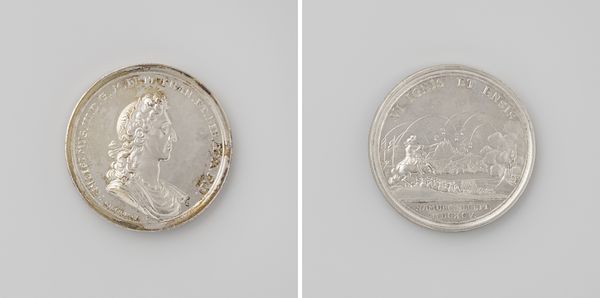
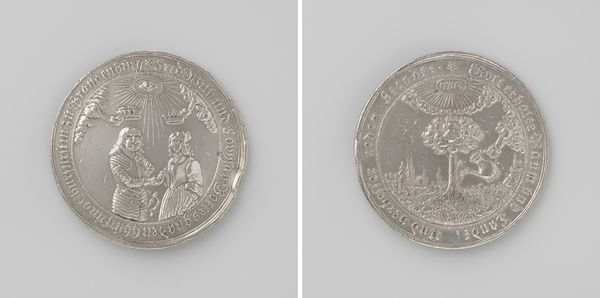
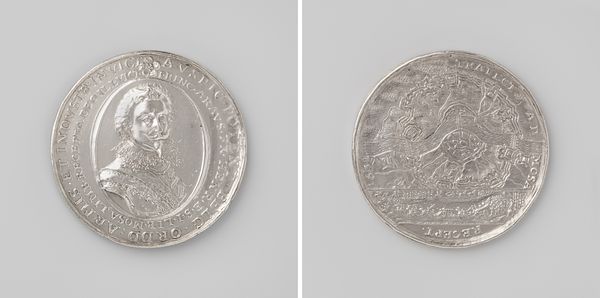
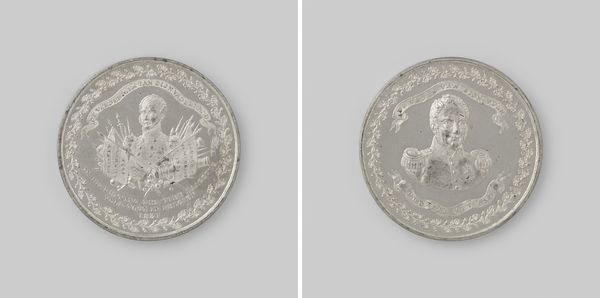
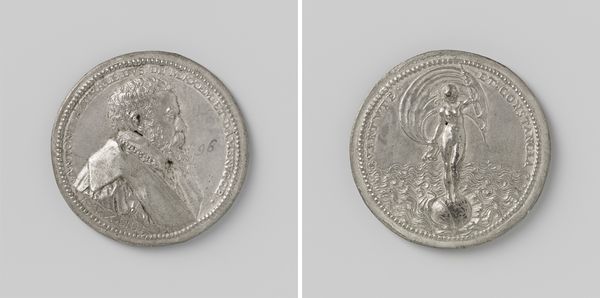
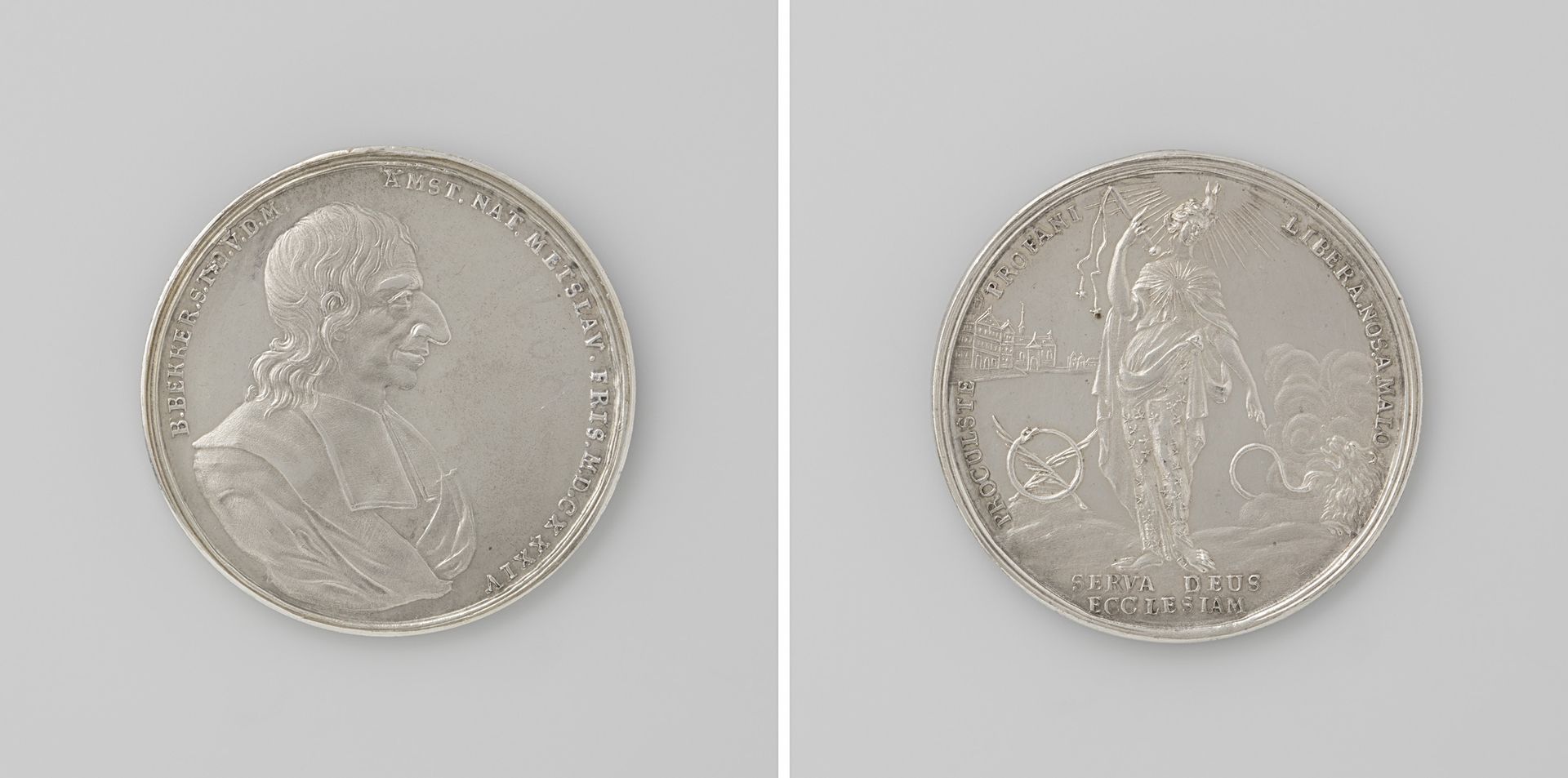
Editor: Here we have a metal relief from 1698 by Jan Smeltzing, titled "Balthasar Bekker, predikant te Amsterdam, door de synode te Alkmaar afgezet." The stark contrast and cool metal feel lend a serious mood. It's intriguing how a story unfolds on such a small scale. What visual elements strike you most in this piece? Curator: The formal composition invites immediate analysis. Observe the circular format—a closed system mirroring the confinement of Bekker’s situation. The starkness is not merely aesthetic, but structural. Note the division: the portrait on one side, allegorical scene on the other, representing the personal and public dimensions of Bekker's conflict. Consider also how the lettering functions; not merely as labels but as compositional elements tightening the conceptual framework. Editor: The allegorical scene is a bit puzzling. How do we decode its message, focusing on its visual language? Curator: Precisely! Semiotics guide our path. The figure, possibly Ecclesia, stands defiant. The broken snake symbolizes defeated falsehoods, and the distant cityscape implies a church in turmoil, and the staff could symbolize authority. But look closer; the flatness of the relief minimizes depth. Is this flatness a symbolic choice? Does it speak to a particular period style, or perhaps a deeper statement about the limitations imposed upon Bekker's world? Editor: I never considered the flatness as a deliberate choice! Seeing these visual cues helps clarify the narrative in a new light. I am seeing new dimensions by just observing what it contains, beyond just knowing. Curator: Precisely. Art invites such formal, rigorous, and enlightening dialogues, wouldn't you agree?
Balthasar Bekker, predikant te Amsterdam, door de synode te Alkmaar afgezet 1698

Artwork details
- Medium
- metal, relief
- Dimensions
- diameter 4.7 cm, weight 42.66 gr
- Copyright
- Rijks Museum: Open Domain
Tags
portrait
baroque
metal
relief
history-painting
Comments
No comments
About this artwork
Editor: Here we have a metal relief from 1698 by Jan Smeltzing, titled "Balthasar Bekker, predikant te Amsterdam, door de synode te Alkmaar afgezet." The stark contrast and cool metal feel lend a serious mood. It's intriguing how a story unfolds on such a small scale. What visual elements strike you most in this piece? Curator: The formal composition invites immediate analysis. Observe the circular format—a closed system mirroring the confinement of Bekker’s situation. The starkness is not merely aesthetic, but structural. Note the division: the portrait on one side, allegorical scene on the other, representing the personal and public dimensions of Bekker's conflict. Consider also how the lettering functions; not merely as labels but as compositional elements tightening the conceptual framework. Editor: The allegorical scene is a bit puzzling. How do we decode its message, focusing on its visual language? Curator: Precisely! Semiotics guide our path. The figure, possibly Ecclesia, stands defiant. The broken snake symbolizes defeated falsehoods, and the distant cityscape implies a church in turmoil, and the staff could symbolize authority. But look closer; the flatness of the relief minimizes depth. Is this flatness a symbolic choice? Does it speak to a particular period style, or perhaps a deeper statement about the limitations imposed upon Bekker's world? Editor: I never considered the flatness as a deliberate choice! Seeing these visual cues helps clarify the narrative in a new light. I am seeing new dimensions by just observing what it contains, beyond just knowing. Curator: Precisely. Art invites such formal, rigorous, and enlightening dialogues, wouldn't you agree?
Comments
No comments