Possibly 1956
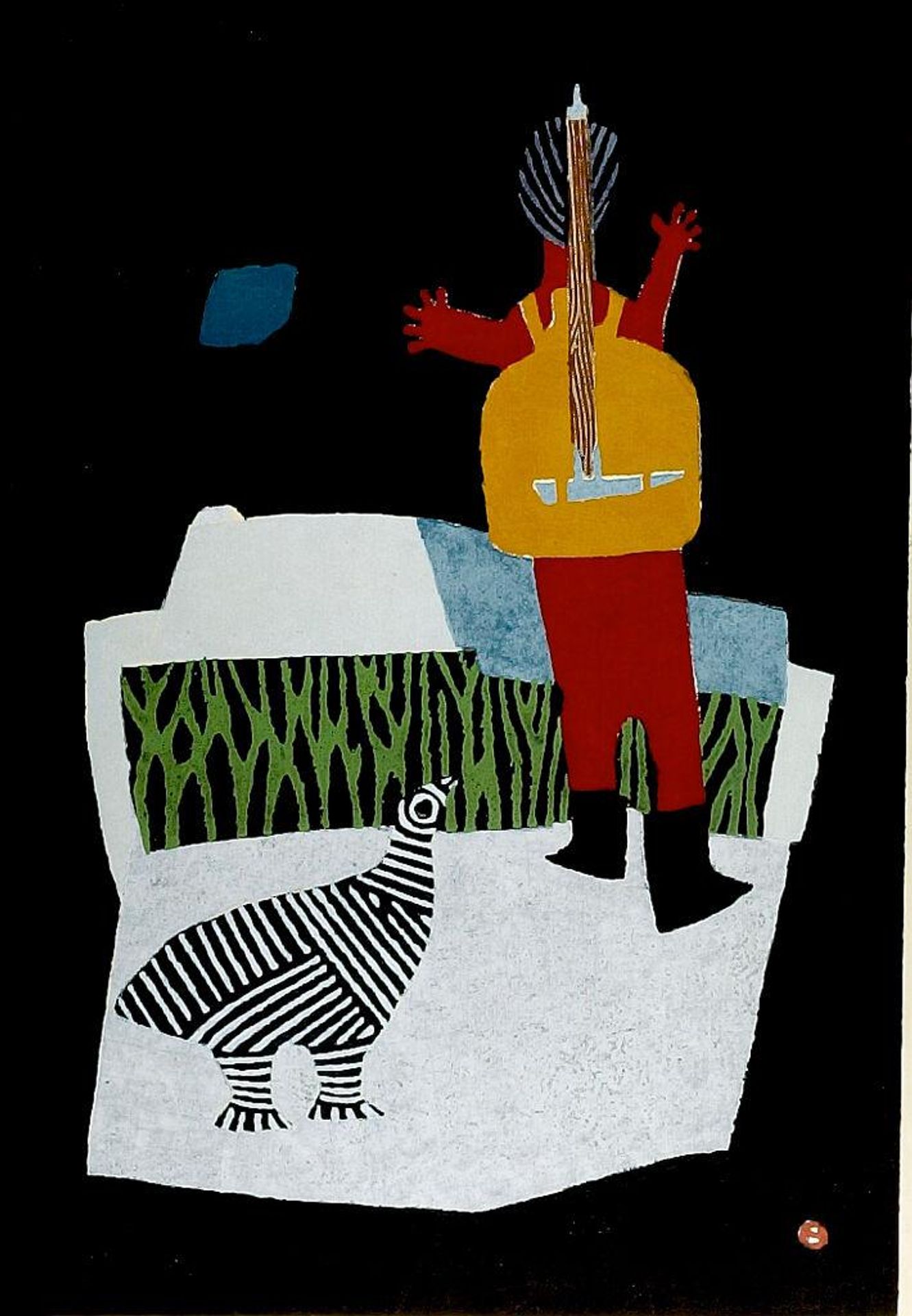
Parting


Listen to curator's interpretation
Curatorial notes
Curator: Azechi Umetarô’s woodcut print, “Parting,” now in the Harvard Art Museums, strikes me as quite melancholic, even lonely, with its sparse setting and isolated figures. Editor: It's fascinating how Azechi, using woodblock printing—a technique deeply rooted in craft traditions—depicts this scene. The process itself involves labor, from carving the wood to applying the ink. Curator: Absolutely, and we can see how the social context of postwar Japan might influence such a stark depiction. The figure’s backpack and raised hands—perhaps a traveler or refugee—echo the era's anxieties. Editor: Indeed, consider the materiality: the texture of the paper, the ink's density, all contributing to the print's overall impact as a manufactured object meant for consumption. Curator: The simplified forms and limited color palette, though, almost create a fable-like quality, reflecting the public role of art as both commentary and potential solace. Editor: Yes, the composition draws our eye, guiding how we perceive these figures in relation to the landscape—a calculated strategy to engage the viewer. Curator: Ultimately, "Parting" reveals the power of art to capture a moment in history while also resonating with universal human experiences. Editor: And through its very production, it reminds us of the intersection of artistic labor and cultural exchange.