About this artwork
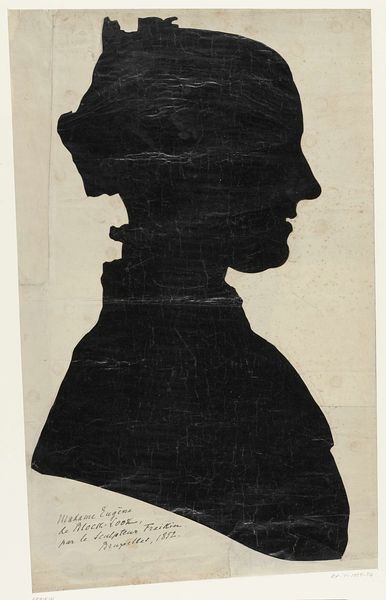
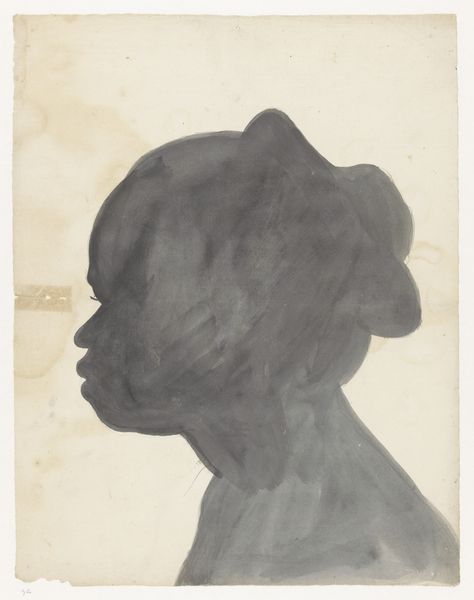
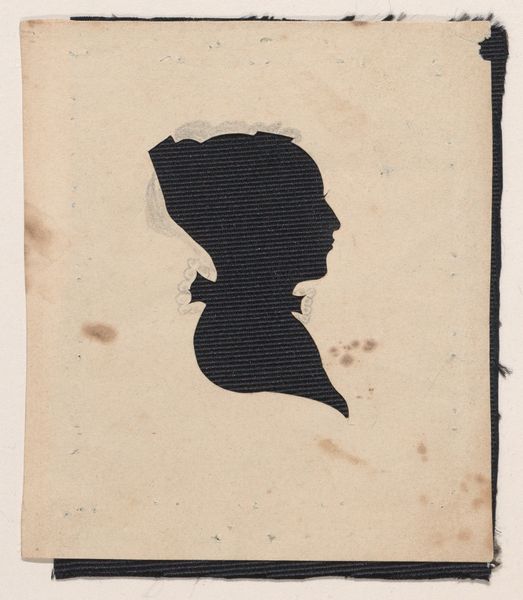
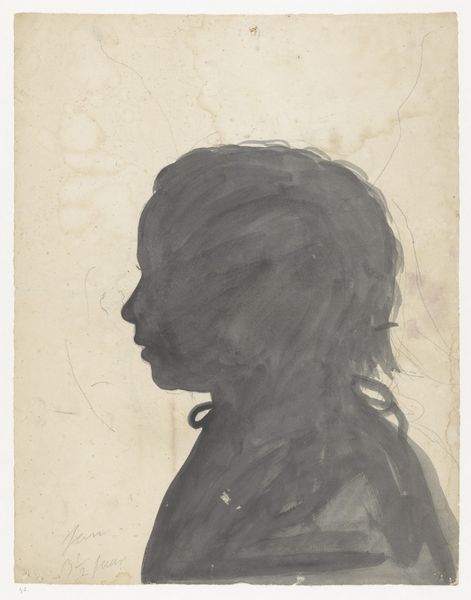
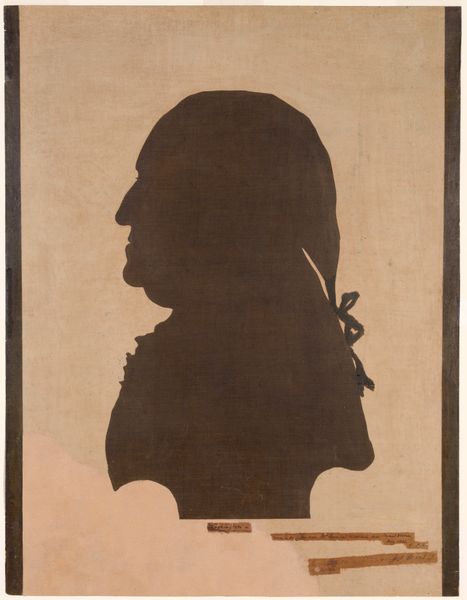
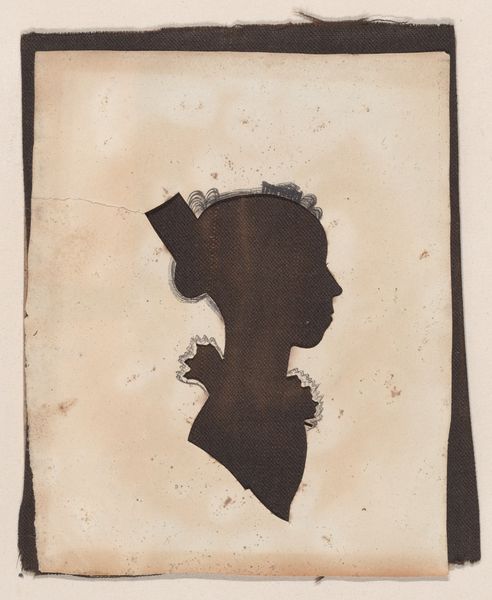
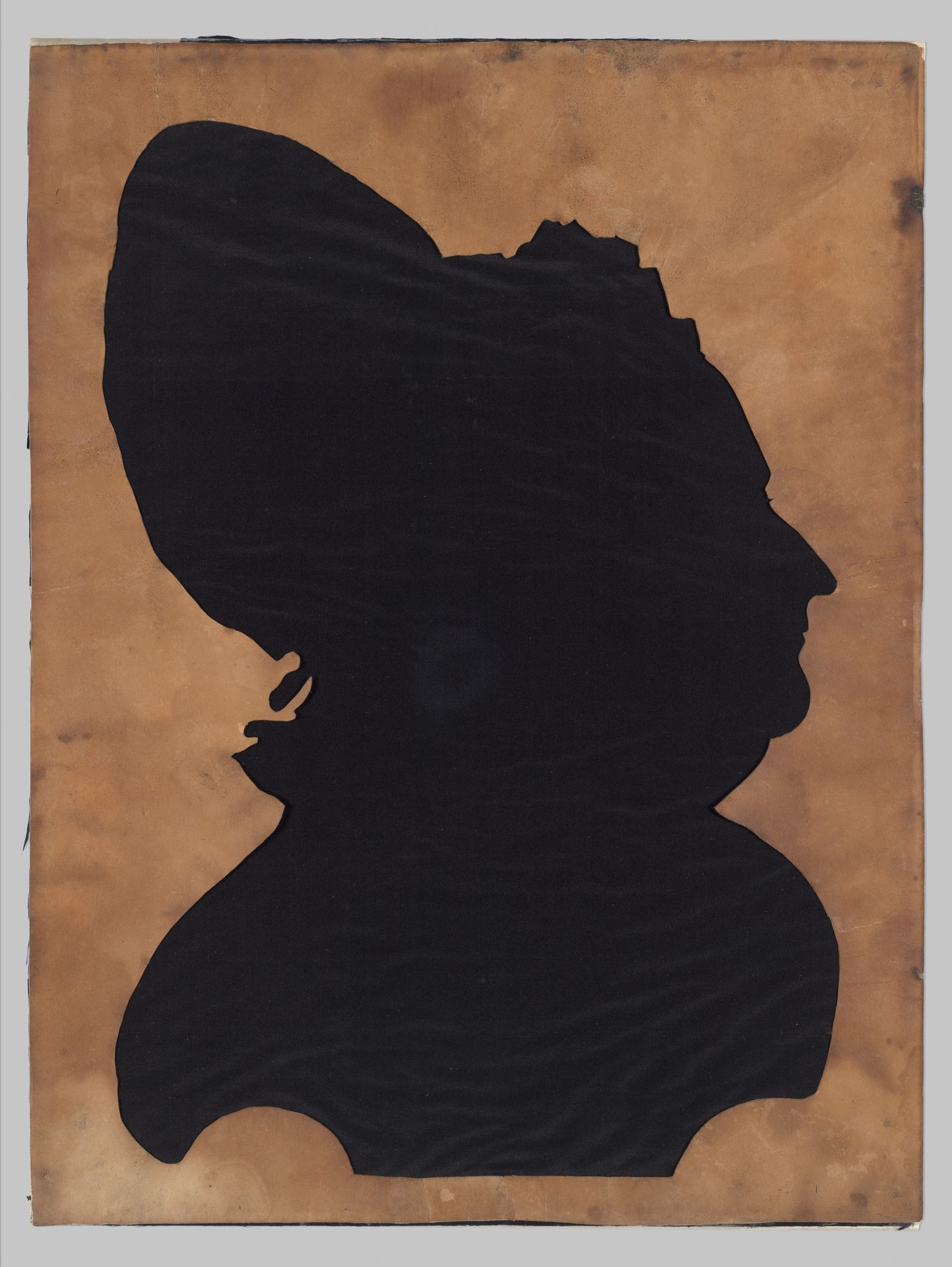
This is Eleanor Parke Custis's silhouette, "Portrait of Martha Washington," at the Metropolitan Museum of Art. The stark contrast of the black silhouette against the aged paper immediately captures the eye, an interplay between figure and ground. The silhouette, a profile view, emphasizes the shape and form of Martha Washington. The artist uses the simple outline to convey character and status. Consider the semiotics at play: the high hairstyle and formal attire, reduced to their outlines, speak to the codes of representation prevalent during this era. The lack of detail invites the viewer to project meaning, engaging with a history filtered through absence. The work challenges traditional portraiture. It destabilizes the conventional values associated with painted portraits by focusing on the essential form. The materiality of the paper, with its imperfections and signs of age, further underscores the passage of time and the evolving nature of historical representation.
Portrait of Martha Washington 1798

Eleanor Parke Custis
@eleanorparkecustis
The Metropolitan Museum of Art
Metropolitan Museum of Art, New York, NYArtwork details
- Medium
- drawing, print, paper
- Dimensions
- Mat: 21 1/4 × 16 1/8 in. (54 × 41 cm) Framed: 26 × 20 in. (66 × 50.8 cm)
- Location
- Metropolitan Museum of Art, New York, NY
- Copyright
- Public Domain
Tags
portrait
drawing
paper
history-painting
profile
Comments
No comments
About this artwork
This is Eleanor Parke Custis's silhouette, "Portrait of Martha Washington," at the Metropolitan Museum of Art. The stark contrast of the black silhouette against the aged paper immediately captures the eye, an interplay between figure and ground. The silhouette, a profile view, emphasizes the shape and form of Martha Washington. The artist uses the simple outline to convey character and status. Consider the semiotics at play: the high hairstyle and formal attire, reduced to their outlines, speak to the codes of representation prevalent during this era. The lack of detail invites the viewer to project meaning, engaging with a history filtered through absence. The work challenges traditional portraiture. It destabilizes the conventional values associated with painted portraits by focusing on the essential form. The materiality of the paper, with its imperfections and signs of age, further underscores the passage of time and the evolving nature of historical representation.
Comments
No comments