About this artwork
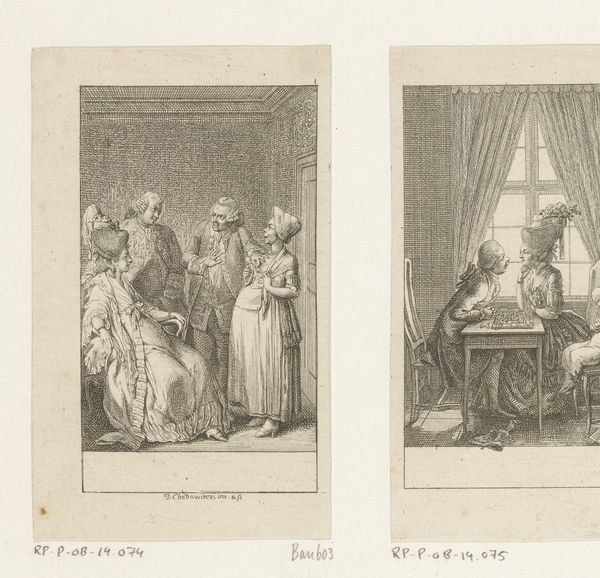
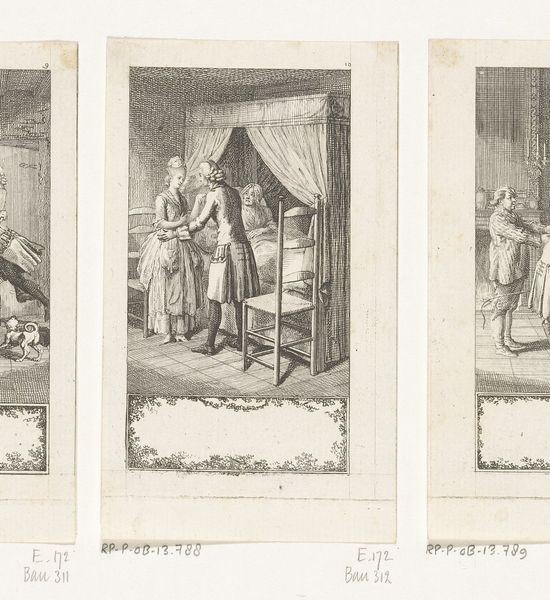
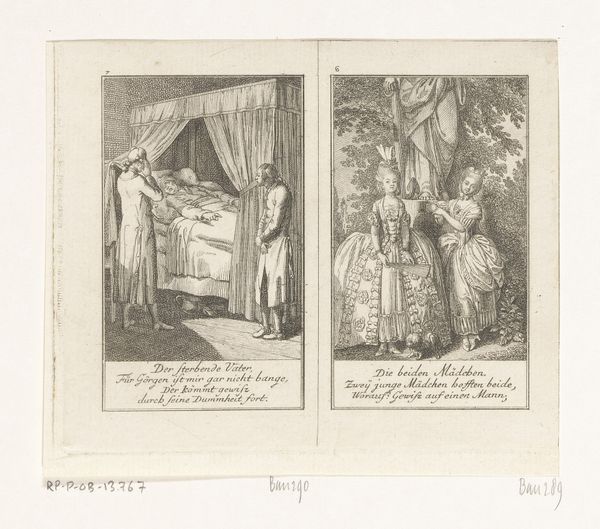
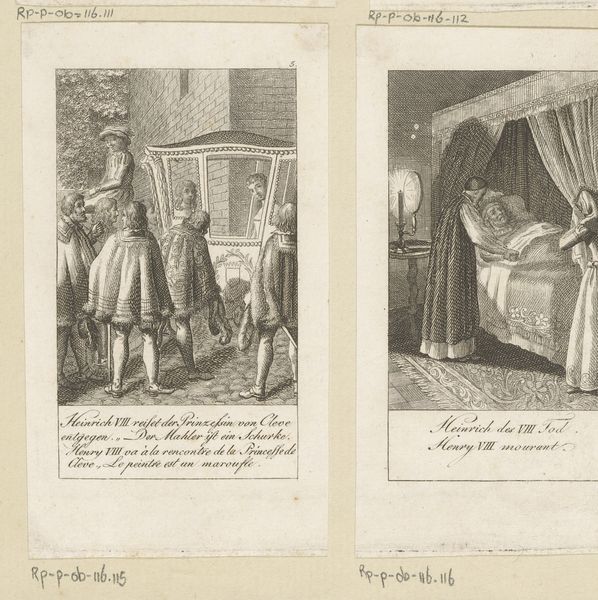
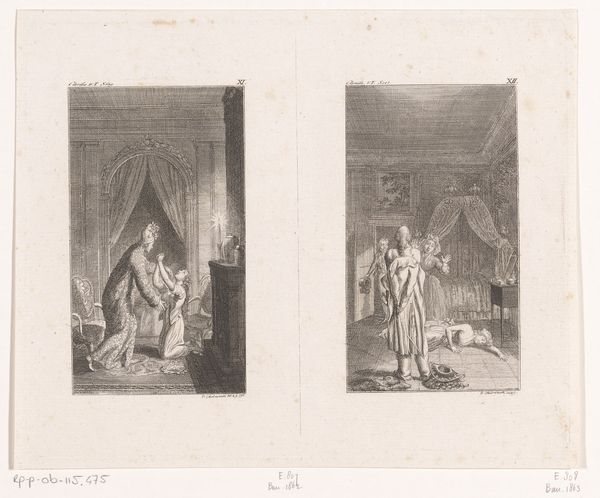
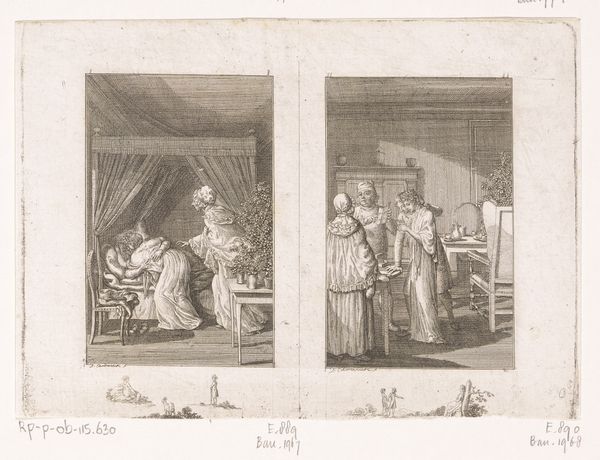
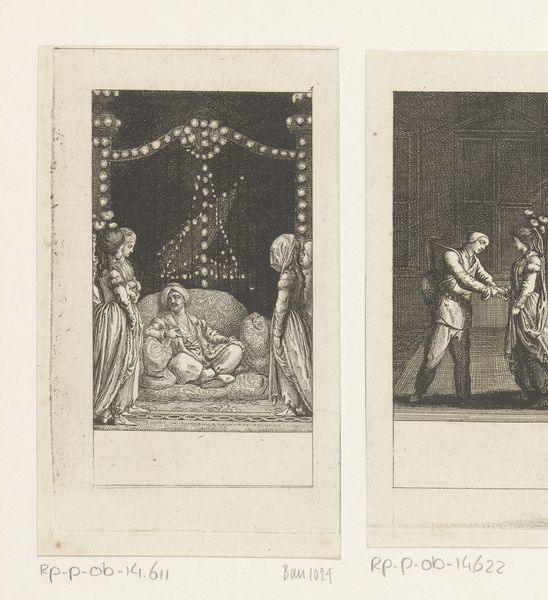
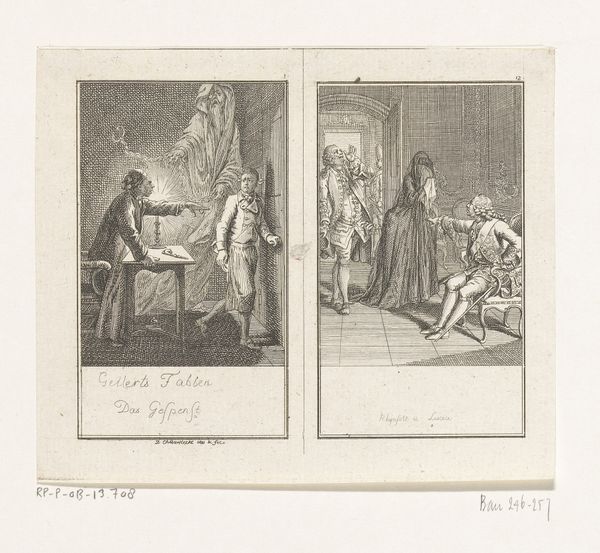
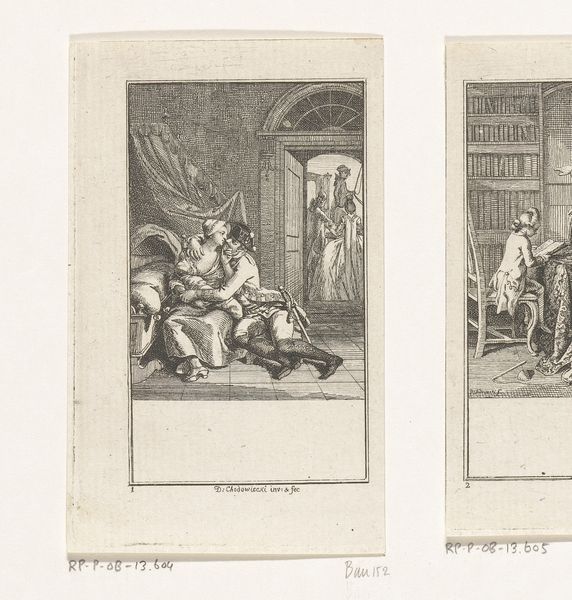
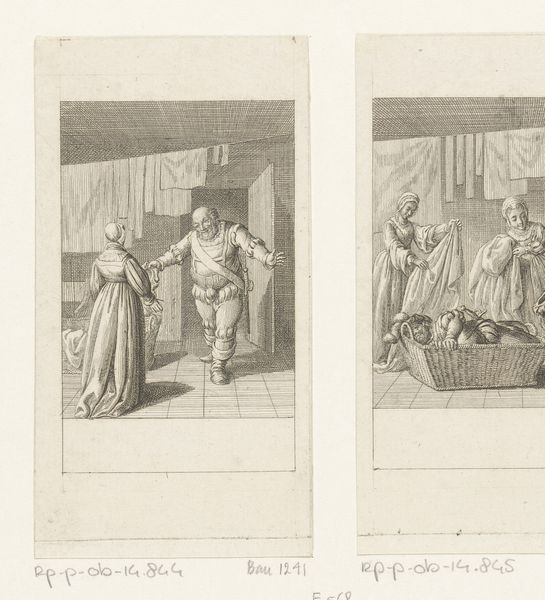
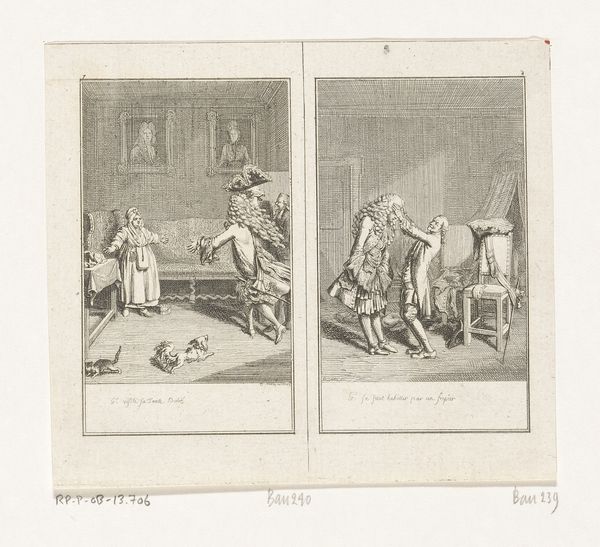
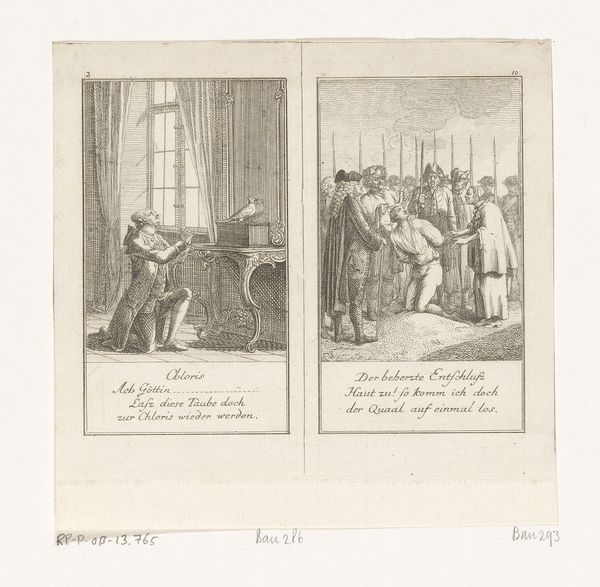
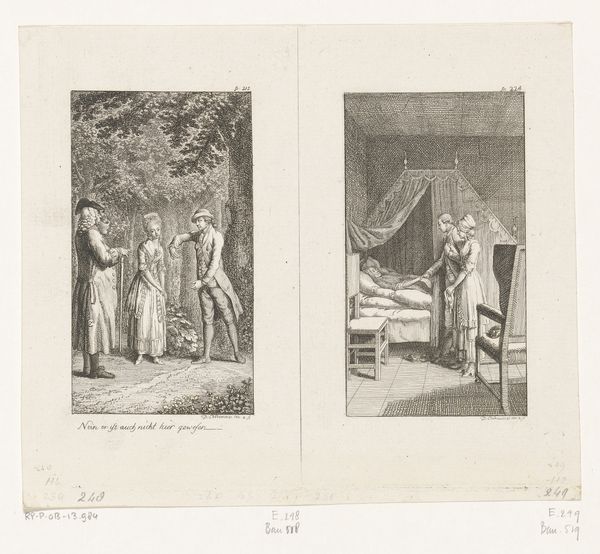
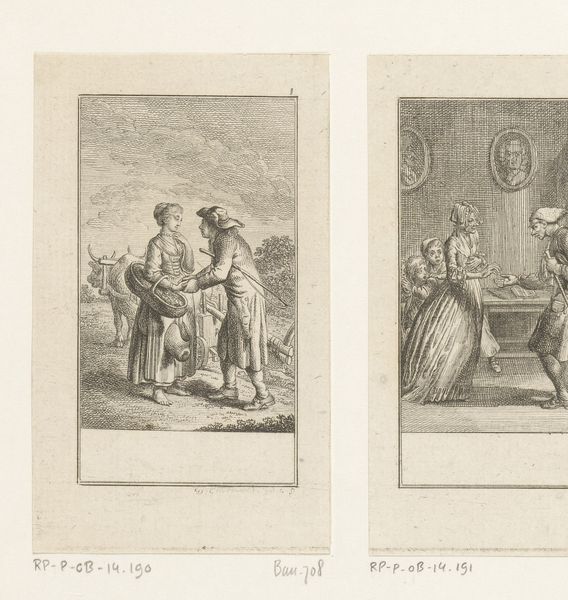
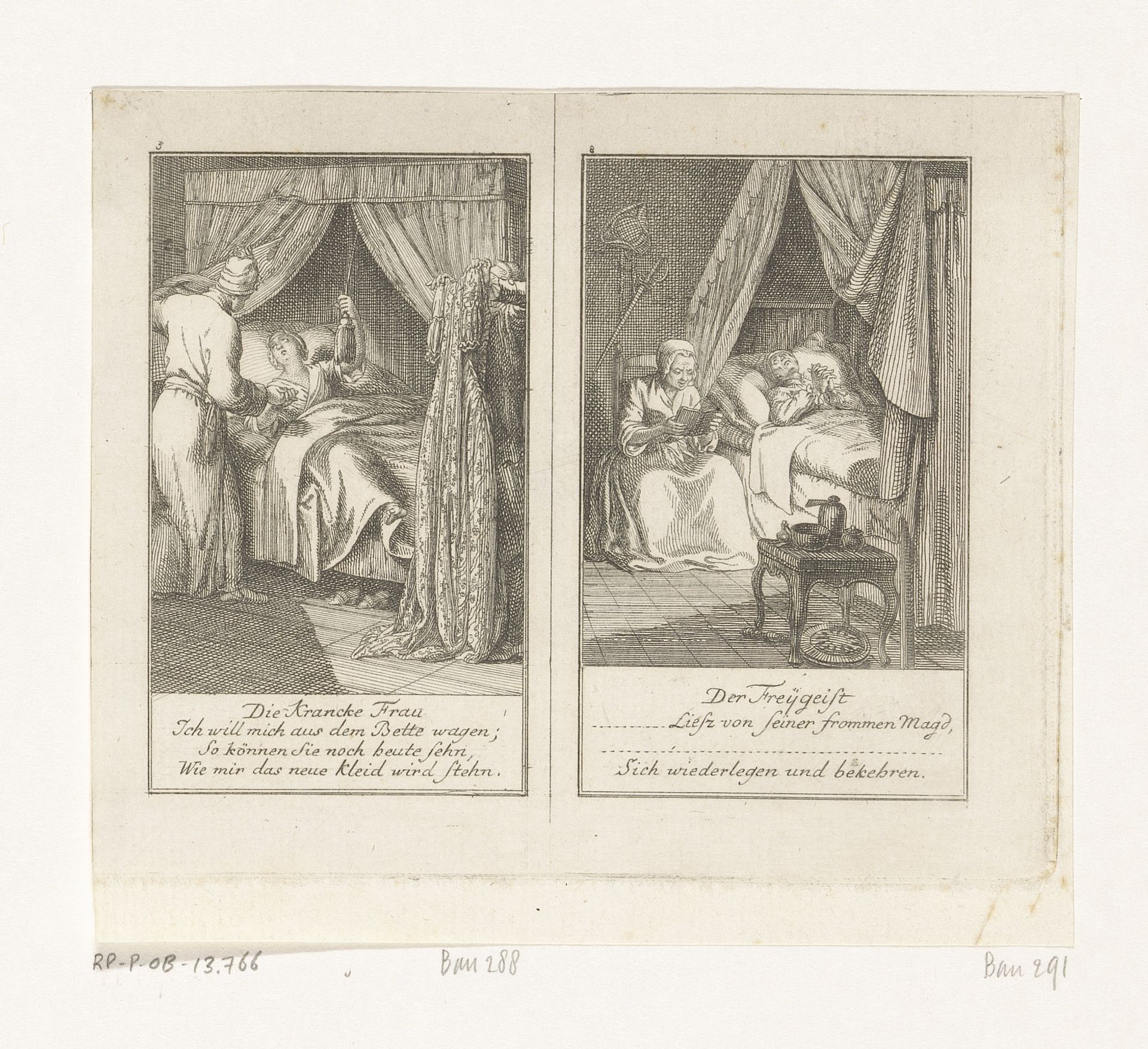
Daniel Nikolaus Chodowiecki made these two scenes from Gellert’s Fables using etching. With this printmaking technique, the artist covers a metal plate with a waxy, acid-resistant layer, then scratches away lines, and immerses the plate in acid. The acid bites into the exposed metal, creating recessed lines that hold ink. The plate is then pressed onto paper, transferring the image. Look at the intricate detailing achieved through this process. Notice how the textures of the fabrics, the rendering of light and shadow, and the expressiveness of the figures are all conveyed through a network of fine lines. Etching allowed for relatively easy reproduction, making art accessible to a wider audience. Prints like this one catered to the growing middle class, who sought affordable art for their homes. Consider the labor involved in creating each print, and how this method democratized image-making in the 18th century.
Twee scènes uit Gellert's Fabelen
1776

Daniel Nikolaus Chodowiecki
1726 - 1801Location
RijksmuseumArtwork details
- Dimensions
- height 110 mm, width 127 mm
- Location
- Rijksmuseum
- Copyright
- Rijks Museum: Open Domain
Comments
Share your thoughts
About this artwork
Daniel Nikolaus Chodowiecki made these two scenes from Gellert’s Fables using etching. With this printmaking technique, the artist covers a metal plate with a waxy, acid-resistant layer, then scratches away lines, and immerses the plate in acid. The acid bites into the exposed metal, creating recessed lines that hold ink. The plate is then pressed onto paper, transferring the image. Look at the intricate detailing achieved through this process. Notice how the textures of the fabrics, the rendering of light and shadow, and the expressiveness of the figures are all conveyed through a network of fine lines. Etching allowed for relatively easy reproduction, making art accessible to a wider audience. Prints like this one catered to the growing middle class, who sought affordable art for their homes. Consider the labor involved in creating each print, and how this method democratized image-making in the 18th century.
Comments
Share your thoughts