About this artwork
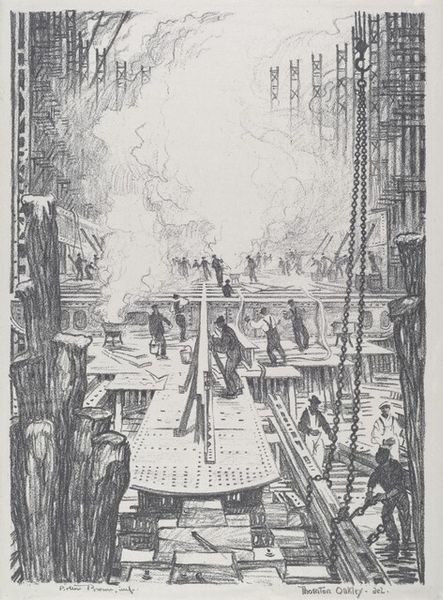
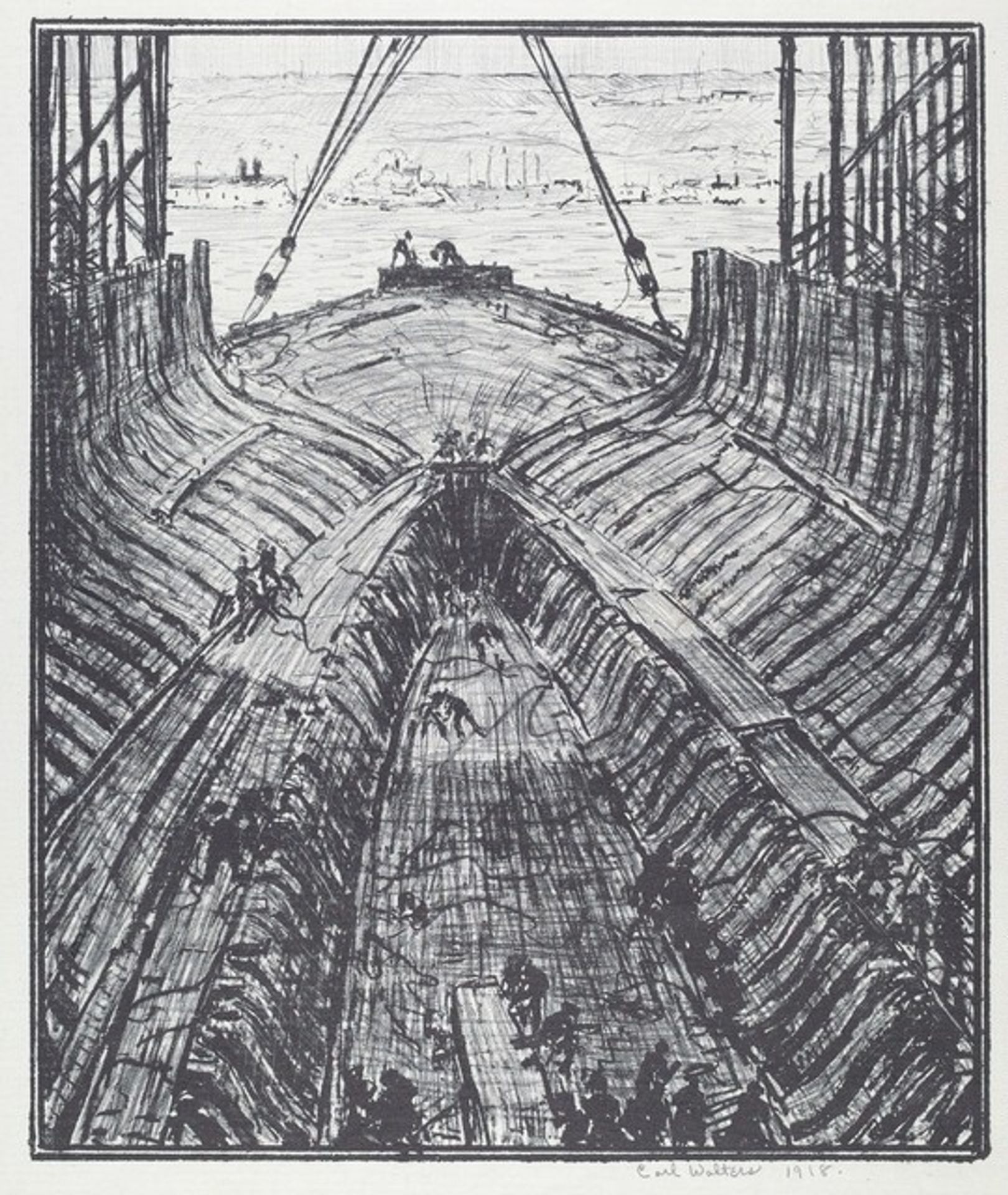
Carl Albert Walters made this drawing, Laying up the Ribs, in 1918. Walters' print hints at the enormous social changes brought about by the First World War. It shows the interior of a ship under construction, with men clambering around the ribs that form the vessel's skeleton. We can see a busy skyline in the distance. The subject matter reflects the war effort in the U.S., which involved rapidly building ships to transport troops and supplies to Europe. It reflects the glorification of labor during this time. In terms of institutions, we see a shift in art away from the pre-war focus on leisure and beauty and towards the celebration of manufacturing and industry. Does the artist critique the nature of this labor? Is it mere propaganda? By researching sources from the period, such as newspapers, magazines, and government documents, we can better understand the social and institutional context in which this image was created.


Artwork details
- Medium
- drawing, print, ink
- Dimensions
- image: 394 x 332 mm sheet: 685 x 509 mm
- Copyright
- National Gallery of Art: CC0 1.0
Tags
Comments
Share your thoughts
About this artwork
Carl Albert Walters made this drawing, Laying up the Ribs, in 1918. Walters' print hints at the enormous social changes brought about by the First World War. It shows the interior of a ship under construction, with men clambering around the ribs that form the vessel's skeleton. We can see a busy skyline in the distance. The subject matter reflects the war effort in the U.S., which involved rapidly building ships to transport troops and supplies to Europe. It reflects the glorification of labor during this time. In terms of institutions, we see a shift in art away from the pre-war focus on leisure and beauty and towards the celebration of manufacturing and industry. Does the artist critique the nature of this labor? Is it mere propaganda? By researching sources from the period, such as newspapers, magazines, and government documents, we can better understand the social and institutional context in which this image was created.
Comments
Share your thoughts