About this artwork
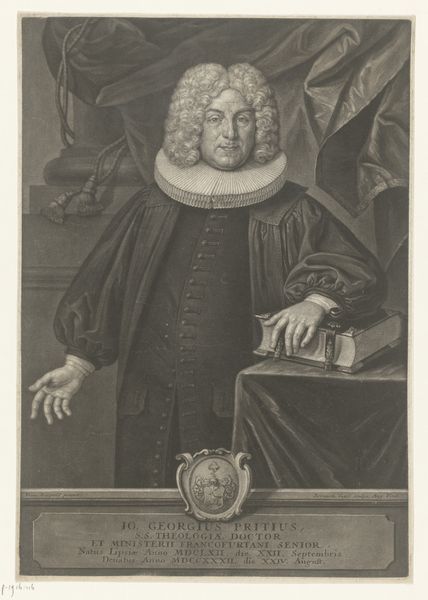
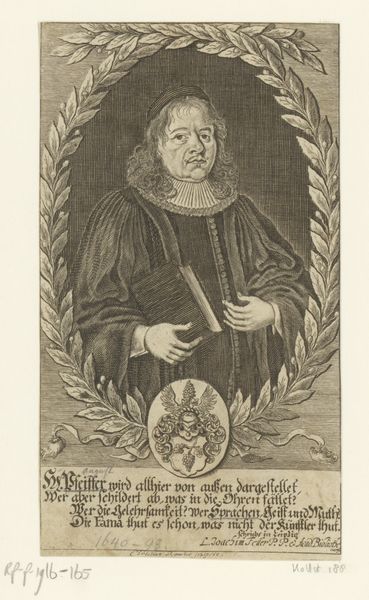
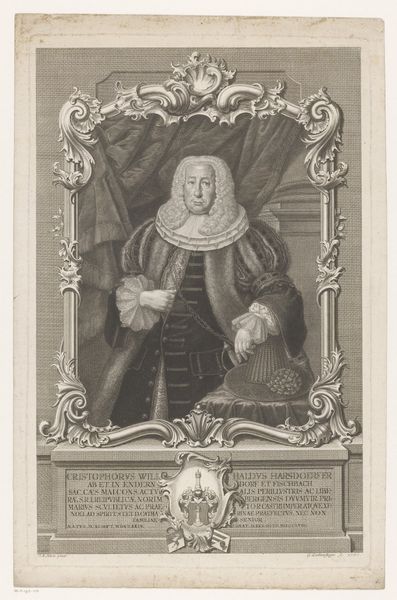
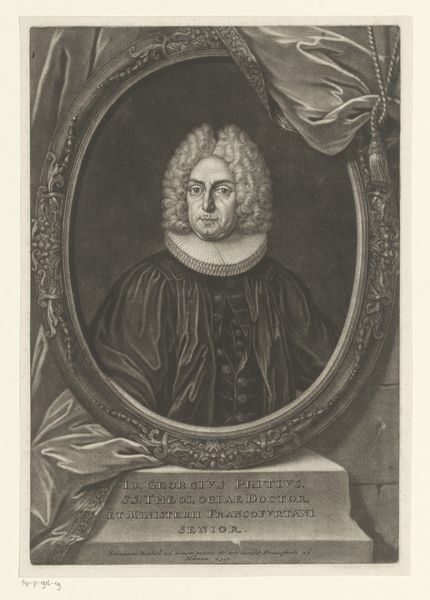
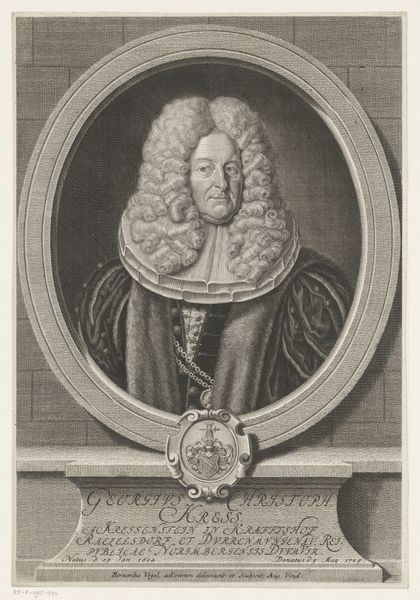
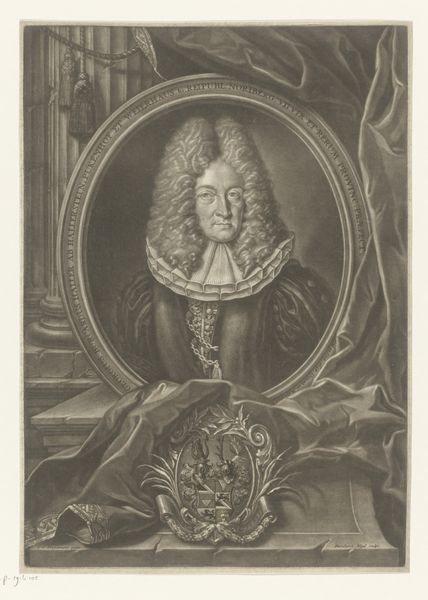
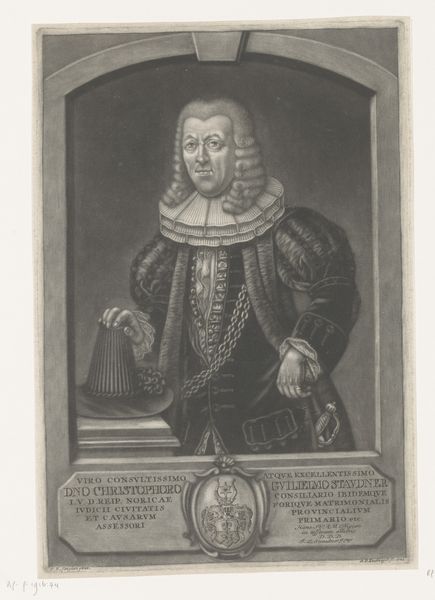
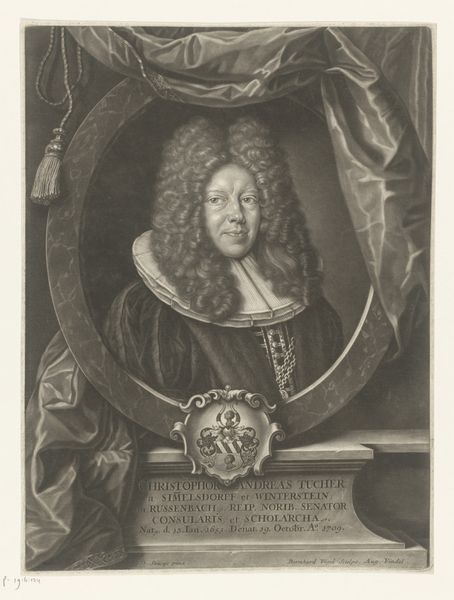
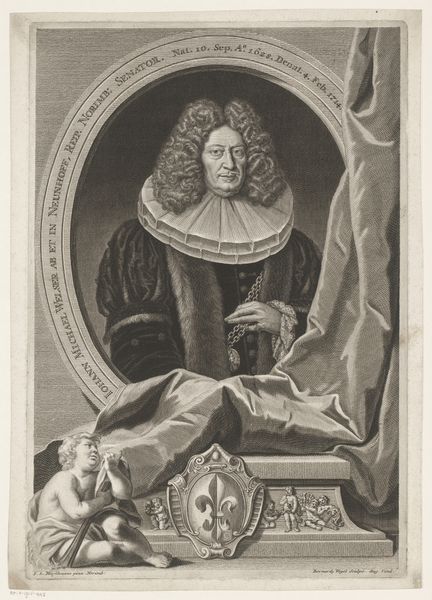
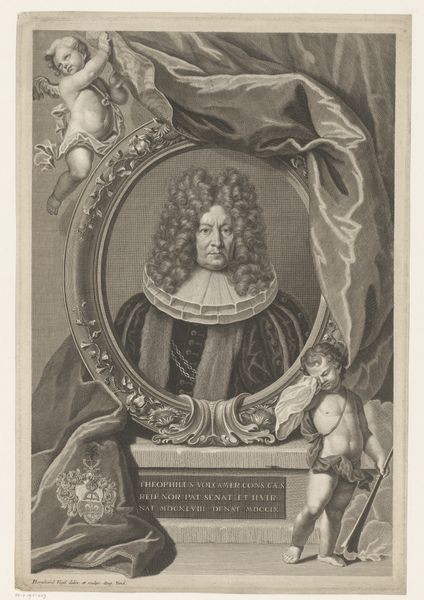
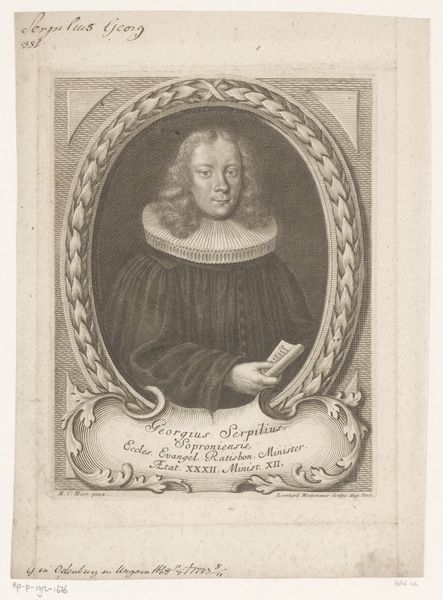
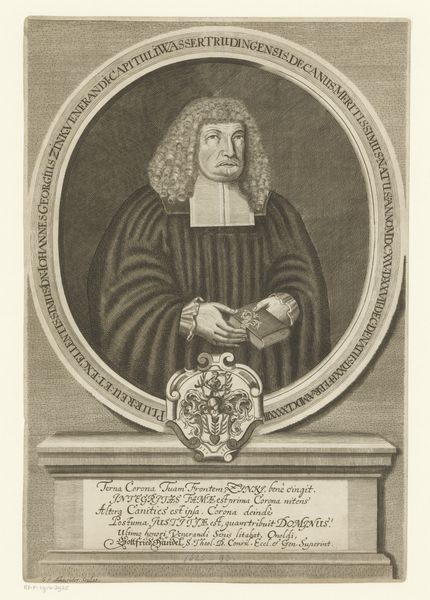
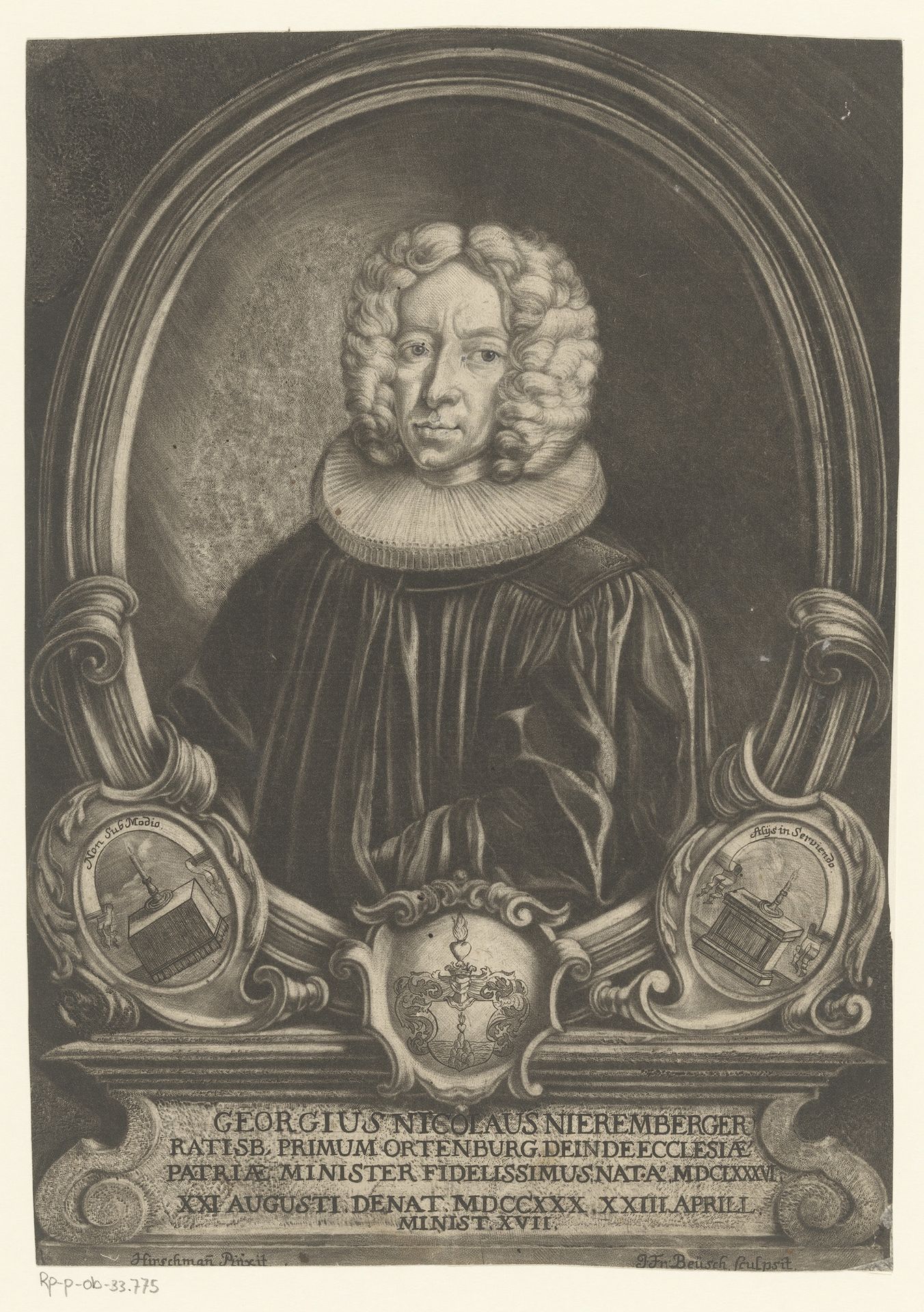
This is Johann Friedrich Beusch's monochrome engraving, "Portret van Georgius Nicolaus Nieremberger". The portrait is strikingly structured by geometric oppositions: the subject's soft, curly hair and round collar are framed by the sharp lines of the rectangular frame and the rigid symmetry of the base below. The subject's gaze meets ours, his expression somewhat elusive amidst the graphic exactitude of the engraving. The texture achieved in the folds of his robes and the intricate detailing of the heraldic symbols create a rich visual language. The contrast between the organic and geometric, coupled with the symbolic weight of the emblems, suggests a tension between personal identity and the structural frameworks of societal role and status. Note, in particular, how the oval border, with its fluid lines, serves not just as a frame but as a dynamic element that unsettles the composition's otherwise strict formality. This formal element invites us to ponder the interplay between representation and the underlying semiotic systems that govern our perception.
Portret van Georgius Nicolaus Nieremberger Possibly 1730 - 1734

Artwork details
- Medium
- print, metal, engraving
- Dimensions
- height 308 mm, width 214 mm
- Copyright
- Rijks Museum: Open Domain
Tags
portrait
baroque
metal
engraving
Comments
No comments
About this artwork
This is Johann Friedrich Beusch's monochrome engraving, "Portret van Georgius Nicolaus Nieremberger". The portrait is strikingly structured by geometric oppositions: the subject's soft, curly hair and round collar are framed by the sharp lines of the rectangular frame and the rigid symmetry of the base below. The subject's gaze meets ours, his expression somewhat elusive amidst the graphic exactitude of the engraving. The texture achieved in the folds of his robes and the intricate detailing of the heraldic symbols create a rich visual language. The contrast between the organic and geometric, coupled with the symbolic weight of the emblems, suggests a tension between personal identity and the structural frameworks of societal role and status. Note, in particular, how the oval border, with its fluid lines, serves not just as a frame but as a dynamic element that unsettles the composition's otherwise strict formality. This formal element invites us to ponder the interplay between representation and the underlying semiotic systems that govern our perception.
Comments
No comments