About this artwork
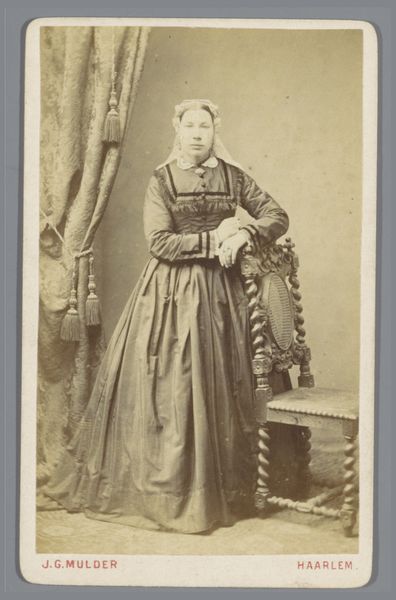
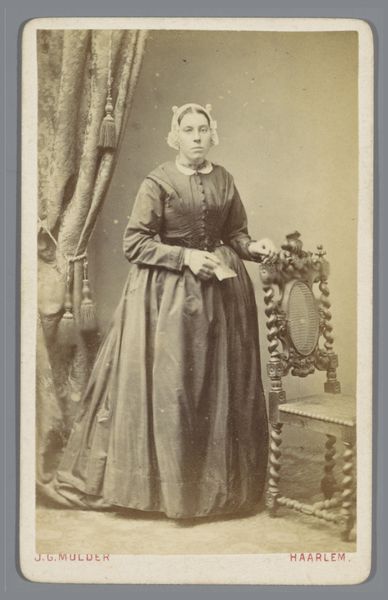
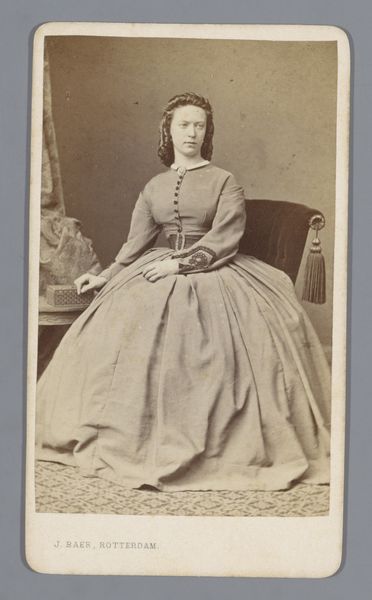
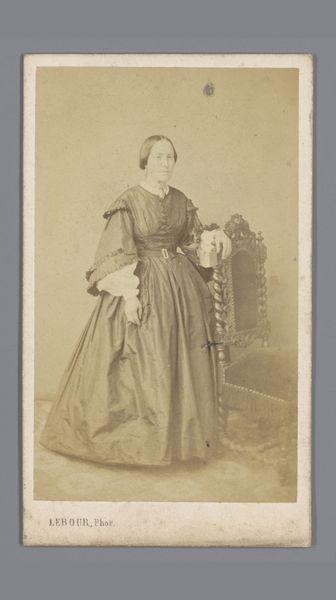
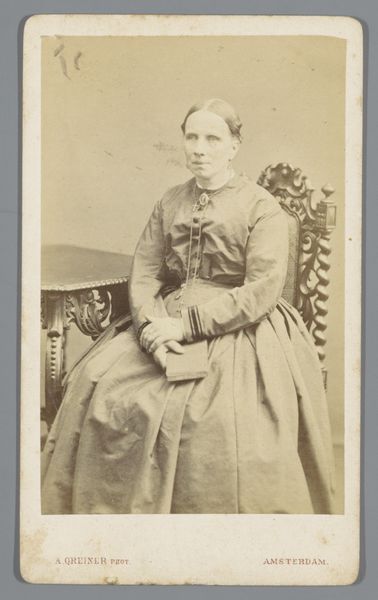
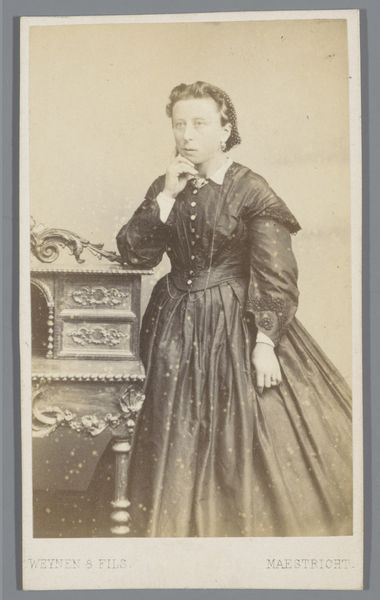
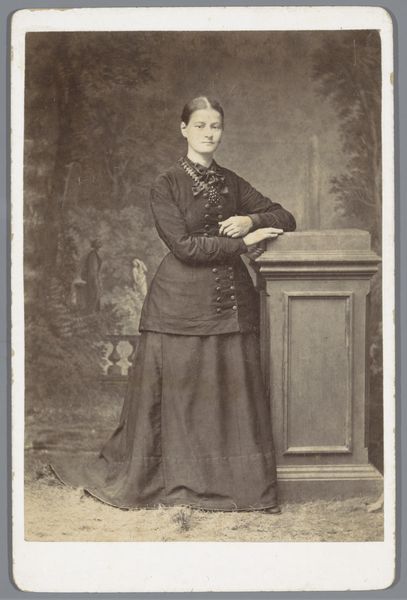
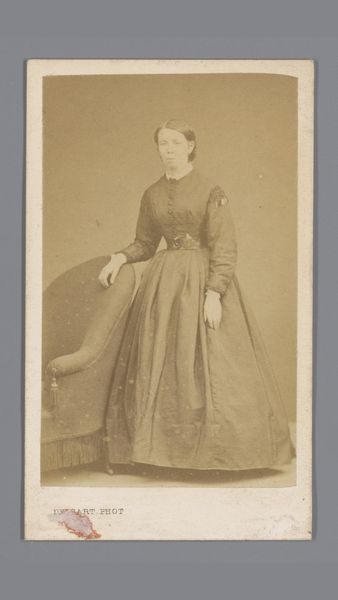
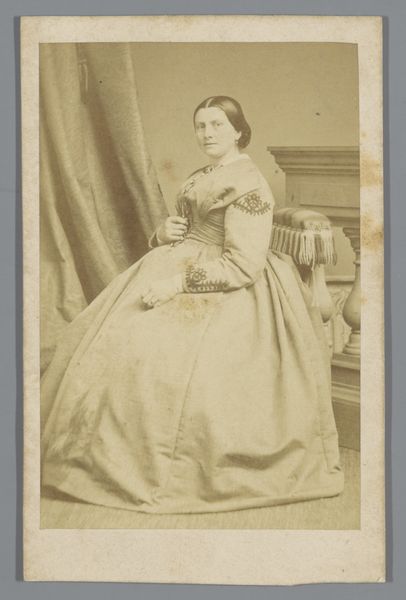
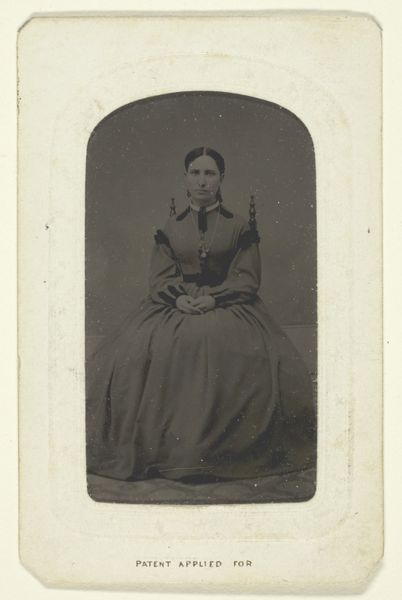
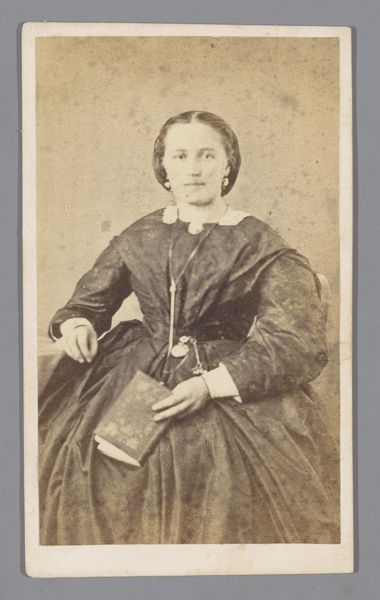
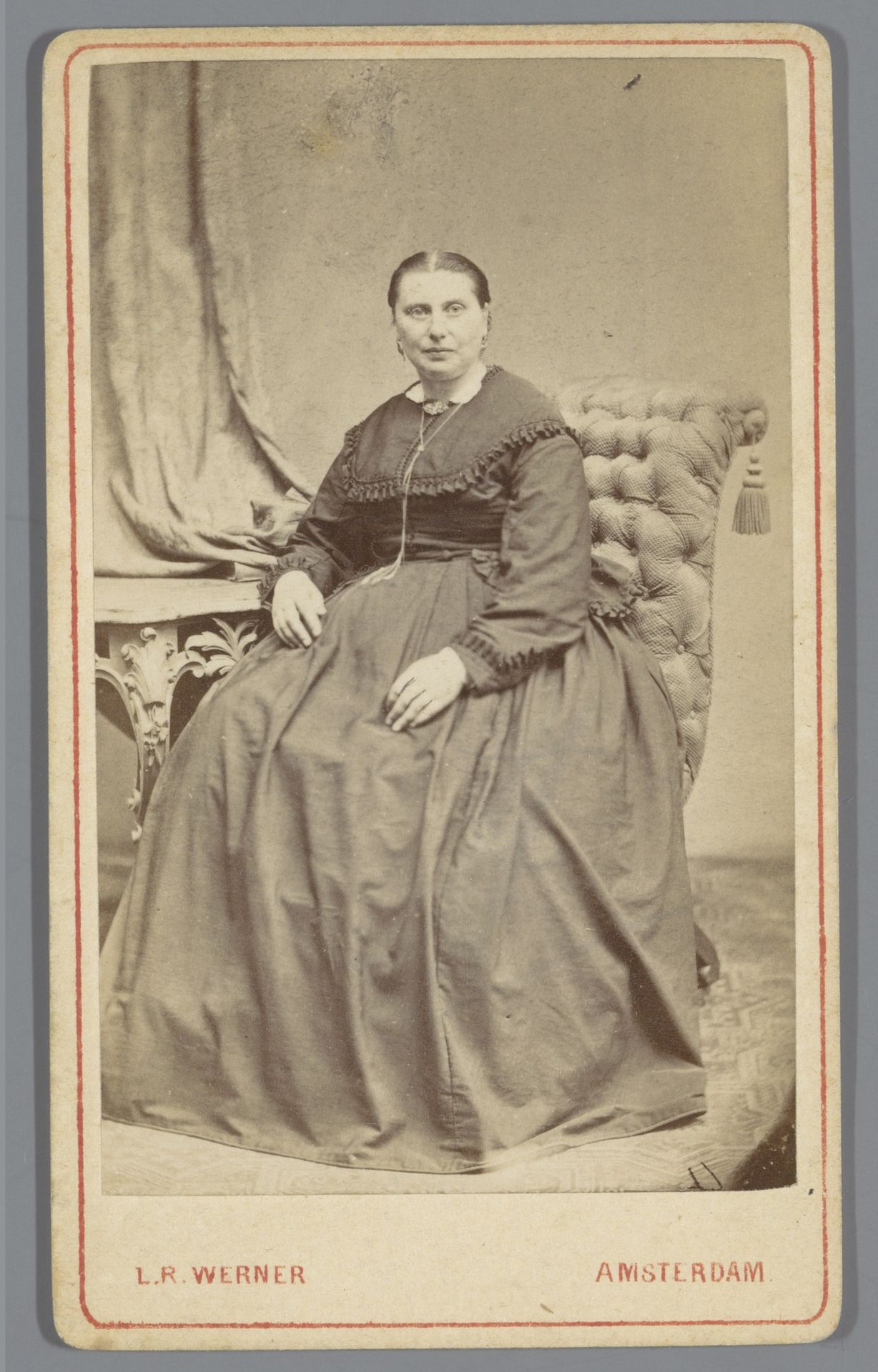
This is a photograph titled ‘Portrait of an Unknown Woman’ by Louis Robert Werner, captured in Amsterdam. Immediately, the composition strikes us with its subdued tonality and formal arrangement. The sitter, positioned slightly off-center, engages the viewer with a direct gaze, fostering a sense of intimacy. Werner masterfully employs light and shadow to sculpt the figure, accentuating the textures of her dress and the contours of her face. The symmetrical backdrop, featuring a draped curtain and ornate table, provides a structured framework that enhances the portrait's formal qualities. Consider the semiotic interplay at work: the subject’s attire, and the meticulous arrangement of the props, all contribute to a narrative that transcends the sitter's anonymity. This controlled composition, coupled with subtle gradations of tone, invites us to contemplate the broader cultural codes and power dynamics inherent in 19th-century portraiture.
Portret van een onbekende vrouw 1871 - 1877

Louis Robert Werner
1834 - 1896Location
RijksmuseumArtwork details
- Medium
- photography
- Dimensions
- height 105 mm, width 63 mm
- Location
- Rijksmuseum
- Copyright
- Rijks Museum: Open Domain
Tags
portrait
photography
genre-painting
realism
Comments
No comments
About this artwork
This is a photograph titled ‘Portrait of an Unknown Woman’ by Louis Robert Werner, captured in Amsterdam. Immediately, the composition strikes us with its subdued tonality and formal arrangement. The sitter, positioned slightly off-center, engages the viewer with a direct gaze, fostering a sense of intimacy. Werner masterfully employs light and shadow to sculpt the figure, accentuating the textures of her dress and the contours of her face. The symmetrical backdrop, featuring a draped curtain and ornate table, provides a structured framework that enhances the portrait's formal qualities. Consider the semiotic interplay at work: the subject’s attire, and the meticulous arrangement of the props, all contribute to a narrative that transcends the sitter's anonymity. This controlled composition, coupled with subtle gradations of tone, invites us to contemplate the broader cultural codes and power dynamics inherent in 19th-century portraiture.
Comments
No comments