1926
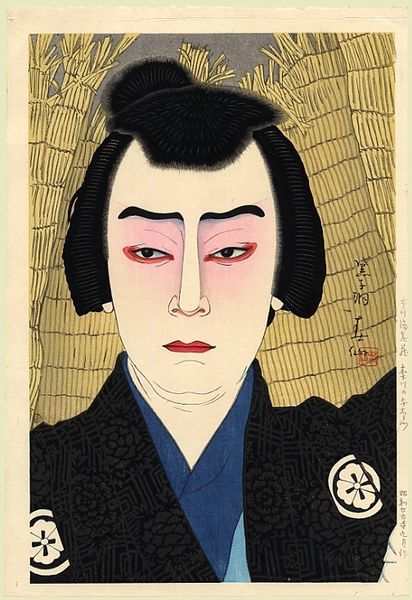
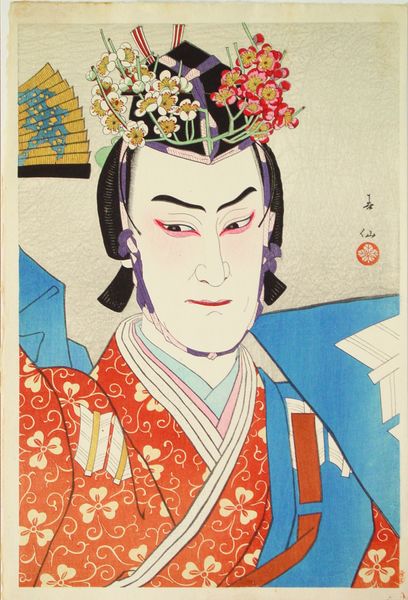
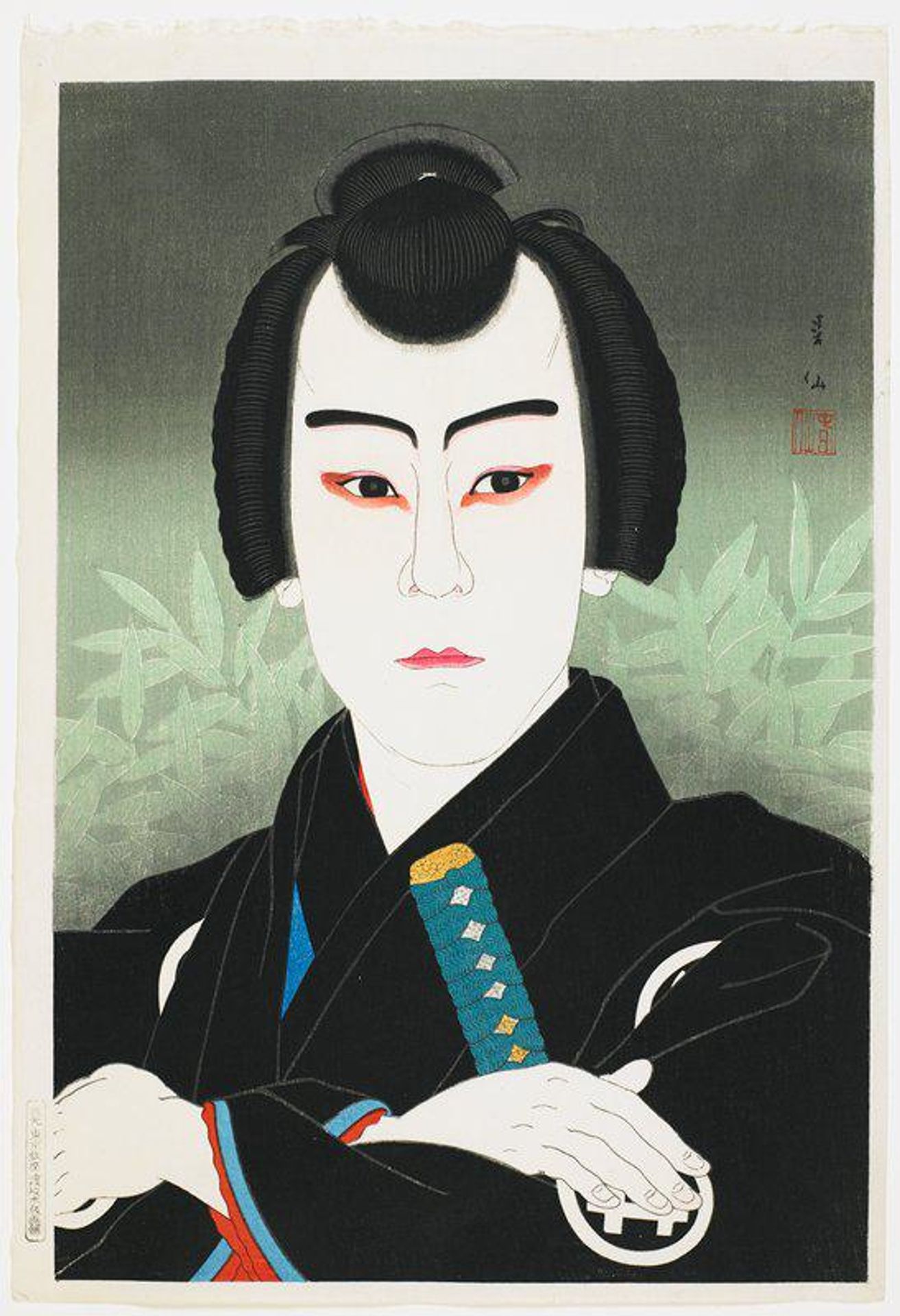
Actor Ichikawa Sumizō VI as Shirai Gonpachi


Listen to curator's interpretation
Curatorial notes
Editor: This is "Actor Ichikawa Sumizō VI as Shirai Gonpachi," a 1926 woodblock print by Natori Shunsen, currently at the Minneapolis Institute of Art. It’s striking how the pale face contrasts with the dark robes, and the bright accents around the eyes immediately grab my attention. How do you interpret this image? Curator: Well, that stark contrast itself carries significance. The actor's ghostly white face, a mask almost, evokes a powerful sense of performance, a detachment from everyday reality. Notice the stylized eyebrows and the red around the eyes – these are all codified signals within Kabuki theatre, indicating specific character traits and emotional states. It is less about individual identity, and more about embodying a well-known cultural story. Editor: So, the colors are more than just aesthetic choices? Curator: Absolutely. In Kabuki, color operates as a powerful symbolic language. Think about it, even the family crest, clearly visible on the kimono, is a signifier – a way of placing the actor within a lineage and a history. This image functions as a mnemonic, triggering recognition and a deeper understanding of the narrative for the audience familiar with Kabuki traditions. What do you feel the bamboo in the background signifies? Editor: Hmm, it provides a serene backdrop. Maybe symbolizing resilience and flexibility? Curator: Precisely! And by using bamboo, it echoes the complex layering of meaning typical of Japanese art, combining visual beauty with cultural resonance. It serves as a signpost toward traditional Japanese values of perseverance and strength. Editor: I see now. It’s not just a portrait of an actor, but a symbol-laden representation of a specific cultural narrative. Curator: Exactly. The piece preserves collective memory and the visual language to trigger specific emotions and deeper layers of cultural context that might otherwise go unnoticed. Editor: That’s a really fascinating way to look at it. I will definitely remember to examine more carefully the cultural symbols imbued in a painting going forward.