About this artwork
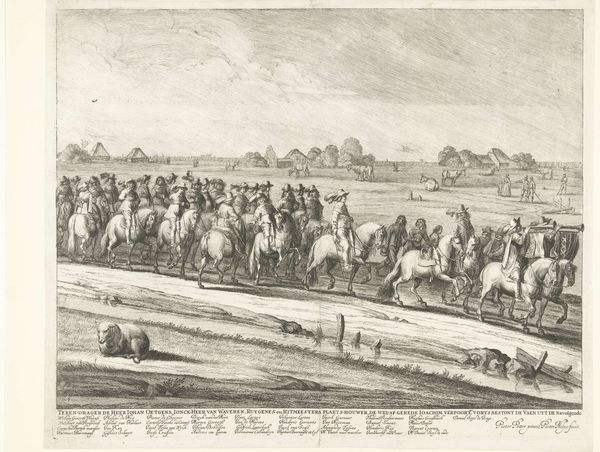
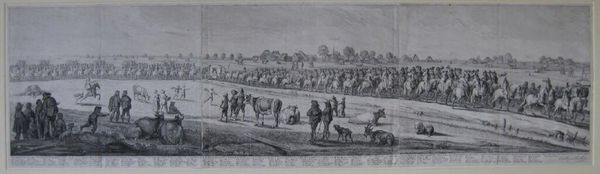
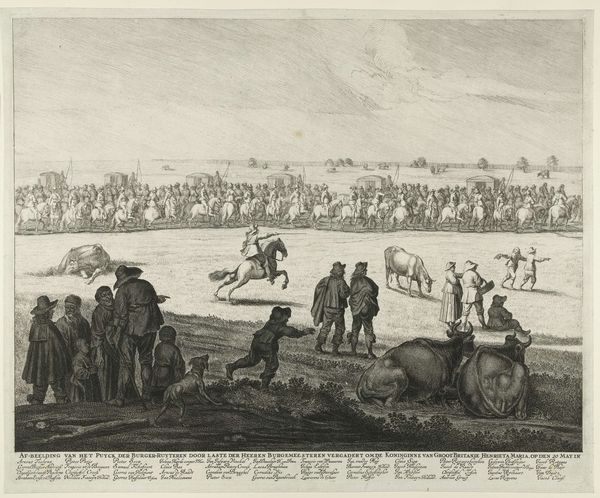
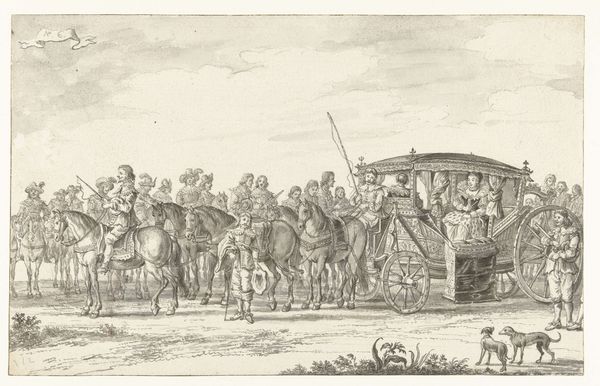
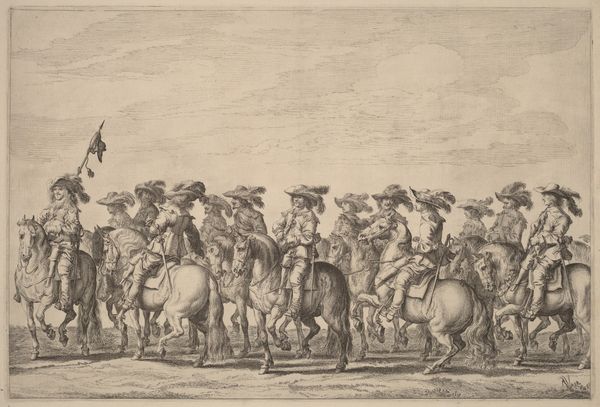
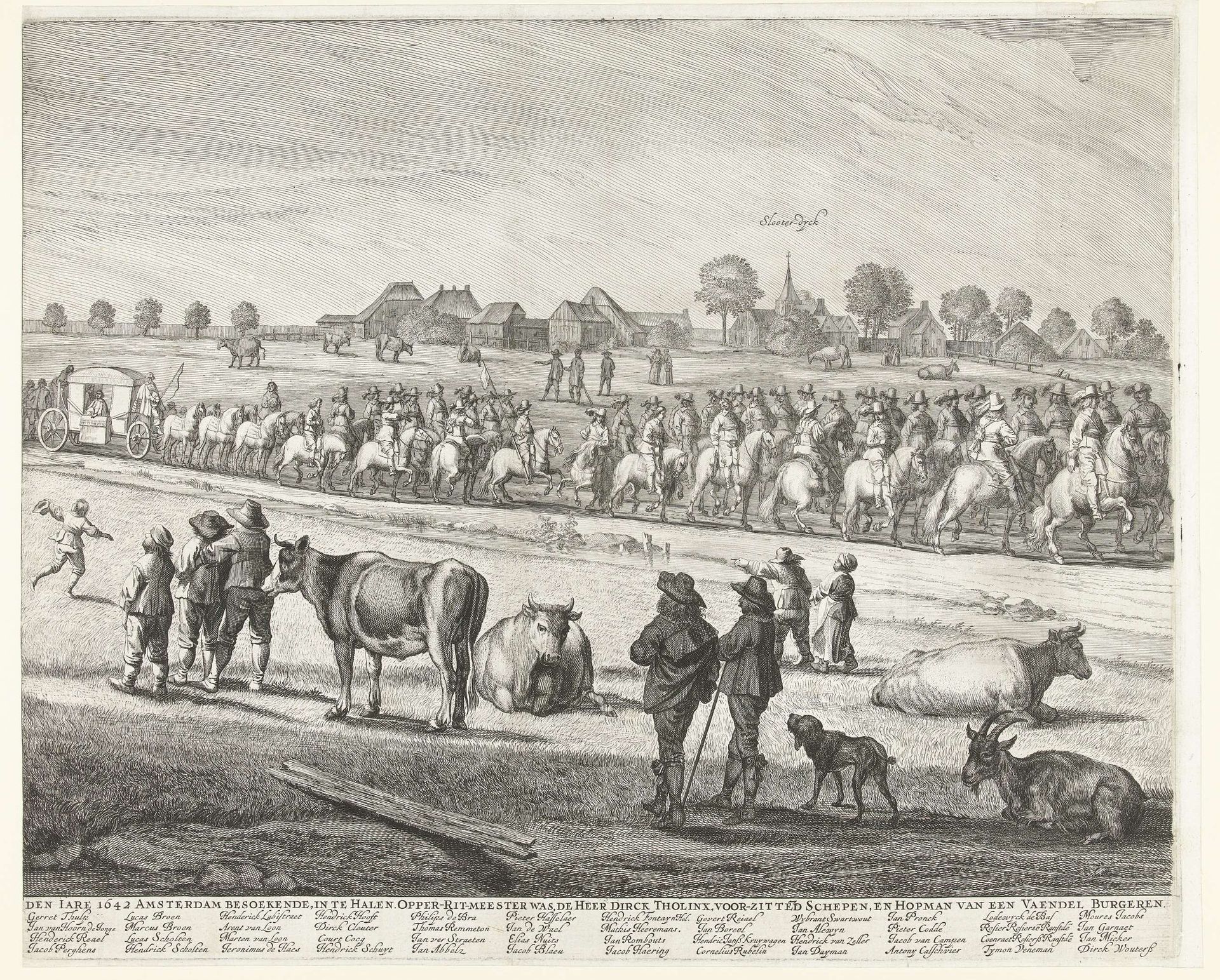
Editor: So, this engraving is Pieter Nolpe's "Procession of the Civic Guard Along the Haarlemmertrekvaart on the Arrival of Queen Henrietta Maria in Amsterdam, 1642". I'm immediately drawn to the detailed depiction of both the procession and the everyday rural life happening around it. What strikes you most about this print? Curator: The print offers a window into the material realities of 17th-century Amsterdam. Consider the labor involved: the engraver’s skill to render such detail, the paper-making process itself, and the economic forces that enabled its production and distribution. How might this print have functioned within the society that consumed it? Editor: Well, it seems like a celebration, so perhaps propaganda, showcasing Amsterdam’s wealth and power during the Dutch Golden Age? Curator: Exactly! And what about the seemingly mundane details, like the livestock in the foreground? Aren't they commenting on the tension between rural and urban life, or the agricultural basis that supported Amsterdam’s commercial power? The materials needed to create a 'golden age'. What value do you assign to them? Editor: That's interesting – I hadn't considered that the presence of the animals might highlight that tension. So it's not just about showing off; it's also hinting at the resources required to maintain this image. Curator: The material itself becomes part of the story, the ink, the paper, everything signifying access and intention. It brings in an important component. The labour of this print becomes valuable to read. Editor: So, by looking at the materials and the process, we can uncover deeper social and economic meanings within this celebratory image. I'll never see an engraving in the same way again! Curator: Precisely! Considering art this way transforms how we interpret not just this work, but all artistic creation, connecting them to broader societal contexts.
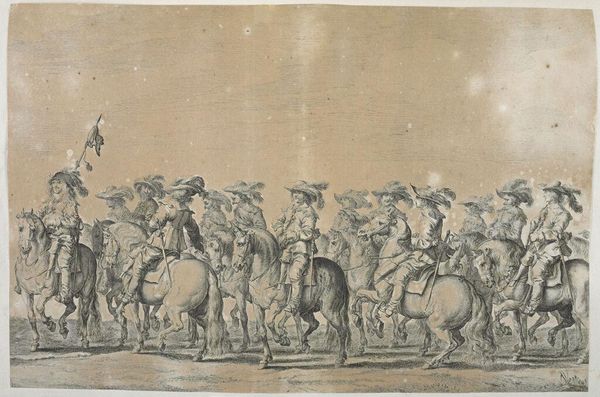
Optocht van de schutters langs de Haarlemmertrekvaart bij de intocht van koningin Henrietta Maria te Amsterdam, 1642 (middenblad)
1642

Pieter Nolpe
1613 - 1614Location
RijksmuseumArtwork details
- Medium
- print, engraving
- Dimensions
- height 400 mm, width 485 mm
- Location
- Rijksmuseum
- Copyright
- Rijks Museum: Open Domain
Tags
dutch-golden-age
old engraving style
landscape
cityscape
genre-painting
history-painting
engraving
Comments
Be the first to share your thoughts about this work.
About this artwork
Editor: So, this engraving is Pieter Nolpe's "Procession of the Civic Guard Along the Haarlemmertrekvaart on the Arrival of Queen Henrietta Maria in Amsterdam, 1642". I'm immediately drawn to the detailed depiction of both the procession and the everyday rural life happening around it. What strikes you most about this print? Curator: The print offers a window into the material realities of 17th-century Amsterdam. Consider the labor involved: the engraver’s skill to render such detail, the paper-making process itself, and the economic forces that enabled its production and distribution. How might this print have functioned within the society that consumed it? Editor: Well, it seems like a celebration, so perhaps propaganda, showcasing Amsterdam’s wealth and power during the Dutch Golden Age? Curator: Exactly! And what about the seemingly mundane details, like the livestock in the foreground? Aren't they commenting on the tension between rural and urban life, or the agricultural basis that supported Amsterdam’s commercial power? The materials needed to create a 'golden age'. What value do you assign to them? Editor: That's interesting – I hadn't considered that the presence of the animals might highlight that tension. So it's not just about showing off; it's also hinting at the resources required to maintain this image. Curator: The material itself becomes part of the story, the ink, the paper, everything signifying access and intention. It brings in an important component. The labour of this print becomes valuable to read. Editor: So, by looking at the materials and the process, we can uncover deeper social and economic meanings within this celebratory image. I'll never see an engraving in the same way again! Curator: Precisely! Considering art this way transforms how we interpret not just this work, but all artistic creation, connecting them to broader societal contexts.
Comments
Be the first to share your thoughts about this work.