About this artwork
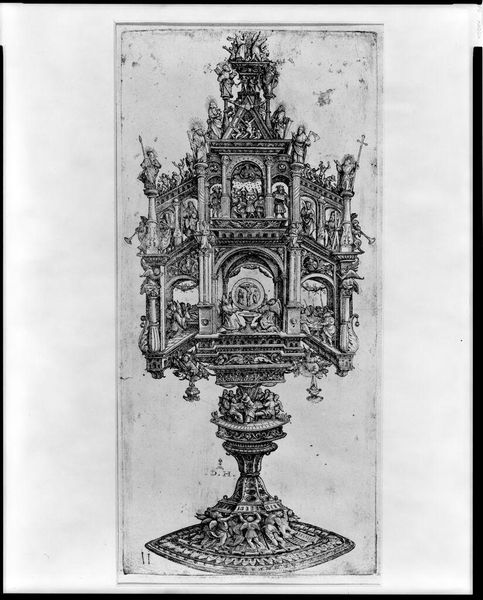
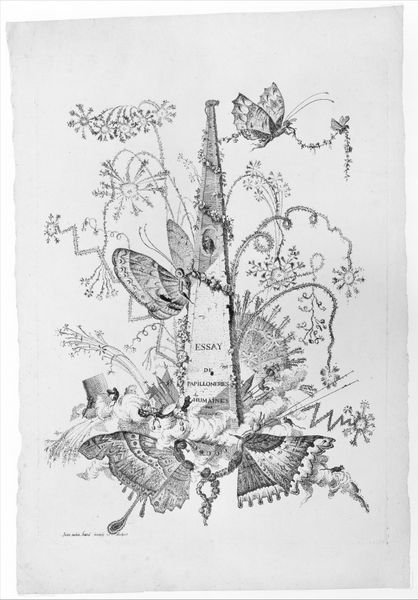
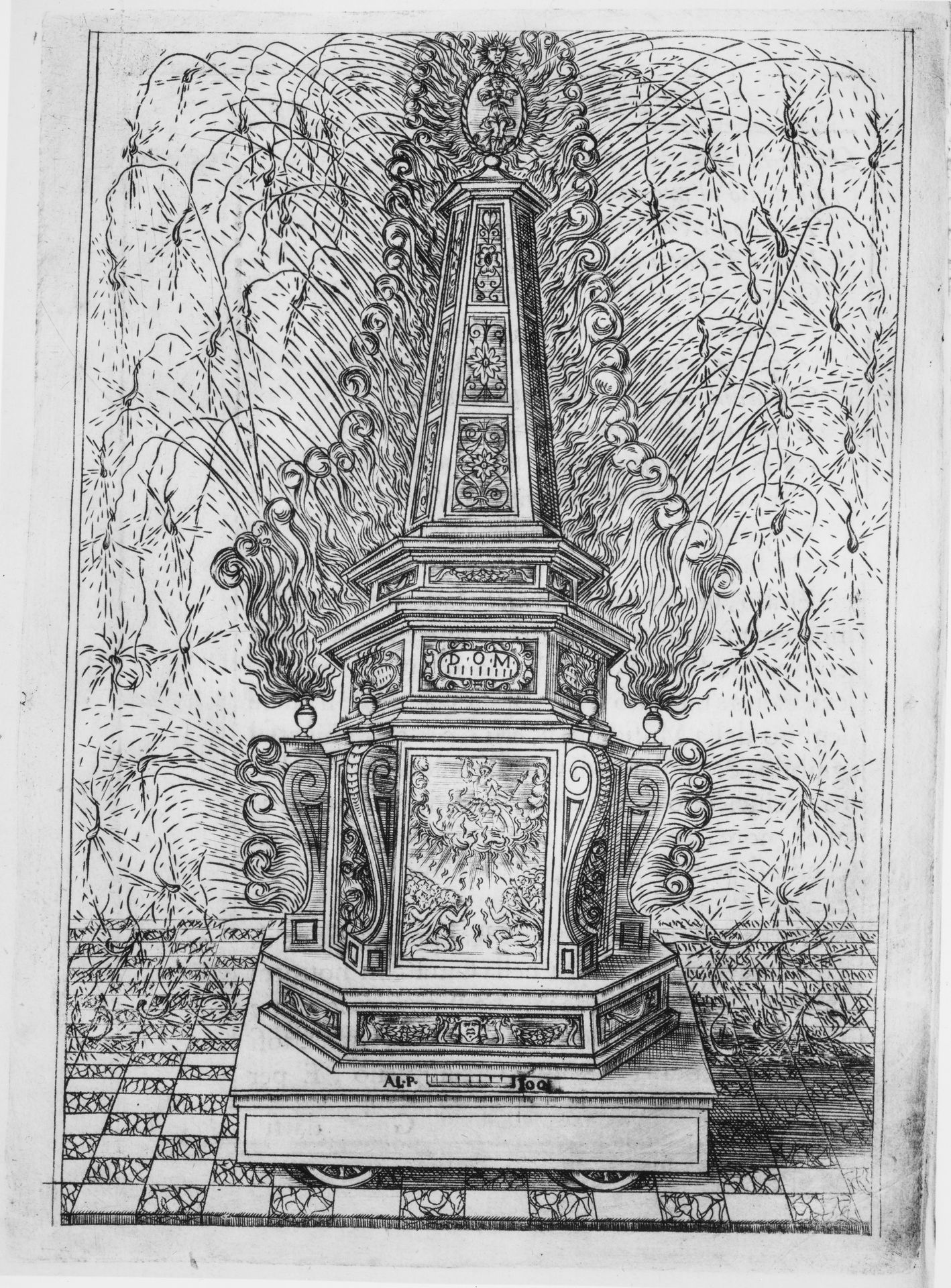
Editor: This is "Festival for Saint Placidus, Messina, August 2, 1589: Fireworks Obelisk," a print by Filippo Gotho from 1591, currently held at The Met. The first thing that strikes me is the incredible detail, and the somewhat chaotic, yet structured composition of the fireworks. What do you see when you look at it? Curator: Focusing solely on the internal visual cues, the image is anchored by a meticulously rendered obelisk, which presents a fascinating study in geometric progression. Observe how Gotho employs vertical lines to create height and grandeur. The structural elements, such as the base, mid-section, and crowning ornamentation, offer a clear sense of hierarchy. Notice, also, how the radiating fireworks contrast starkly with the obelisk's rigid form, creating a visual tension. Editor: The contrast is really striking! It’s almost like two separate artworks coexisting. Are the fireworks intentionally chaotic to highlight the obelisk's structure? Curator: Precisely. The dynamic lines of the fireworks—bursting and expanding—serve to accentuate the static nature of the obelisk. Furthermore, examine the use of line weight throughout the composition. Thicker lines define the obelisk's edges, creating a sense of solidity, whereas the finer lines used for the fireworks suggest movement and ephemerality. What do you make of that visual differentiation? Editor: That’s an interesting way to look at it, the thick lines really give definition. I was so caught up in the excitement that I didn’t see how meticulously it was put together. Thanks for pointing that out! Curator: Indeed. It's in examining these internal relationships of form, line, and contrast, that the work truly speaks to us, allowing one to look at it anew, and gain better insight and awareness.
Festival for Saint Placidus, Messina, August 2, 1589: Fireworks Obelisk
1591


Artwork details
- Medium
- drawing, print, engraving
- Dimensions
- Overall: 9 1/8 x 6 7/8 x 1 3/16 in. (23.1 x 17.5 x 3 cm)
- Location
- Metropolitan Museum of Art, New York, NY
- Copyright
- Public Domain
Tags
Comments
Share your thoughts
About this artwork
Editor: This is "Festival for Saint Placidus, Messina, August 2, 1589: Fireworks Obelisk," a print by Filippo Gotho from 1591, currently held at The Met. The first thing that strikes me is the incredible detail, and the somewhat chaotic, yet structured composition of the fireworks. What do you see when you look at it? Curator: Focusing solely on the internal visual cues, the image is anchored by a meticulously rendered obelisk, which presents a fascinating study in geometric progression. Observe how Gotho employs vertical lines to create height and grandeur. The structural elements, such as the base, mid-section, and crowning ornamentation, offer a clear sense of hierarchy. Notice, also, how the radiating fireworks contrast starkly with the obelisk's rigid form, creating a visual tension. Editor: The contrast is really striking! It’s almost like two separate artworks coexisting. Are the fireworks intentionally chaotic to highlight the obelisk's structure? Curator: Precisely. The dynamic lines of the fireworks—bursting and expanding—serve to accentuate the static nature of the obelisk. Furthermore, examine the use of line weight throughout the composition. Thicker lines define the obelisk's edges, creating a sense of solidity, whereas the finer lines used for the fireworks suggest movement and ephemerality. What do you make of that visual differentiation? Editor: That’s an interesting way to look at it, the thick lines really give definition. I was so caught up in the excitement that I didn’t see how meticulously it was put together. Thanks for pointing that out! Curator: Indeed. It's in examining these internal relationships of form, line, and contrast, that the work truly speaks to us, allowing one to look at it anew, and gain better insight and awareness.
Comments
Share your thoughts