About this artwork
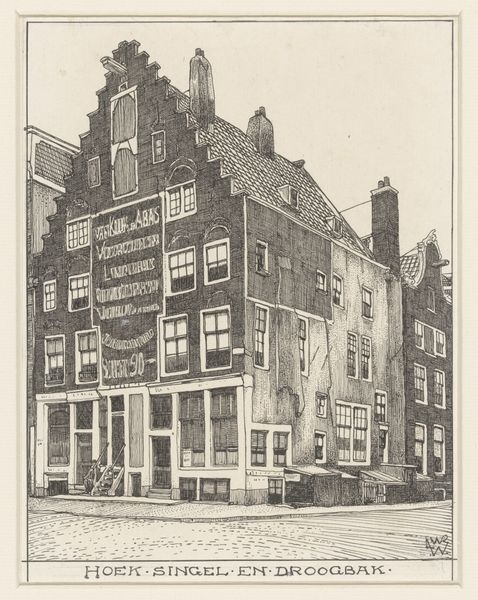
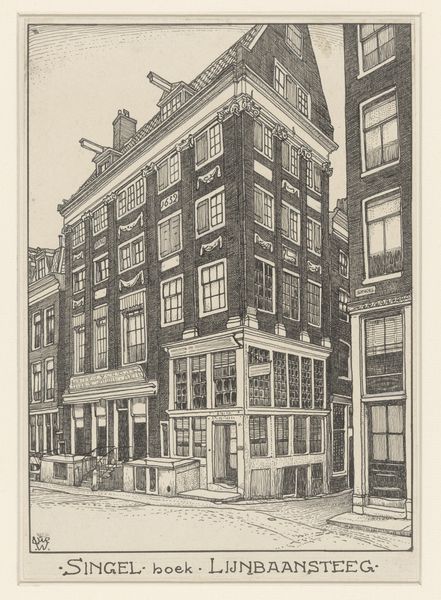
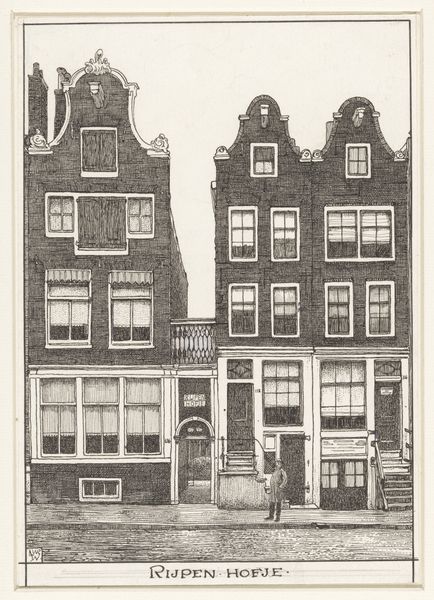
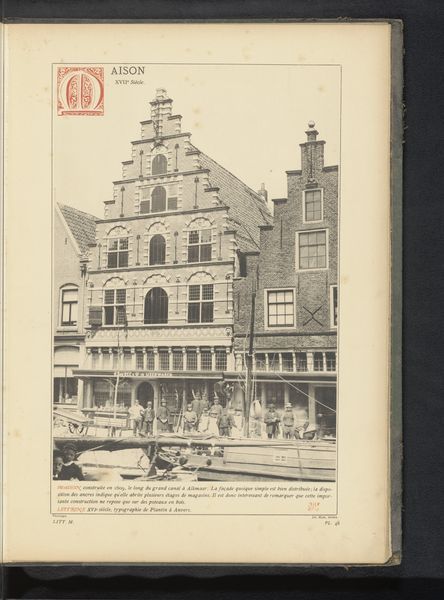
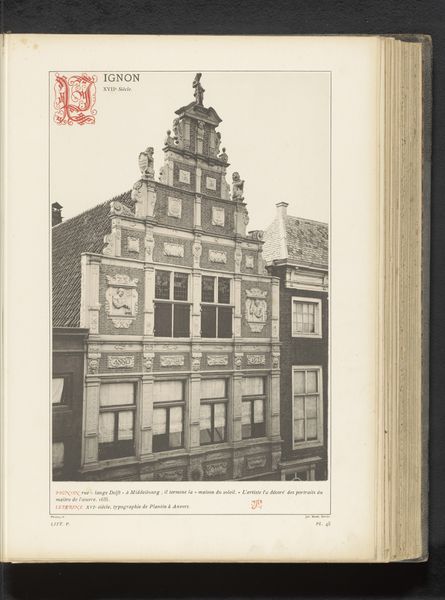
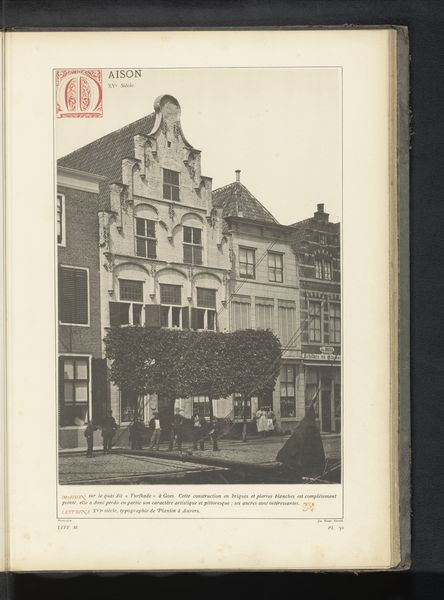
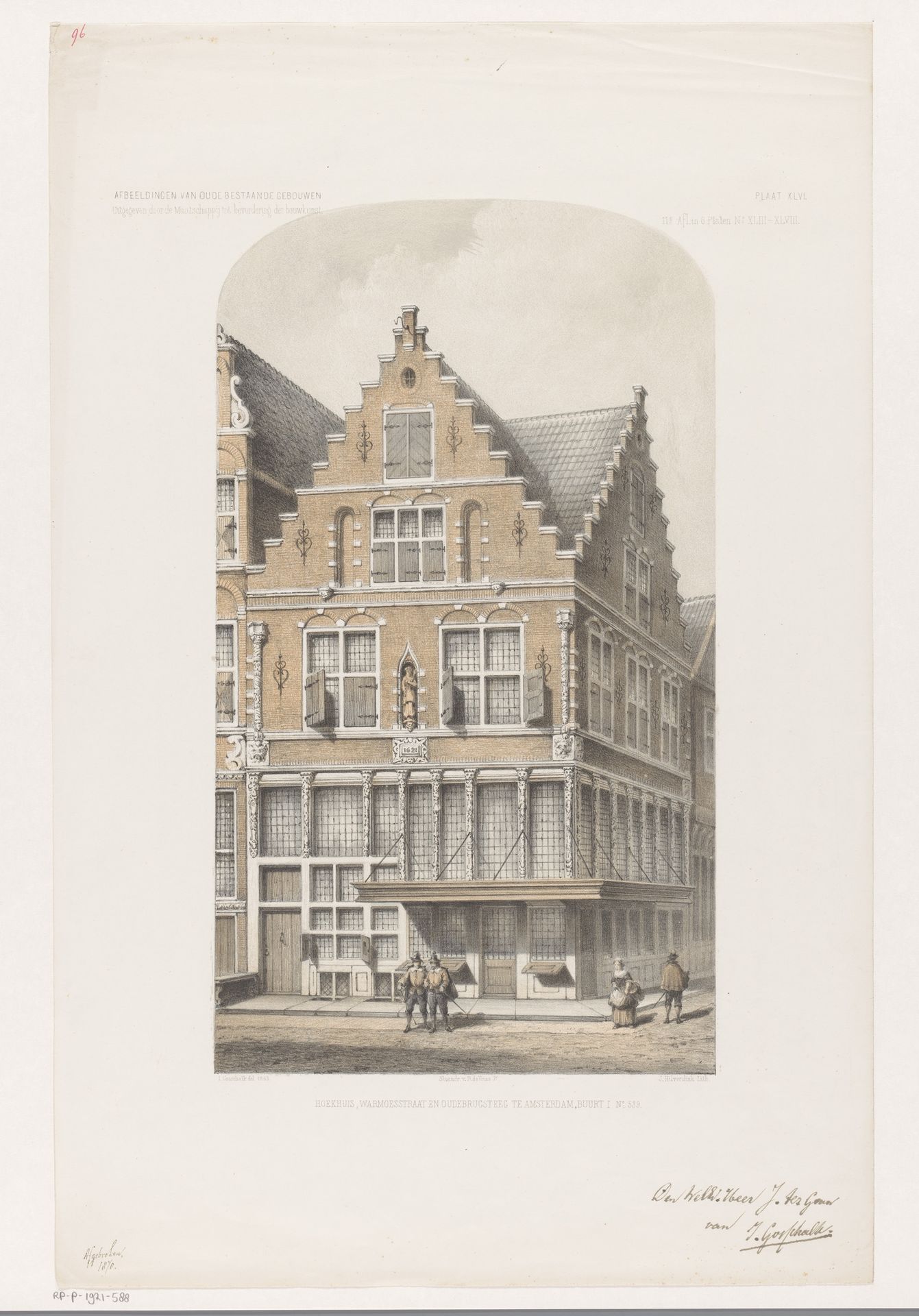
Editor: So, this is "Hoekhuis Warmoesstraat en Oudebrugsteeg in Amsterdam," a watercolor print made after 1863 by Johannes Hilverdink. It's currently housed in the Rijksmuseum. I'm really struck by the intricate architectural details—all those windows! What catches your eye? Curator: The way the light falls on the building's facade certainly holds significance. Do you notice the statue above the entrance? That is more than mere decoration. It acts as a symbolic marker, speaking to the values and identity the residents wished to project. Hilverdink's capture reminds us how buildings speak without words. Editor: So, the architectural features, like the statue, act as visual cues for deeper meanings? How would one interpret such cues? Curator: Exactly. Look at the stepped gable, common in Dutch architecture of that era. It projects upward ambition but the earth tones suggests practicality. These architectural forms often served as symbols of status, wealth, and civic pride. And the positioning, on the corner – literally a keystone. A nexus point, you see. Hilverdink isn’t merely depicting a building; he's showing a node of cultural memory. Editor: That's fascinating! I never considered architecture as a form of visual storytelling, but I see what you mean now. Each choice reflects something about the society at the time. Curator: Indeed. Now, how does that affect your own understanding of place? Editor: I now have a much deeper understanding of this piece and of Amsterdam. Curator: Yes, we looked closer, we dug a little deeper.
Hoekhuis Warmoesstraat en Oudebrugsteeg in Amsterdam after 1863

Johannes Hilverdink
1813 - 1902Location
RijksmuseumArtwork details
- Medium
- print, watercolor, architecture
- Dimensions
- height 540 mm, width 350 mm
- Location
- Rijksmuseum
- Copyright
- Rijks Museum: Open Domain
Tags
ink paper printed
watercolor
cityscape
watercolour illustration
watercolor
architecture
realism
Comments
No comments
About this artwork
Editor: So, this is "Hoekhuis Warmoesstraat en Oudebrugsteeg in Amsterdam," a watercolor print made after 1863 by Johannes Hilverdink. It's currently housed in the Rijksmuseum. I'm really struck by the intricate architectural details—all those windows! What catches your eye? Curator: The way the light falls on the building's facade certainly holds significance. Do you notice the statue above the entrance? That is more than mere decoration. It acts as a symbolic marker, speaking to the values and identity the residents wished to project. Hilverdink's capture reminds us how buildings speak without words. Editor: So, the architectural features, like the statue, act as visual cues for deeper meanings? How would one interpret such cues? Curator: Exactly. Look at the stepped gable, common in Dutch architecture of that era. It projects upward ambition but the earth tones suggests practicality. These architectural forms often served as symbols of status, wealth, and civic pride. And the positioning, on the corner – literally a keystone. A nexus point, you see. Hilverdink isn’t merely depicting a building; he's showing a node of cultural memory. Editor: That's fascinating! I never considered architecture as a form of visual storytelling, but I see what you mean now. Each choice reflects something about the society at the time. Curator: Indeed. Now, how does that affect your own understanding of place? Editor: I now have a much deeper understanding of this piece and of Amsterdam. Curator: Yes, we looked closer, we dug a little deeper.
Comments
No comments