About this artwork
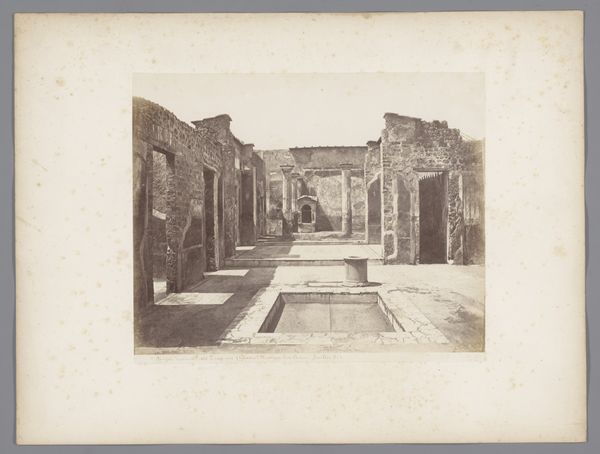
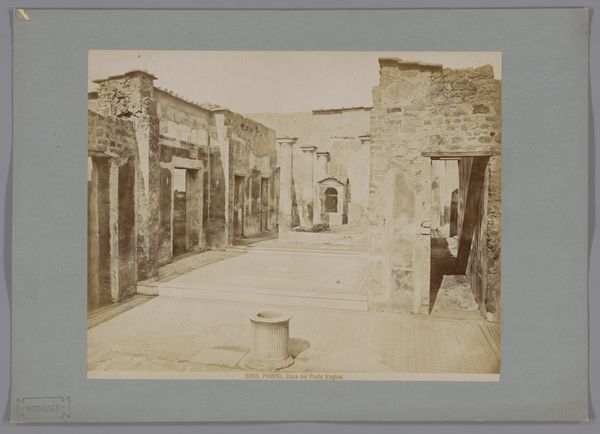
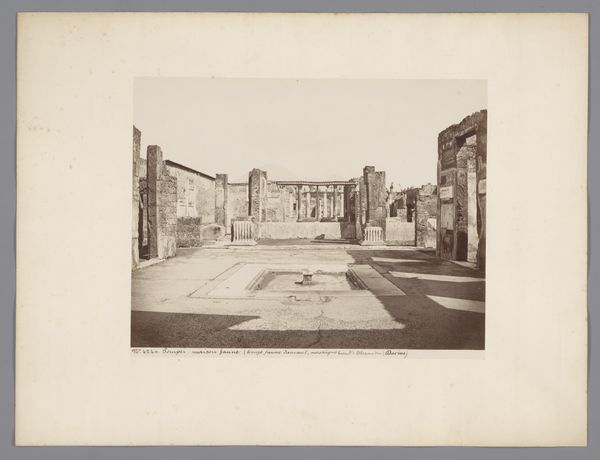
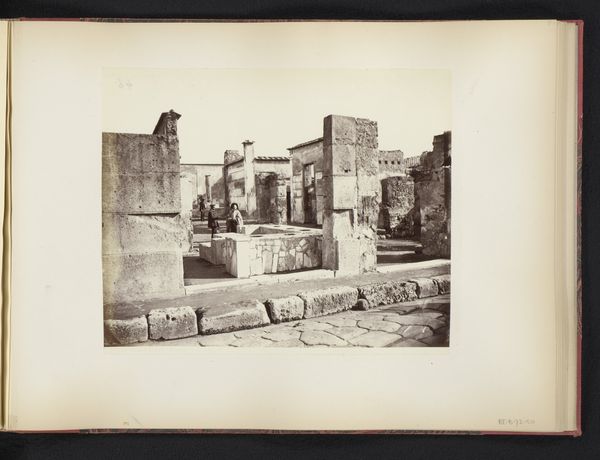
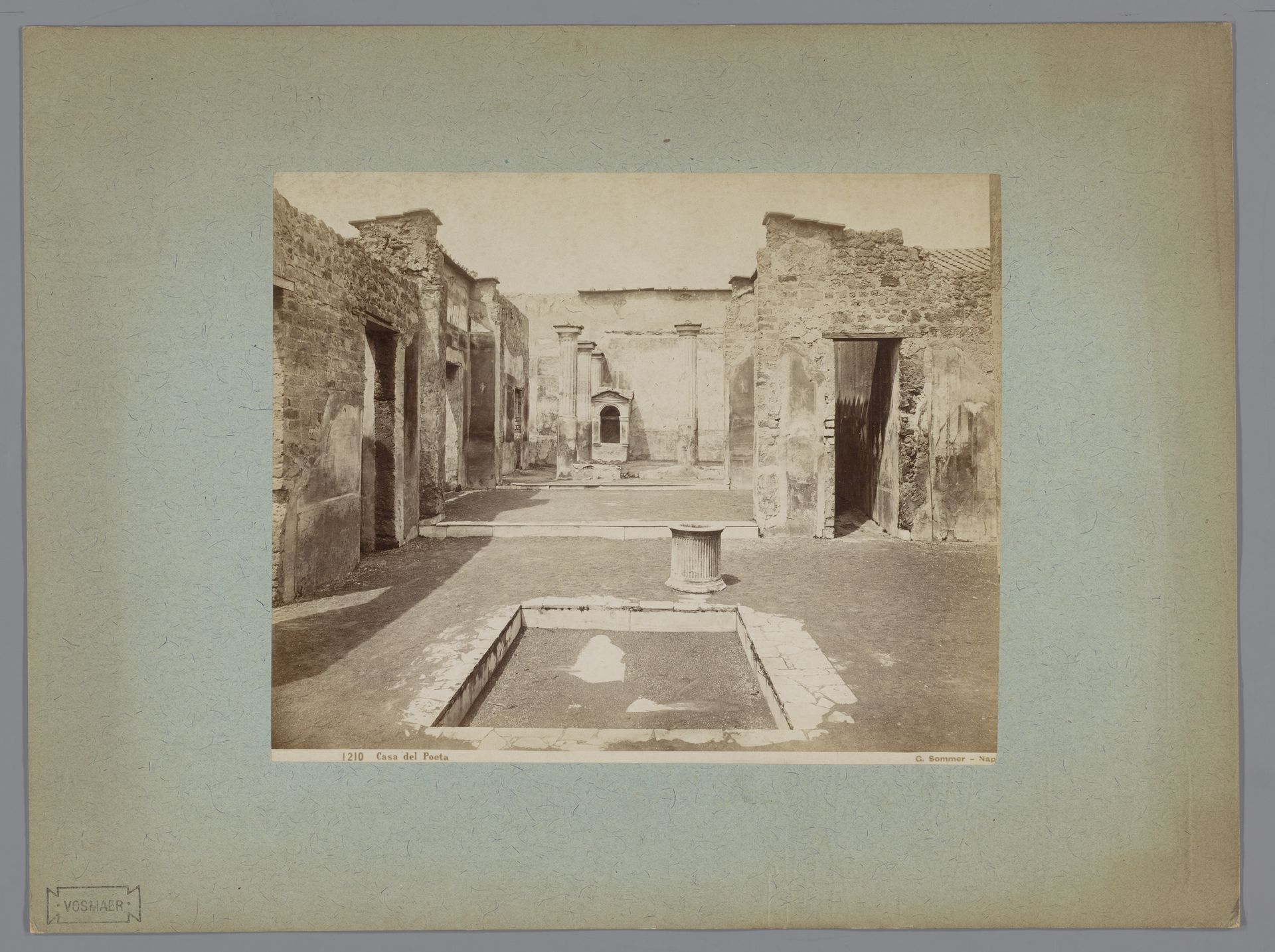
This albumen print shows the Restanten van het Huis van de Tragische Dichter te Pompeï, and was created by Giorgio Sommer sometime in the late 19th century. The image is a study in contrasts. The geometric exactitude of the courtyard’s architecture is set against the organic decay and erosion evident in the walls and stonework. The composition’s careful balance – a water basin in the foreground, a wellhead centrally placed, and framed by symmetrical doorways – speaks to a classical architectural ideal. Yet, this order is unsettled. The monochrome tonality mutes the vibrancy of life, emphasizing instead the ruinous state. Consider how Sommer plays with the semiotics of space. The house, once a symbol of domestic order and personal narrative, now opens onto absence and erasure. The play of light and shadow not only models form but also suggests themes of time, memory, and loss. It’s a stark reminder of how human constructs inevitably succumb to the forces of nature and history.
Restanten van het Huis van de Tragische Dichter te Pompeï 1863 - 1875

Giorgio Sommer
1834 - 1914Location
RijksmuseumArtwork details
- Medium
- photography, gelatin-silver-print, architecture
- Dimensions
- height 316 mm, width 422 mm
- Location
- Rijksmuseum
- Copyright
- Rijks Museum: Open Domain
Tags
landscape
photography
ancient-mediterranean
gelatin-silver-print
cityscape
architecture
Comments
No comments
About this artwork
This albumen print shows the Restanten van het Huis van de Tragische Dichter te Pompeï, and was created by Giorgio Sommer sometime in the late 19th century. The image is a study in contrasts. The geometric exactitude of the courtyard’s architecture is set against the organic decay and erosion evident in the walls and stonework. The composition’s careful balance – a water basin in the foreground, a wellhead centrally placed, and framed by symmetrical doorways – speaks to a classical architectural ideal. Yet, this order is unsettled. The monochrome tonality mutes the vibrancy of life, emphasizing instead the ruinous state. Consider how Sommer plays with the semiotics of space. The house, once a symbol of domestic order and personal narrative, now opens onto absence and erasure. The play of light and shadow not only models form but also suggests themes of time, memory, and loss. It’s a stark reminder of how human constructs inevitably succumb to the forces of nature and history.
Comments
No comments