About this artwork
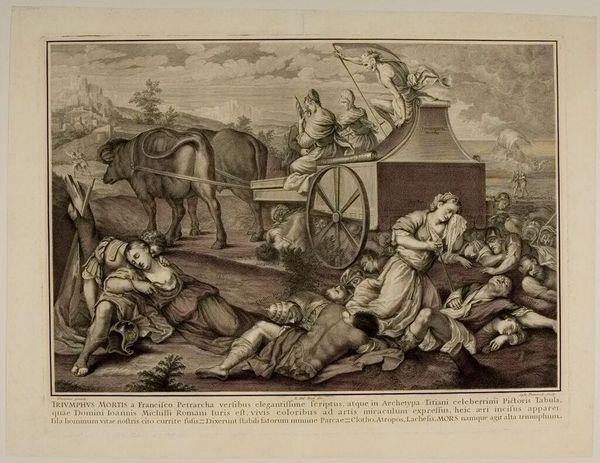
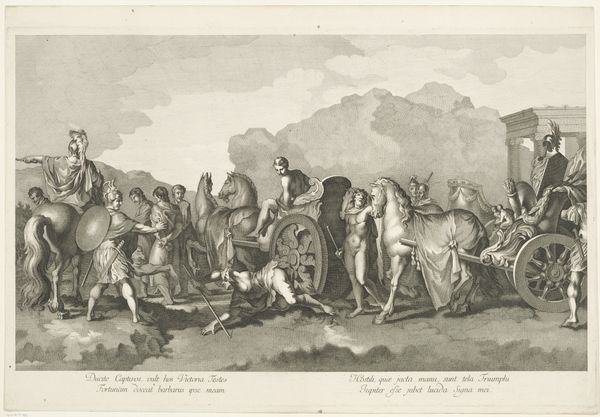
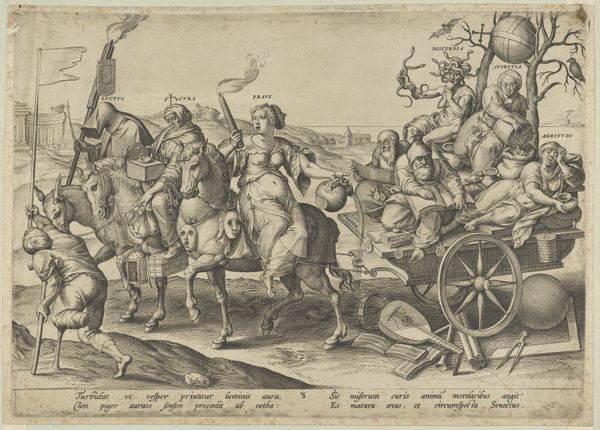
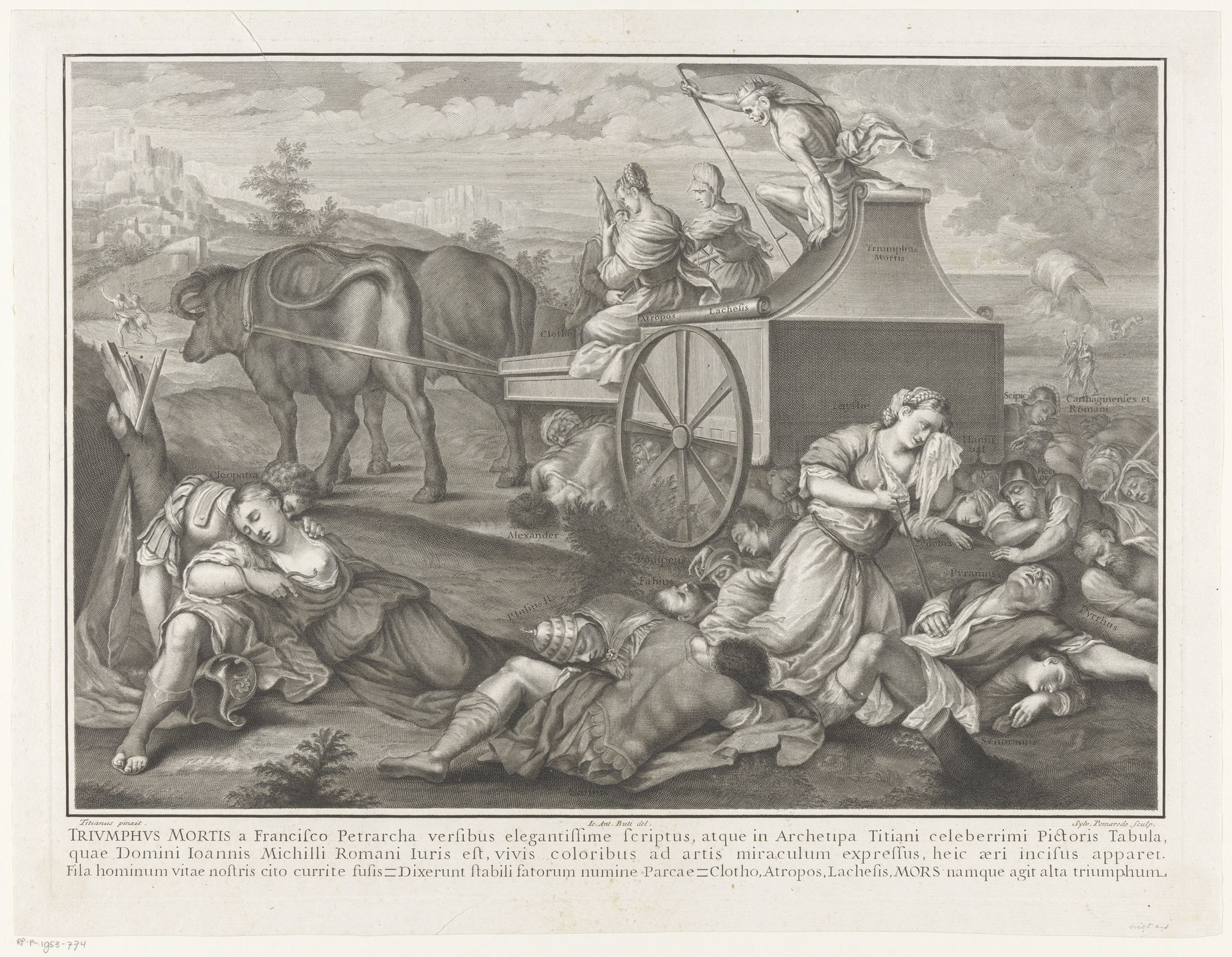
Silvester Pomarede made this print titled 'Triumph of Death' after a painting by Titian, but what does this image tell us about the society in which it was made? The title and Latin inscription refer to Petrarch, an Italian scholar from the 1300s. Petrarch wrote about the triumph of death as a way of expressing the omnipresence of mortality. In this image, we see Death on a triumphal chariot pulled by oxen, flattening people as it passes. It’s a reminder that no one, regardless of their social status, can escape death. We can think about images of death like this as memento mori – symbols that remind us of our own mortality. To understand images like this, we need to delve into the culture that created them, exploring both the visual and literary sources that gave them meaning.

Artwork details
- Medium
- print, engraving
- Dimensions
- height 384 mm, width 510 mm
- Copyright
- Rijks Museum: Open Domain
Tags
allegory
narrative-art
baroque
old engraving style
landscape
figuration
vanitas
history-painting
engraving
Comments
No comments
About this artwork
Silvester Pomarede made this print titled 'Triumph of Death' after a painting by Titian, but what does this image tell us about the society in which it was made? The title and Latin inscription refer to Petrarch, an Italian scholar from the 1300s. Petrarch wrote about the triumph of death as a way of expressing the omnipresence of mortality. In this image, we see Death on a triumphal chariot pulled by oxen, flattening people as it passes. It’s a reminder that no one, regardless of their social status, can escape death. We can think about images of death like this as memento mori – symbols that remind us of our own mortality. To understand images like this, we need to delve into the culture that created them, exploring both the visual and literary sources that gave them meaning.
Comments
No comments