About this artwork
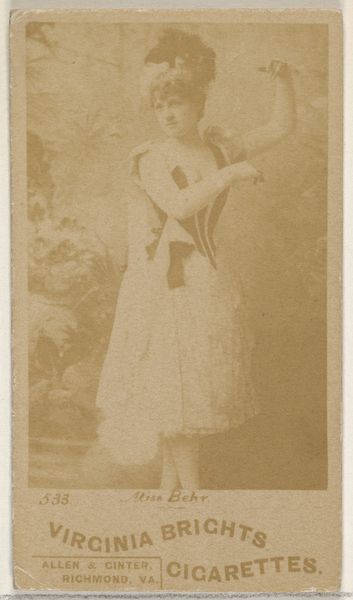
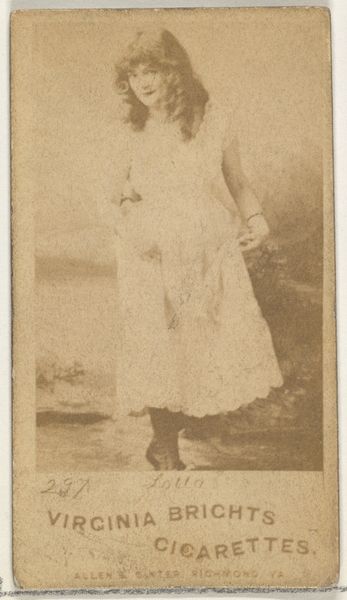
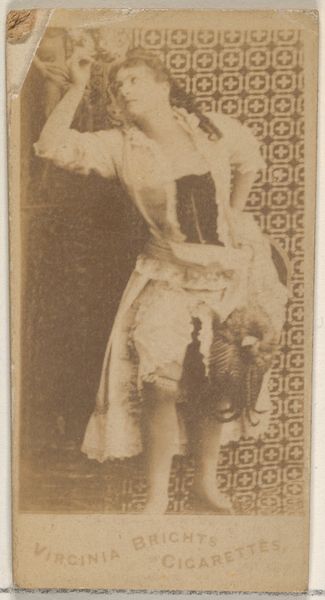
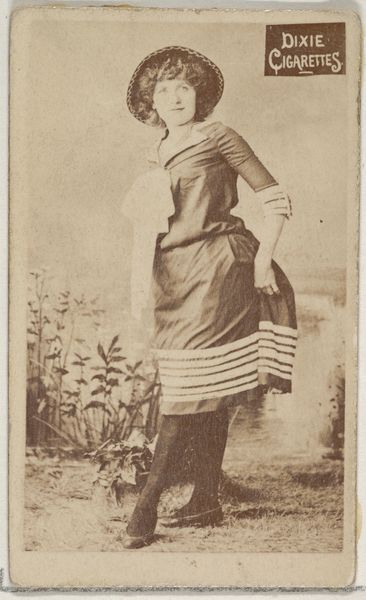
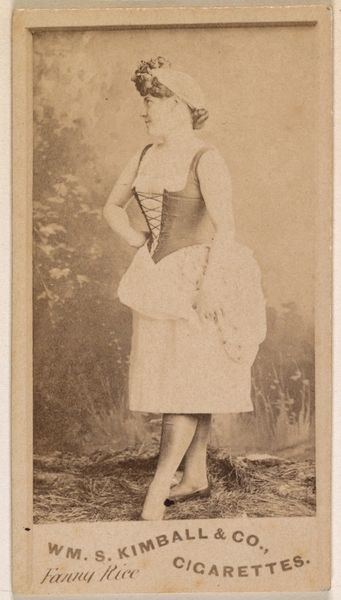
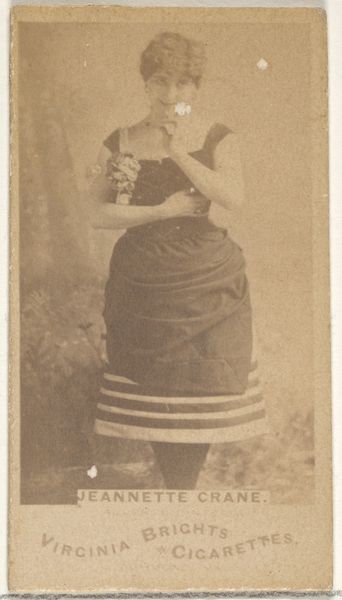
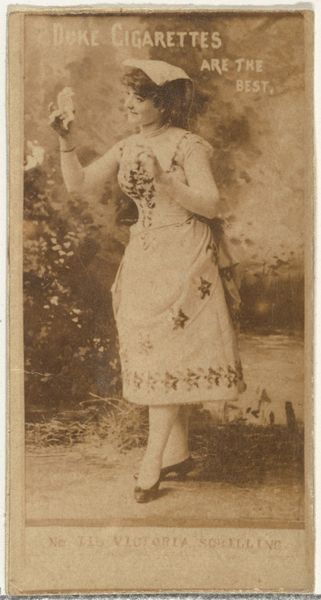
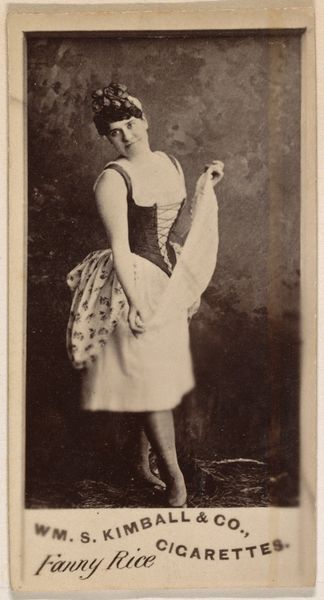
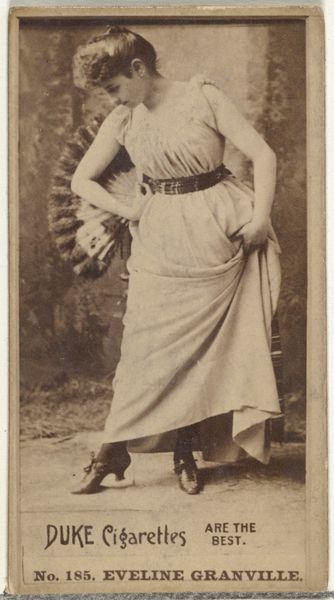
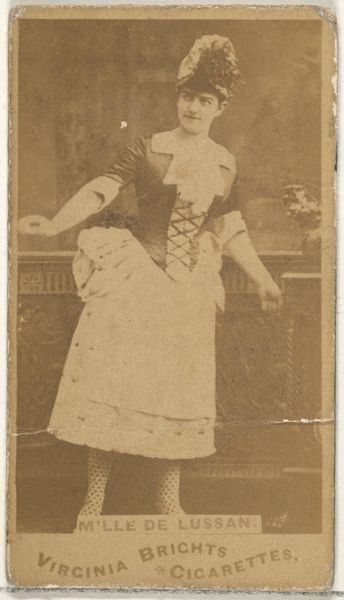
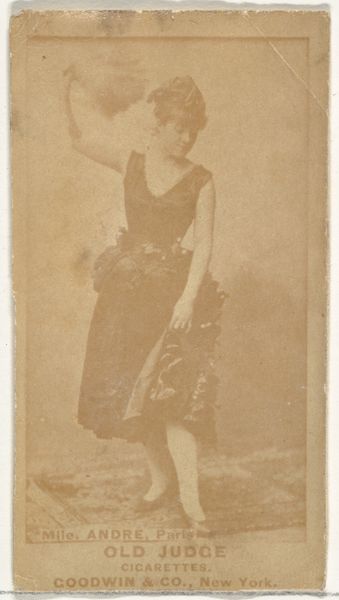
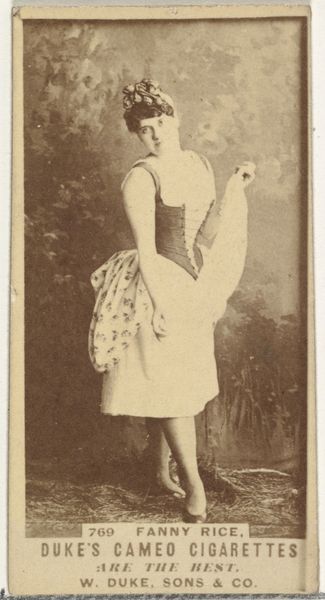
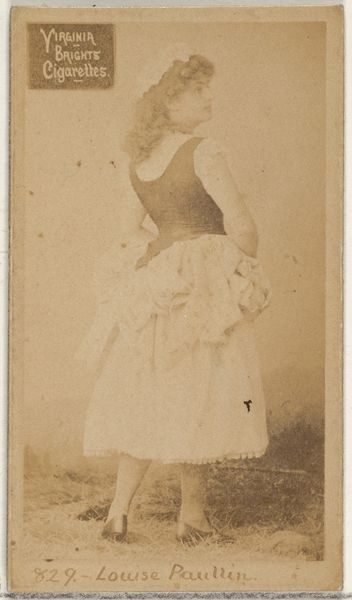
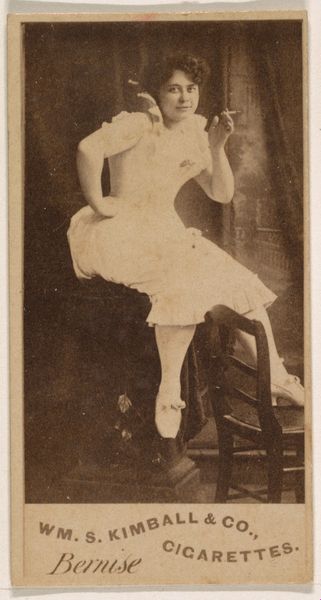
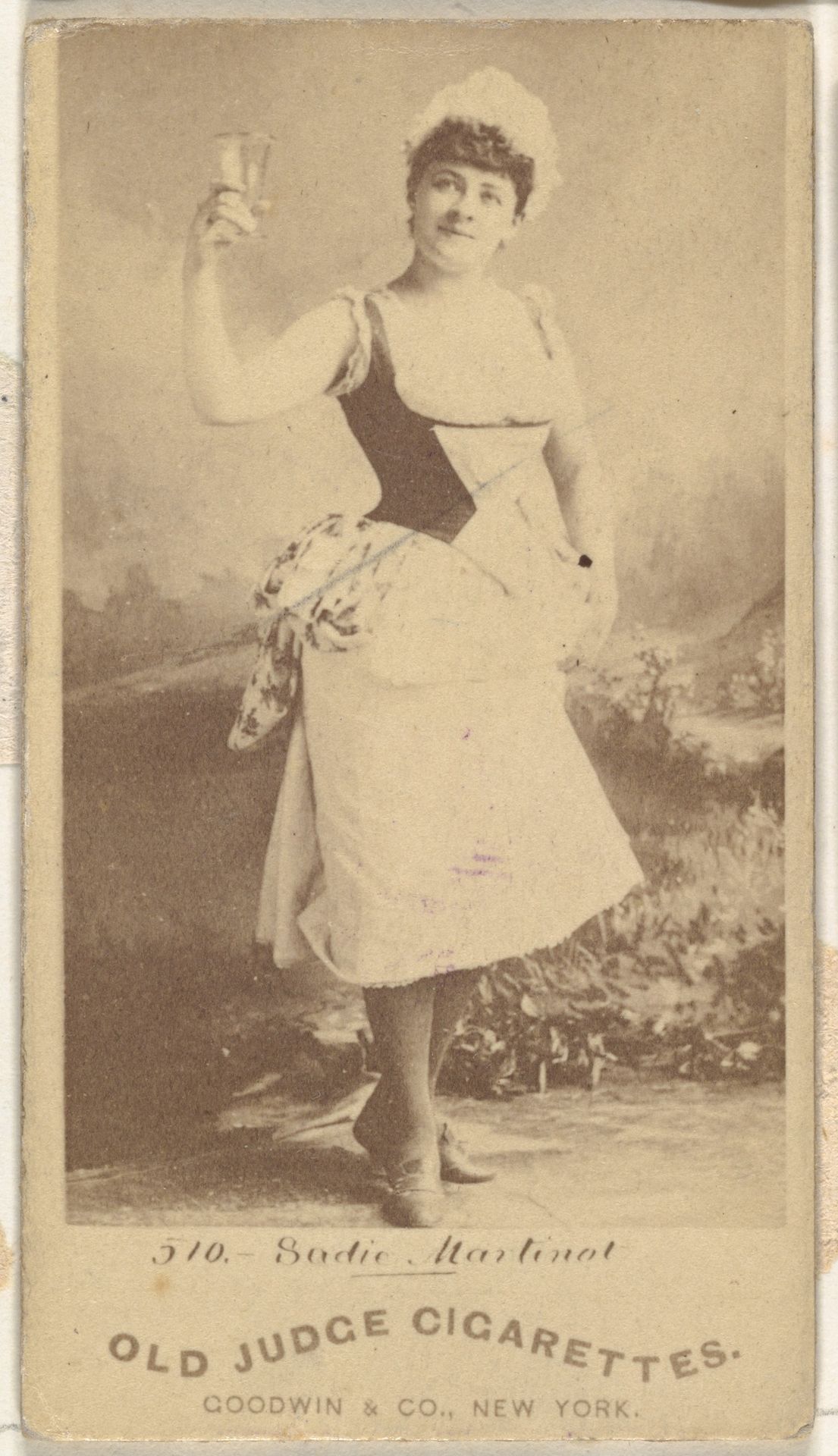
This is Sadie Martinot, from the Actors and Actresses series, printed by Goodwin & Company, the makers of Old Judge Cigarettes. It's made from paper, using photography and printing techniques, and was inserted into cigarette packs as a collectible item. The process of mass-producing these cards is crucial to understanding their significance. They were printed in enormous quantities, reflecting the rise of consumer culture and the industrialization of image-making. These cards weren't meant to be high art; they were commercial objects, designed to promote a product. The sepia tone of the photograph lends a nostalgic feel, yet its original purpose was purely to drive sales. What is the relationship between the artwork and the modes of production or capitalism? The card reflects the commodification of celebrity, using an image of an actress to sell cigarettes. How do issues like labor and class appear in the work? It speaks to the labor involved in both the entertainment industry (Martinot's acting career) and the mass production of cigarettes and promotional materials. So, when we look at this card, we’re not just seeing an actress; we’re seeing a snapshot of a society grappling with new forms of labor, leisure, and consumption. It invites us to consider the many hands and processes that brought this small piece of paper into being.
Sadie Martinot, from the Actors and Actresses series (N171) for Old Judge Cigarettes 1886 - 1890


Artwork details
- Medium
- drawing, print, photography
- Dimensions
- sheet: 2 11/16 x 1 3/8 in. (6.9 x 3.5 cm)
- Location
- Metropolitan Museum of Art, New York, NY
- Copyright
- Public Domain
Tags
portrait
drawing
photography
19th century
genre-painting
post-impressionism
Comments
No comments
About this artwork
This is Sadie Martinot, from the Actors and Actresses series, printed by Goodwin & Company, the makers of Old Judge Cigarettes. It's made from paper, using photography and printing techniques, and was inserted into cigarette packs as a collectible item. The process of mass-producing these cards is crucial to understanding their significance. They were printed in enormous quantities, reflecting the rise of consumer culture and the industrialization of image-making. These cards weren't meant to be high art; they were commercial objects, designed to promote a product. The sepia tone of the photograph lends a nostalgic feel, yet its original purpose was purely to drive sales. What is the relationship between the artwork and the modes of production or capitalism? The card reflects the commodification of celebrity, using an image of an actress to sell cigarettes. How do issues like labor and class appear in the work? It speaks to the labor involved in both the entertainment industry (Martinot's acting career) and the mass production of cigarettes and promotional materials. So, when we look at this card, we’re not just seeing an actress; we’re seeing a snapshot of a society grappling with new forms of labor, leisure, and consumption. It invites us to consider the many hands and processes that brought this small piece of paper into being.
Comments
No comments