About this artwork
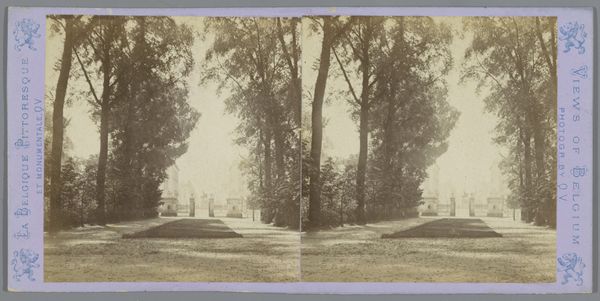
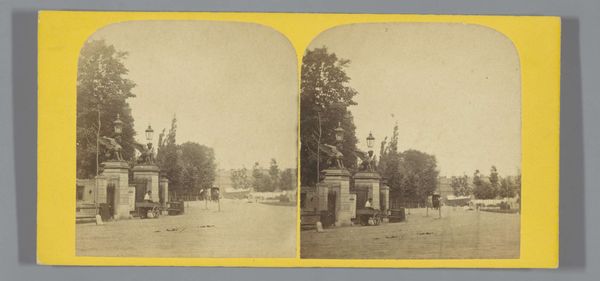
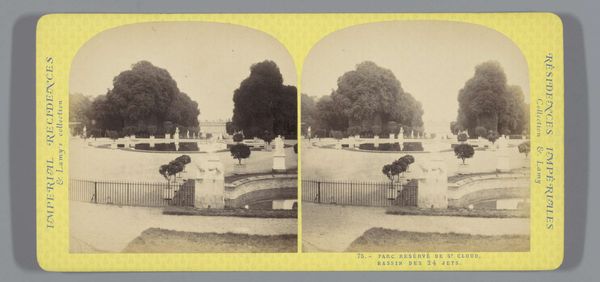
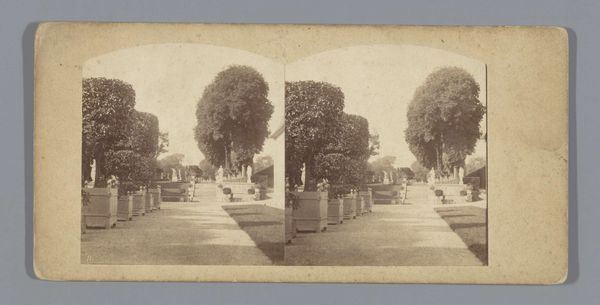
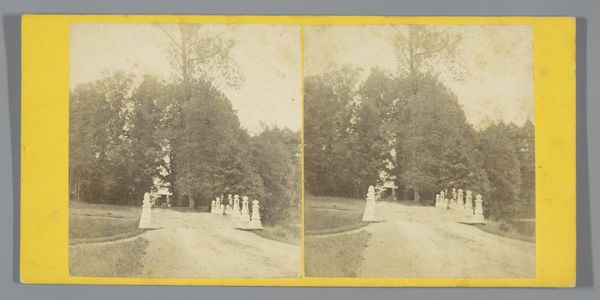
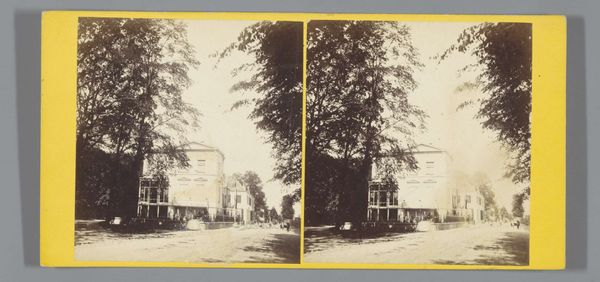
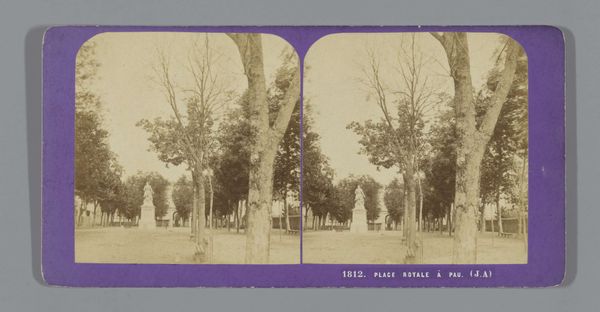
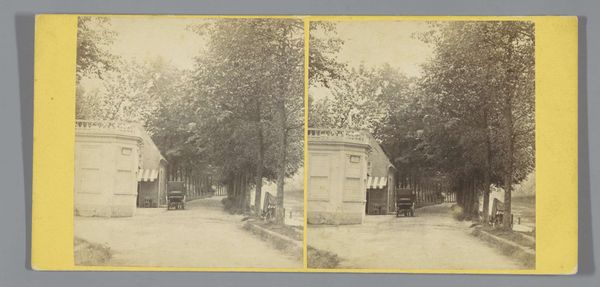
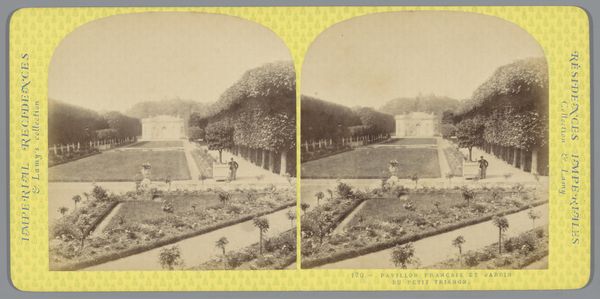
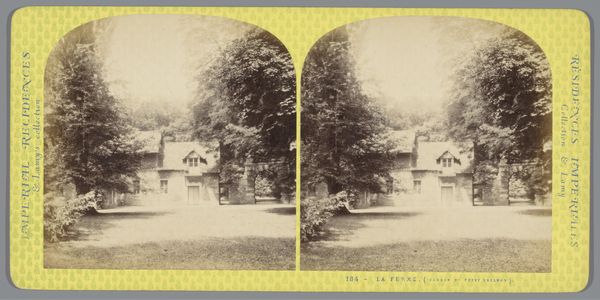
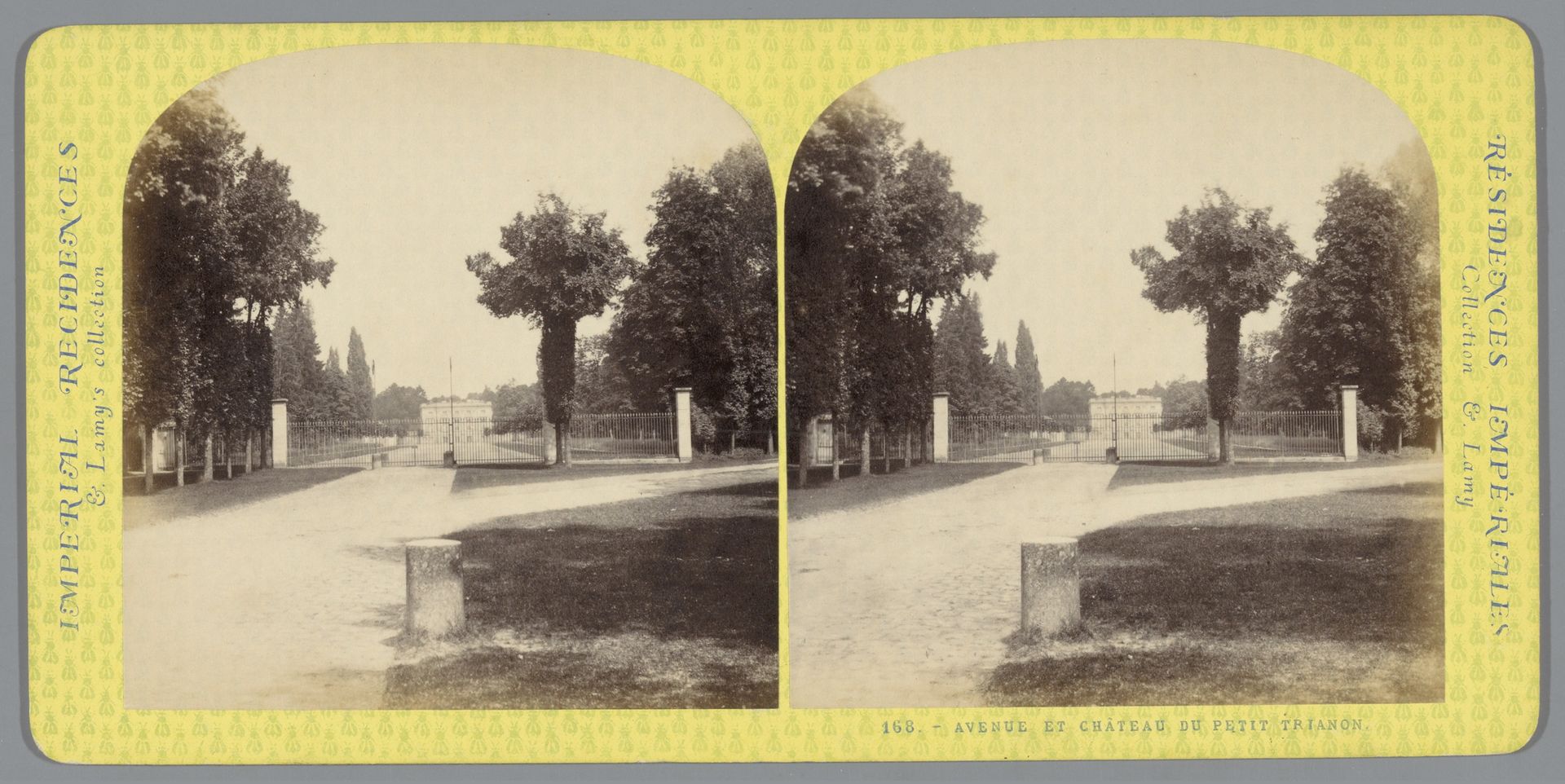
This stereoscopic photograph of the Petit Trianon and its access road was produced by Ernest Eléonor Pierre Lamy, sometime between 1828 and 1900. It belongs to a tradition of photographic documentation that took hold in the 19th century, with the advent of more portable camera technologies. The stereoscopic format was particularly popular, as it gives an illusion of depth when viewed through a special device. It was a form of mass media and photographic prints were often sold as souvenirs. Photographs like this one involved a complex interplay of chemistry and optics, but also labor. This was true not only of the photographer's own work, but also of the factory workers who made the materials, and of the distributors who got the images into circulation. Looking at this image, consider how the rise of photography democratized the experience of art and culture, even as it relied on new forms of industrial production and distribution. It is a reminder that no artwork exists in a vacuum, but is always embedded in a web of social and economic relations.
Gezicht op het Petit Trianon en de toegangsweg
1860 - 1880

Artwork details
- Medium
- photography, gelatin-silver-print
- Dimensions
- height 87 mm, width 178 mm
- Copyright
- Rijks Museum: Open Domain
Tags
Comments
Share your thoughts
About this artwork
This stereoscopic photograph of the Petit Trianon and its access road was produced by Ernest Eléonor Pierre Lamy, sometime between 1828 and 1900. It belongs to a tradition of photographic documentation that took hold in the 19th century, with the advent of more portable camera technologies. The stereoscopic format was particularly popular, as it gives an illusion of depth when viewed through a special device. It was a form of mass media and photographic prints were often sold as souvenirs. Photographs like this one involved a complex interplay of chemistry and optics, but also labor. This was true not only of the photographer's own work, but also of the factory workers who made the materials, and of the distributors who got the images into circulation. Looking at this image, consider how the rise of photography democratized the experience of art and culture, even as it relied on new forms of industrial production and distribution. It is a reminder that no artwork exists in a vacuum, but is always embedded in a web of social and economic relations.
Comments
Share your thoughts