1862 - 1876
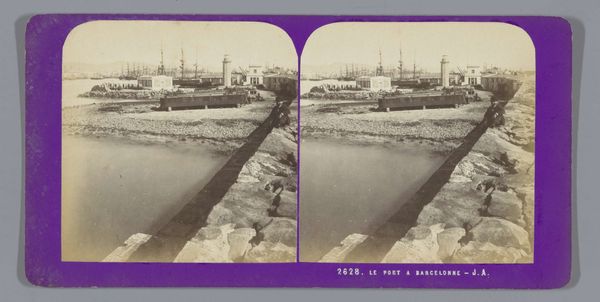
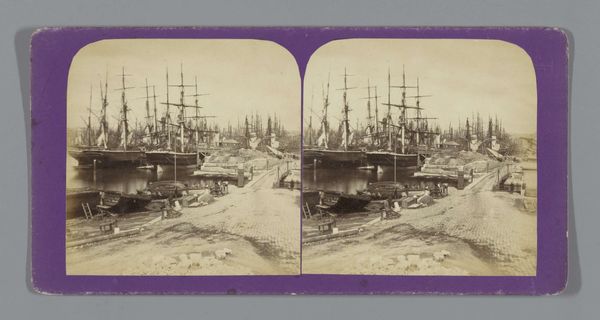
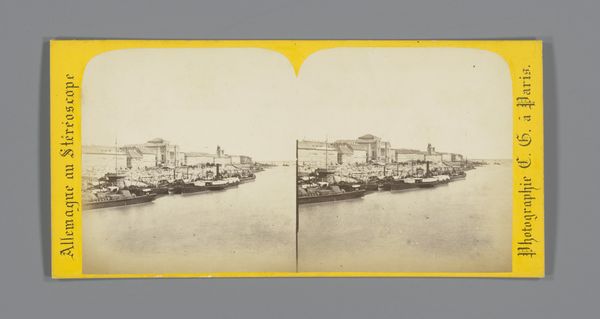
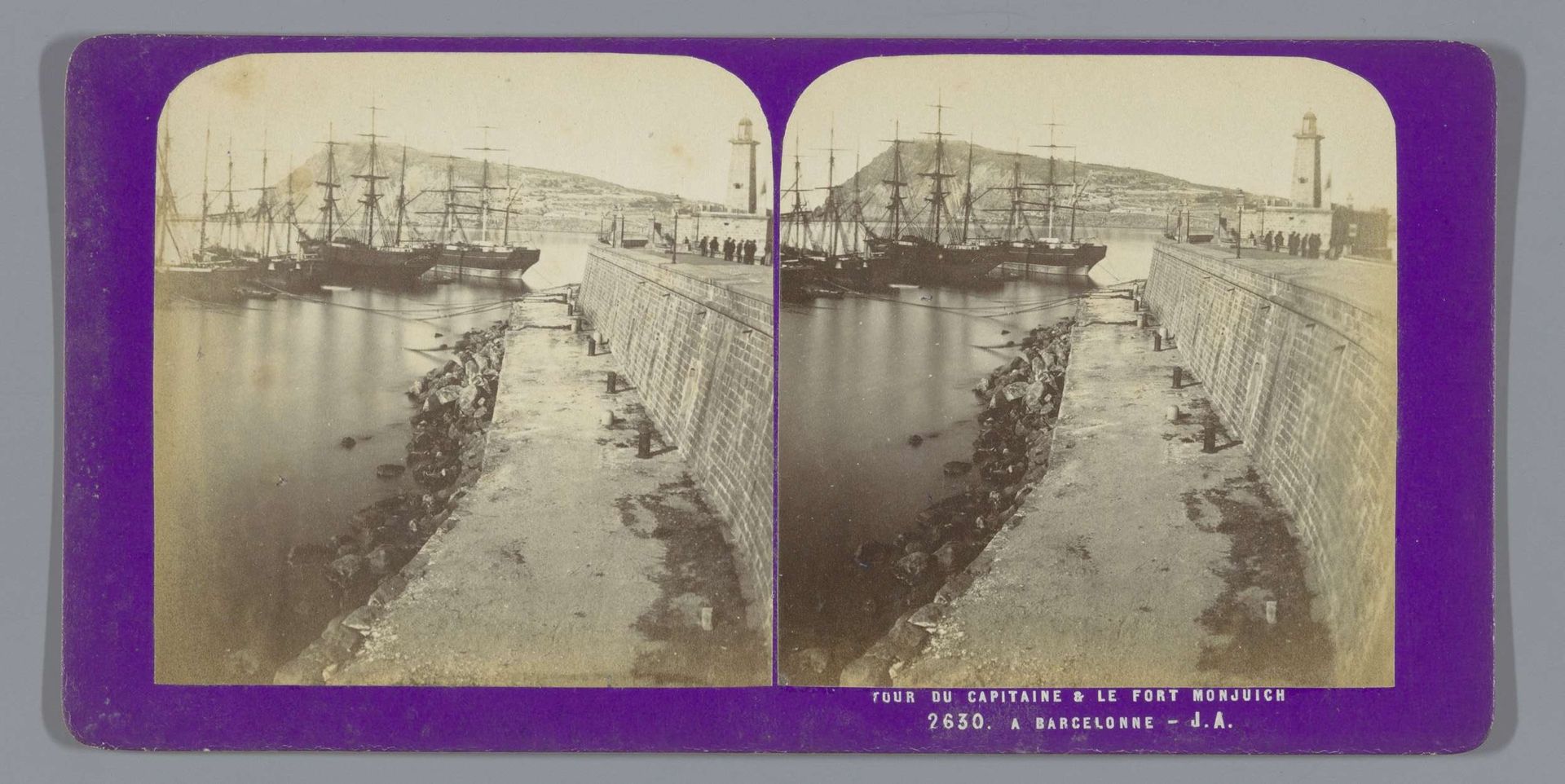
Boten in de haven van Barcelona, met op de achtergrond een vuurtoren

Listen to curator's interpretation
Curatorial notes
Editor: We are looking at “Boats in the Port of Barcelona, with a Lighthouse in the Background," a gelatin silver print from sometime between 1862 and 1876, by Jean Andrieu. It gives me a quiet feeling, a captured moment in a bustling place. What can you tell me about this piece? Curator: This photograph offers a glimpse into the historical narrative of Barcelona’s port, specifically how it served as a site for trade and military presence. The large ships indicate international connections. It's interesting how photography at this time was becoming a tool not just for documentation, but also for shaping public perceptions of cities. What do you notice about the people in the photo? Editor: They’re a small group, almost an afterthought compared to the ships and the landscape. Maybe visitors like us looking back? Curator: Exactly! Consider how the inclusion of figures transforms this cityscape into a tableau reflecting social classes, access, and visibility. Does this suggest something to you about who this image might have been intended for, and what purpose it served? Editor: I guess it suggests it was for people with enough leisure time to visit a port, or who were interested in the maritime industry. A way of showing off Barcelona's importance. Curator: Precisely. Think about how the photographic process itself becomes a political act of choosing what to display. What social and institutional frameworks enabled and popularized images like these? The lighthouse, too, symbolizes something: not only navigation, but also enlightenment and progress. How do you see the image participating in these narratives? Editor: I didn't think about that. Seeing it as more than just a nice picture helps. Curator: Understanding how power, visual representation, and technology intertwined can radically alter our understanding of even seemingly simple images. It really helps contextualize how we might relate to that history today.