c. 1876 - 1878
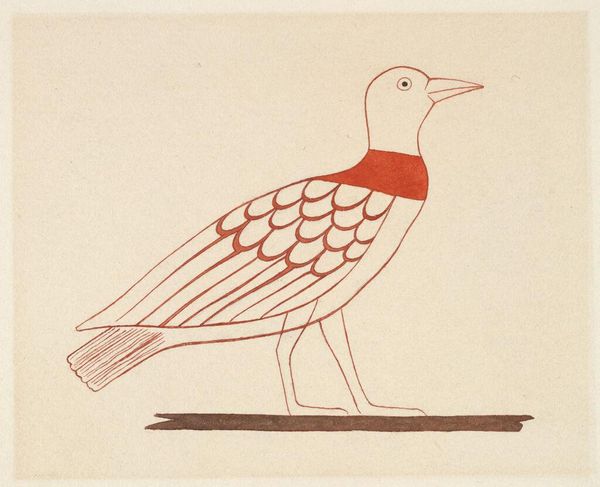
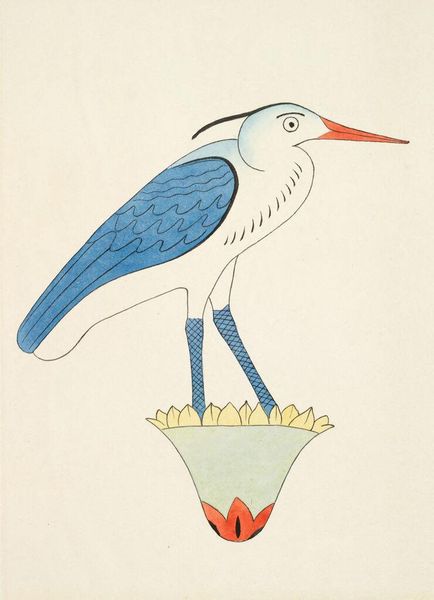
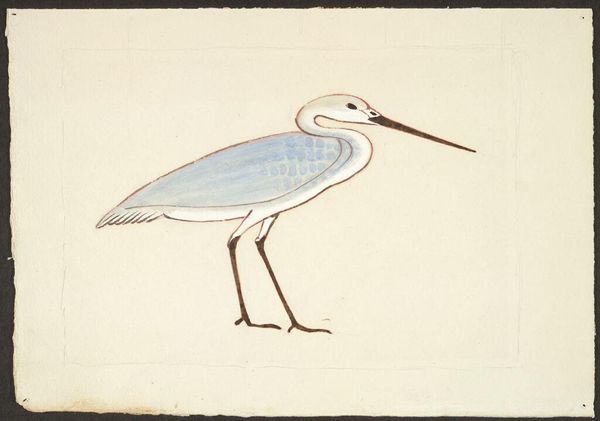
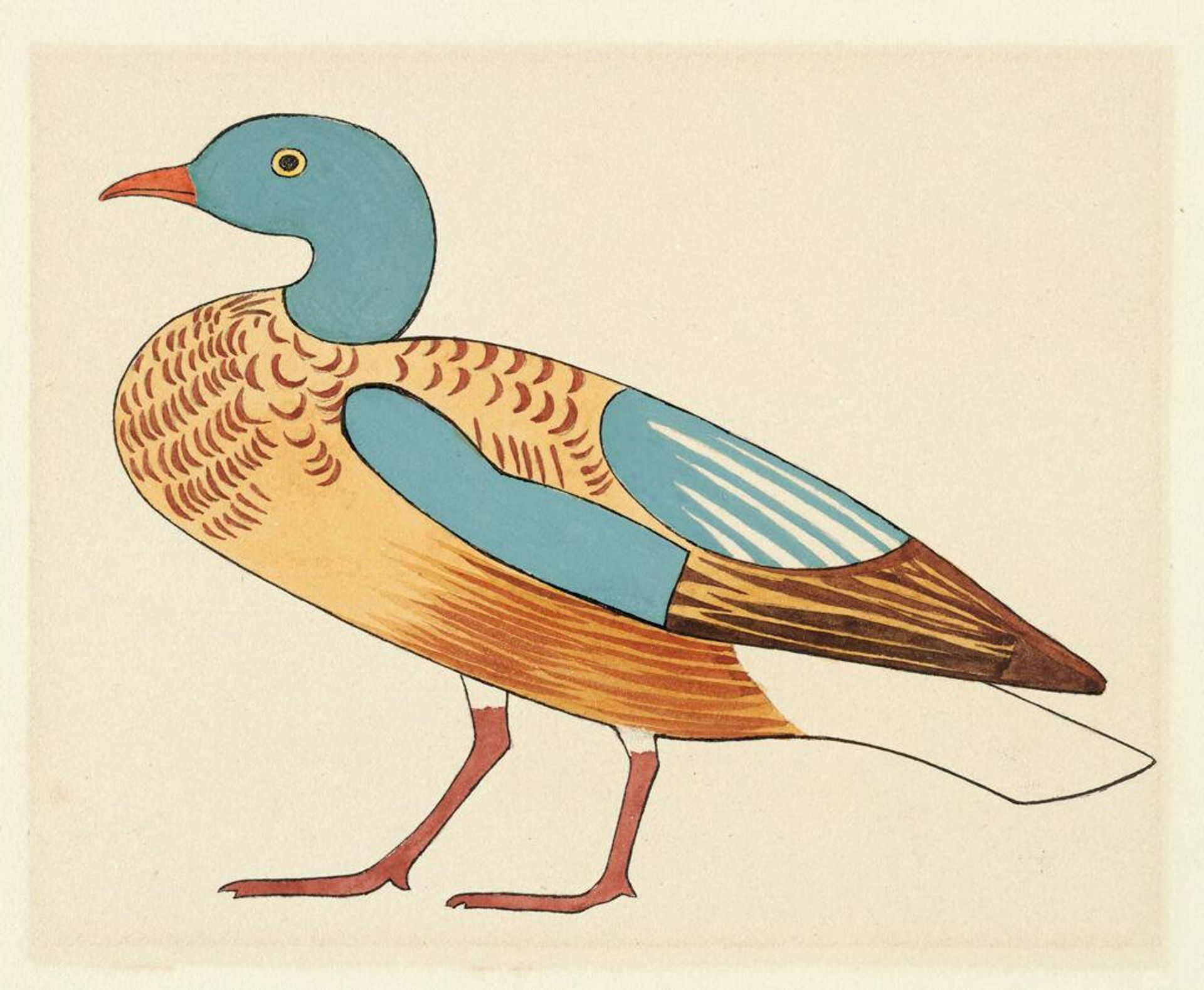
Waterbird, after Egyptian Wall Painting


Listen to curator's interpretation
Curatorial notes
Editor: This is Charles Herbert’s "Waterbird, after Egyptian Wall Painting". It's quite small, only about 6 by 8 inches. The colours are so flat and the lines are crisp and bold, like a graphic design. What do you notice about the composition of this work? Curator: Note the emphasis on line and colour. The artist uses a limited palette, focusing on the interplay of blues, browns, and creams to define form. How does the absence of shading affect your perception of depth and volume? Editor: It makes it seem very two-dimensional, almost like a hieroglyph. Curator: Precisely. Herbert seems less interested in mimetic representation and more in capturing the essential form through simplified shapes and patterns. The stylization suggests a focus on symbolic rather than literal depiction. Editor: That's fascinating, it really shifts how I see the piece. Curator: Indeed. The power lies not in realistic portrayal, but in the arrangement of formal elements, creating an image that is both decorative and evocative.