drawing, paper, ink
#
pen and ink
#
drawing
#
art-nouveau
#
pen drawing
#
pen sketch
#
figuration
#
paper
#
text
#
ink
#
sketch
#
symbolism
#
erotic-art
Copyright: Public domain
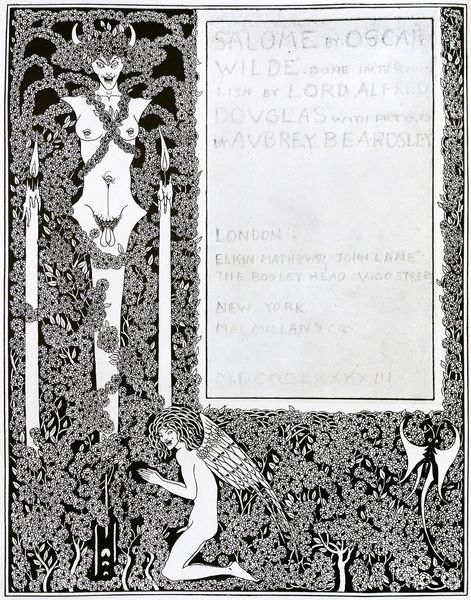
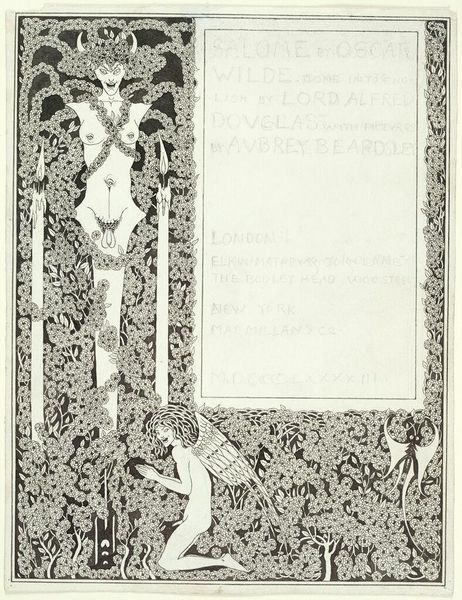
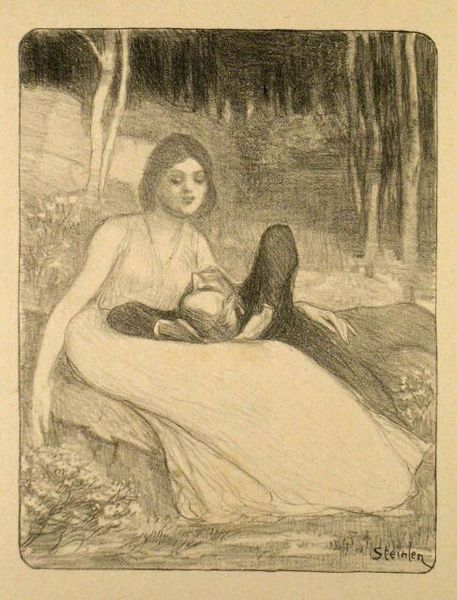
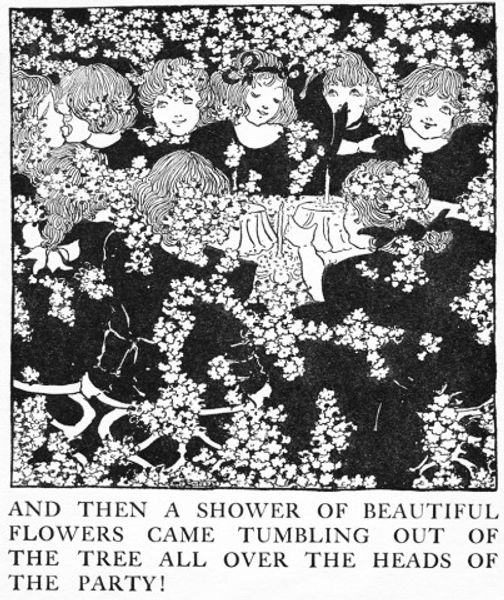
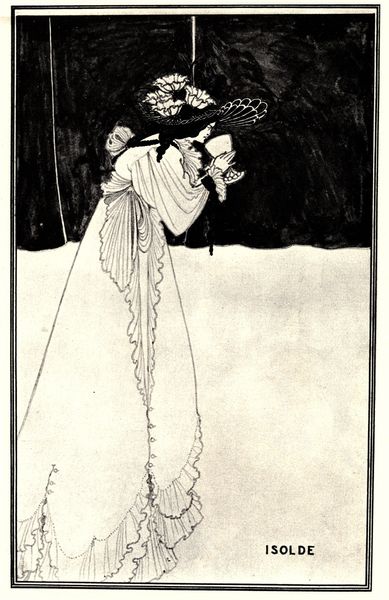
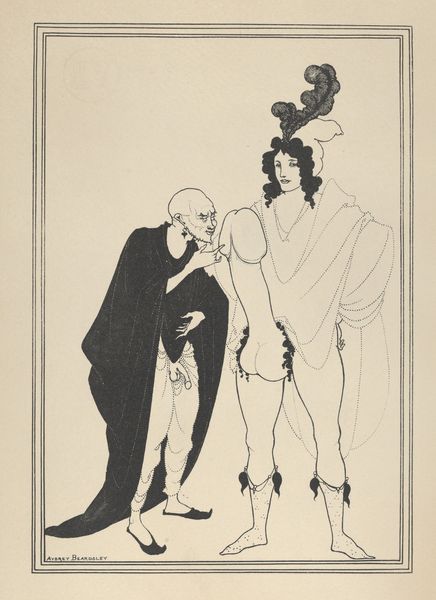
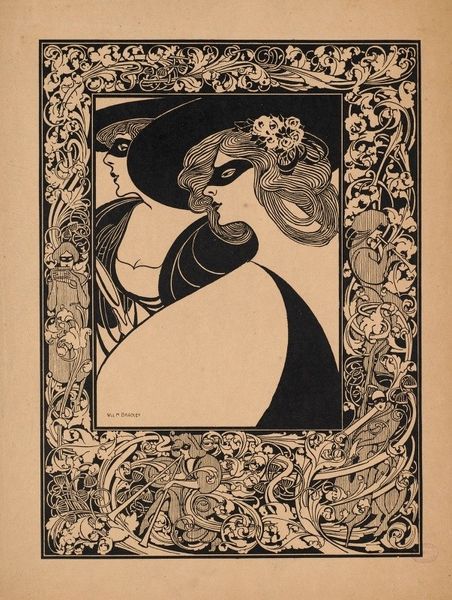
Editor: This is an illustration, likely a book cover, by Aubrey Beardsley from 1894. It's a black and white drawing with intricate details, made with pen and ink. The mood is definitely unsettling, with a demonic figure and an almost grotesque beauty. What do you see in this piece? Curator: For me, this image vibrates with the radical energy of its time. Beardsley was operating in a late-Victorian context grappling with changing notions of sexuality, gender, and morality. How does this illustration engage with and potentially subvert these conventions? Editor: Well, I guess the overt sexuality, especially the female figure, is pretty provocative for the time, right? It's almost challenging the idealized images of women that were prevalent. Curator: Precisely. This aesthetic rebellion, this embrace of the grotesque and the erotic, aligns with a broader critique of Victorian values. Beardsley seems to be positioning female sexuality not as passive and innocent, but as a potent force. Editor: I see that now. So, it’s not just about creating something visually interesting, but making a statement about power and representation. Curator: Exactly! How might Beardsley's choices in composition, such as the dominance of the demonic figure versus the supplicating angel, further reinforce a narrative of power subversion? Think about the ways gender, identity, and even spirituality intersect in this single image. Editor: Thinking about those elements changes how I see the piece, understanding that it goes beyond shock value, it's making a social statement. Curator: And that intersectionality is precisely what makes it so compelling even today. It reminds us that art can be a powerful tool for social commentary. Editor: Absolutely, it adds layers to something that looks, at first glance, just visually interesting. Curator: Exactly! This piece is much more than meets the eye.
Comments
No comments
Be the first to comment and join the conversation on the ultimate creative platform.
 Collect
 React
React Comment
More like this